
Today’s first reading is one of my favorite chapters of the Old Testament: Isaiah 55. It always reminds me of the parable of the Sower and the Seed from the gospels with the Word of God being sent into the world on good and poor soil alike.
Starting in Isaiah 40, the prophet begins to describe the end of the Babylonian Exile period and the triumphant return of the People of God to Jerusalem. By the time the Prophet’s narrative arrives at Isaiah 55, Israel is invited to seek the Lord anew, forsaking the choices and ways that got them into Exile in the first place (Isaiah 55:6-7a). It is not the simple moral imperative, it is a reminder that echoes the beginning of Exodus 20: “I am the LORD your God, who brought you out of the land of Egypt, out of the house of slavery; you shall have no other gods before me” (Exodus 20:2-3). The Lord is now delivering them from Babylon with the same admonishment that the people received in Deuteronomy 34: choose life.
Isaiah has told them that they received what their choices deserved, but now they are encouraged to turn away from that which led them toward death and to turn again to the God of restoration and pardon. It is an OT moment: “Repent and believe in God’s Word” that echo the words of Ash Wednesday: “Repent and believe in the Gospel.” The people hearing Isaiah’s words are called to believe that God’s mercy and pardon triumph over God’s wrath. It is God’s mercy that gives life – and in today’s first reading Isaiah offers an illustration from the world around them.
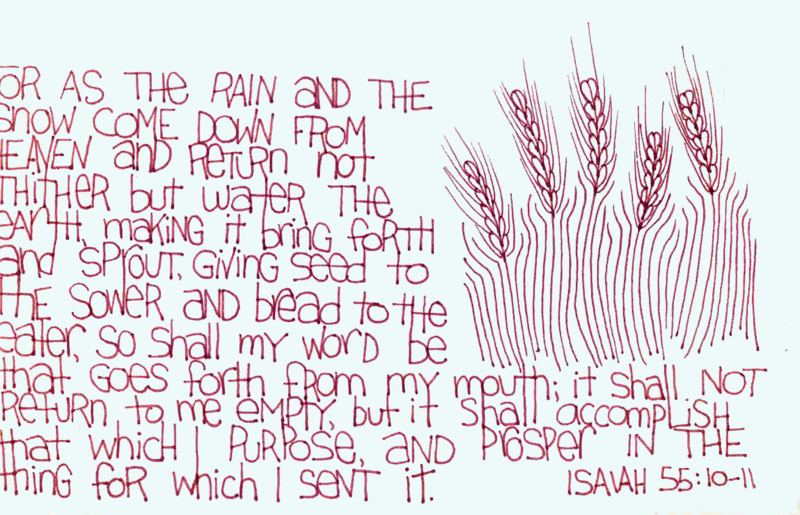
“Just as from the heavens the rain and snow come down and do not return there till they have watered the earth…”
The heart of the image here is life. The earth is not that which gives life; it is the rain and snow, moisture from above, that causes the earth to proliferate, “making it fertile and fruitful, giving seed to the one who sows and bread to the one who eats.” Without the moisture, fertile and fruitful life shrivels-up. The power and the life is in the rain and snow.
The power and the life is in the Word of God: “So shall my word be that goes forth from my mouth; It shall not return to me void, but shall do my will, achieving the end for which I sent it.” And what is that end? Repentance, faith, and salvation. We participate in this work of God. We don’t add to this work or validate it or accomplish it. This is God’s work done by way of God’s Word proclaimed.
And in Isaiah 55:12, the next verse just outside our reading Isaiah tells them that if the listen to the Word of God, take it as the compass of their journey in life, “Yes, in joy you shall go forth, in peace you shall be brought home; Mountains and hills shall break out in song before you, all trees of the field shall clap their hands.” Even the very earth will give witness to the power and life in the Word of God.
The Word of God has come to you again and again in your lifetime. Have you allowed it to make your life fertile, fruitful, and cooperate in God’s work in this world? Yes? Then in joy may you go forth to let that Word work in you to accomplish its end.
Image credit: Detail of “Sower Went Out to Sow” | Irish Dominican Photography | Brasov, Romania | CC-BY
 friarmusings