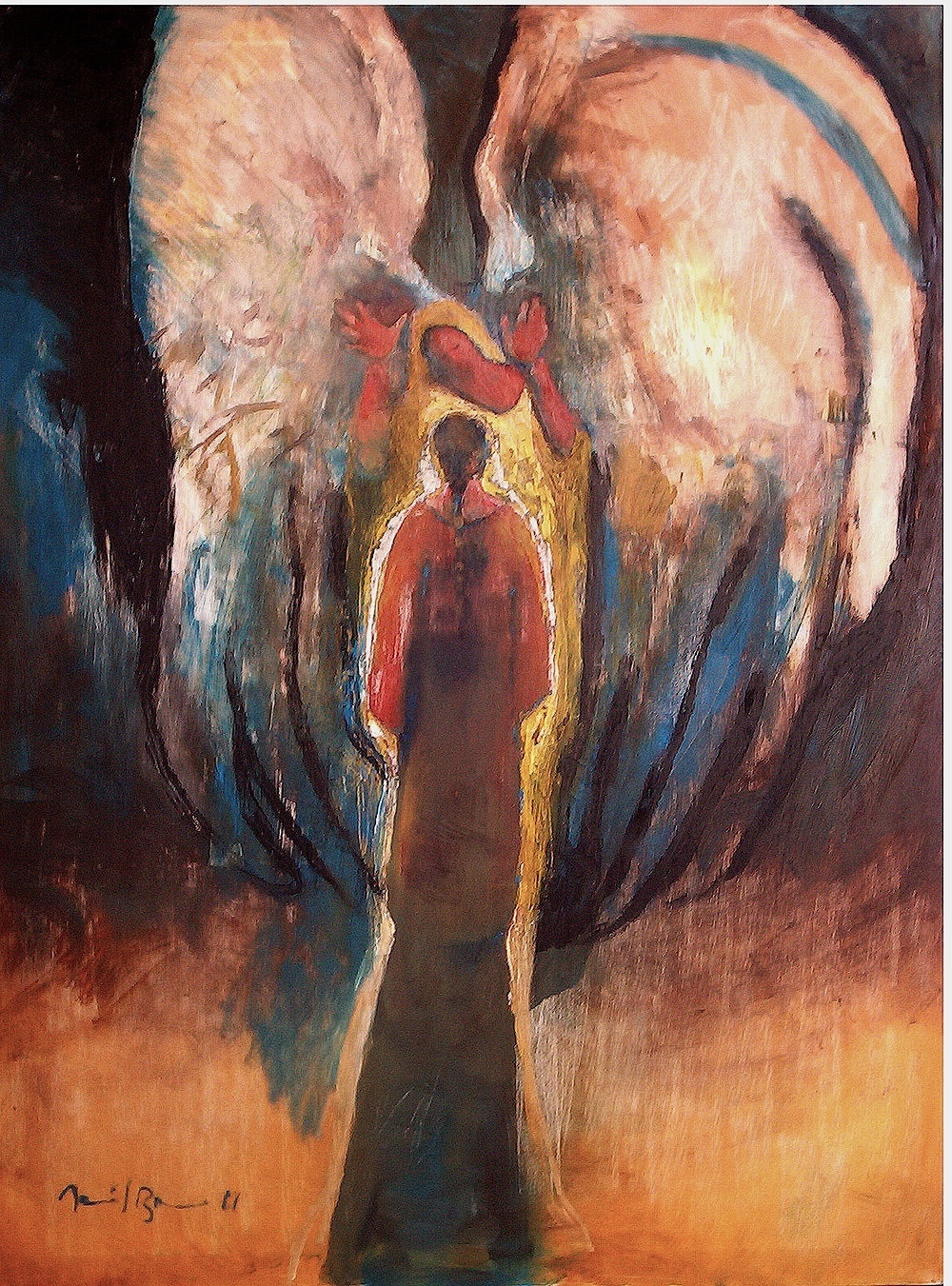
The Theology of History

This coming Sunday is the 3rd Sunday of Advent in Year C of the lectionary cycle. Yesterday’s post completed the commentary on the coming gospel and noted the coming Messiah “will baptize you with the Holy Spirit and fire.” (Luke 3:16). The Sunday gospel emphasizes John the Baptist but also points forward to Jesus and the Holy Spirit. This is one of many passages that are taken together to consider what has become known as the “Theology of History”. St. Bonaventure wrote about it in the 13th century and it was the topic of Pope Benedict’s doctoral dissertation. Continue reading

Spirit and Fire

This coming Sunday is the 3rd Sunday of Advent in Year C of the lectionary cycle. In the previous post, in the face of the coming wrath (Luke 3:7), the people have cried out “What should we do?” (v.10) John answers that each person, where they are in life and the work they have, is to be compassionate and perform their job faithfully, especially in the way they treat others. How we treat others is a litmus test for how we are responding to God. As Jesus says later, “Be merciful, just as your Father is merciful” (Luke 6:36). Continue reading

What should we do?

This coming Sunday is the 3rd Sunday of Advent in Year C of the lectionary cycle. The opening verse of the gospel is from the people who have just heard John the Baptist proclaim the coming wrath of God (Luke 3:7) and they shout out, “What should we do?” What is clear from John is that judgment on the basis of one’s fruit/deeds is at hand: “Even now the ax lies at the root of the trees” (v.9). Continue reading

Evidence and Heritage

This coming Sunday is the 3rd Sunday of Advent in Year C of the lectionary cycle. The gospel for the coming Sunday again returns to John the Baptist in Judean wilderness, proclaiming a baptism of repentance. John is filling the role that was the king’s duty: call people back to Covenant with God. He preaches repentance, turning away from sin and turning towards God, and symbolically washes them clean in the waters of the Jordan. Continue reading

Our mission

We are familiar with the story of John the Baptist as the herald of the coming Messiah – it is the story that introduces and highlights the Advent season. But Advent’s proclamation of Christmas is not the end of John’s story. He remained a man faithful to God’s calling.
After Jesus began his public ministry and the spotlight refocused, John continued baptizing and calling people to repentance. He continued calling people to remember they were a covenant people. He challenged kings, even if it meant being imprisoned and being killed.

Continue reading

Advent and John the Baptist

The Gospel readings for the Second and Third Sundays of Advent always focus on John the Baptist. Since we are again in Lectionary Year A, the two selections are from Matthew 3:1-12 and 11:2-11, respectively. Given that John the Baptist is mentioned in quite a few other passages of Matthew’s Gospel (3:13-15; 4:12; 9:14-17; 11:12-19; 14:1-12; 16:13-14; 17:10-13; 21:23-27, 32), one might ask: Why were these two passages from chapters 3 and 11 chosen?

The short answer: They both deal with John’s role in preparing for Jesus, making them particularly suited for Advent. Continue reading

The Forerunner

This coming Sunday marks our journey into a new liturgical year and a new Season, the 2nd Sunday in Advent in Year A. You can read a complete commentary on the Sunday Gospel here. The Gospel readings for the Second and Third Sundays of Advent always focus on John the Baptist. Since we are again in Lectionary Year A, the two selections are from Matthew 3:1-12 and 11:2-11, respectively. One might ask: Why were these two passages from chapters 3 and 11 chosen? The short answer: They both deal with John’s role in preparing for Jesus, making them particularly suited for Advent. But how? On the 2nd Sunday of Advent each year, the Gospel reading presents the preaching of John the Baptist. Although we normally call him “the Baptist,” Matt 3:1-12 does not focus on his baptizing activity as much as on other aspects of his ministry: John as Preacher/Prophet, and John as the Forerunner to Jesus.
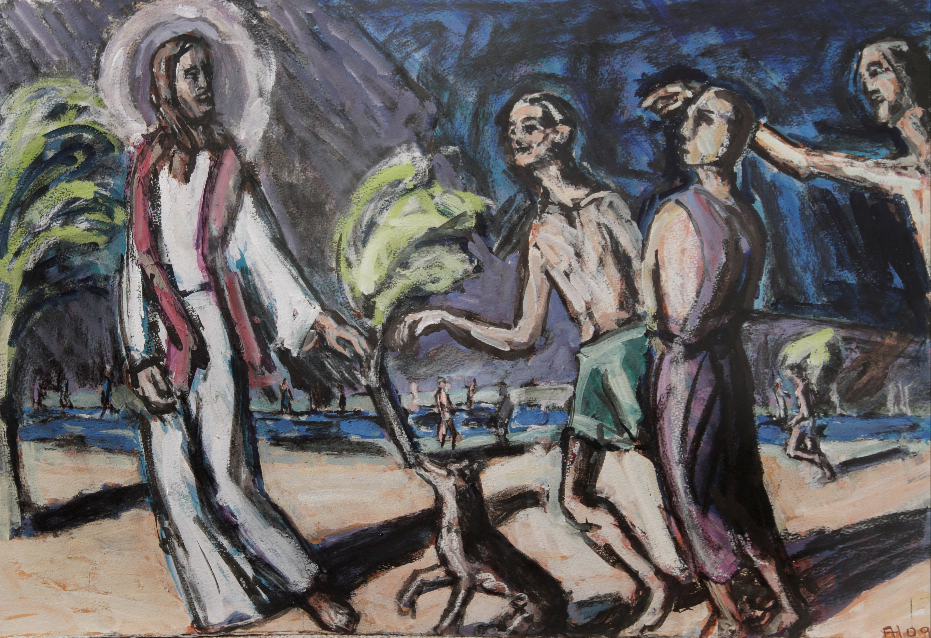
1 In those days John the Baptist appeared, preaching in the desert of Judea 2 (and) saying, “Repent, for the kingdom of heaven is at hand!” 3 It was of him that the prophet Isaiah had spoken when he said: “A voice of one crying out in the desert, ‘Prepare the way of the Lord, make straight his paths.’” Continue reading

Come and See: context

Ecce Agnus Dei - Francis Hoyland

Ecce Agnus Dei – Francis Hoyland

This coming Sunday is the 2nd Sunday in Ordinary Time, Year B – the cycle of readings in which The Gospel according to Mark is the principal source of our Sunday gospels. That being said, our reading is from the Gospel According to John. In fact, regardless of which cycle of readings (A,B, or C), the “Second Sunday of Ordinary Time the Gospel continues to center on the manifestation of the Lord” with a gospel from John (General Introduction to the Lectionary, 105). It is done as a means of transitioning from the theme of “manifestation” highlighted in Epiphany to ordinary time readings – I suspect – because there are some years when the Baptism of the Lord is celebrated on the Monday following the Sunday celebration of Epiphany (when Epiphany Sundays falls on Jan 7th or 8th). The reading for the 2nd Sunday ensures the theme is continued in the simple verse: “We have Found the Messiah.” Continue reading

Annunciations

TheAnnunciationSimilar, yet… In many respects our gospel (Luke 1:26-38) is similar to the annunciation of the birth of John. The angel Gabriel appears to announce the birth of the child, and the annunciation follows the pattern of birth annunciations in the OT: The angel says, “Do not be afraid,” calls the recipient of the vision by name, assures him or her of God’s favor, announces the birth of the child, discloses the name of the child to be born, and reveals the future role of the child in language drawn from the Scriptures. After their respective announcements, Zechariah and Mary each ask a question, a sign is given, and the scene closes with a departure. The similarity of structure and content between the two scenes invites the reader to consider the differences between them all the more closely. For example, the first announcement came as an answer to fervent prayer; the second was completely unanticipated. John would be born to parents past the age of child bearing, but the miracle of Jesus’ birth would be even greater. Jesus would be born to a virgin. The announcement of Jesus’ future role also shows that at every point Jesus would be even greater than his forerunner. Watch how these nuances are developed in the course of the details of this scene. Note this narrative comparison also punctuates the beginning of Mark’s gospel which has no infancy narrative: John the Baptist is not the Christ, not Elijah, not the prophet to come, and not worthy to loosen the strap of the sandal of the one who is to come. Continue reading

The Annunciation – context

TheAnnunciationLuke 1:26-38  26 In the sixth month, the angel Gabriel was sent from God to a town of Galilee called Nazareth, 27 to a virgin betrothed to a man named Joseph, of the house of David, and the virgin’s name was Mary. 28 And coming to her, he said, “Hail, favored one! The Lord is with you.” 29 But she was greatly troubled at what was said and pondered what sort of greeting this might be. 30 Then the angel said to her, “Do not be afraid, Mary, for you have found favor with God. 31 Behold, you will conceive in your womb and bear a son, and you shall name him Jesus. 32 He will be great and will be called Son of the Most High, and the Lord God will give him the throne of David his father, 33 and he will rule over the house of Jacob forever, and of his kingdom there will be no end.” Continue reading