
The first concerns itself with the international situation, particularly in regard to China. The second deals specifically with Japan and how this conflict affected it. At the time, World War I was widely regarded within Japan as “an opportunity that comes once every thousand years” because it produced assured profitability for the nation and for its industries, unprecedented industrial and financial opportunity, and minimal obligation and commitment. Japan, before 1914, was poor. The country was obliged to import British and German steel because it was cheaper than steel made in Japan, and there were very few shipyards that could build steel vessels of any size. It was not until 1905 that Japan laid down a battleship built with home-produced steel. As late as 1914 state spending, especially on the armed services, remained very low because of the debt that had been accumulated in the Russian war. A mark of the narrow margins on which Japan was forced to operate was the fact that before 1914 the greatest annual profit recorded by its largest shipping company, Nippon Yusen Kaisha, was about 6 million yen.
With the start of the war all the European powers were diminished in terms of Pacific presence and merchant traffic and trade. Merchant shipping, other than Japan’s, virtually disappeared from the Indian and Pacific oceans during this war. A mark of the impact of World War I was the fact that in 1918 Nippon Yusen Kaisha ran a profit of 86 million yen. In the course of World War I, Japanese shipping came to dominate Pacific routes, even dominating U.S. trade on the Pacific Coast – a fact that caused concerns in the U.S. and led directly to building the Mare Island shipyard and a post-war effort to reestablish U.S. trade and shipping in the Pacific.
Japan: post-war
Japan’s post-war economic policy shifted to focus on development of the civil sector, enhancement of light industry, and improvement of the economic lives of ordinary citizens. However, good intentions aside, the nation experienced a sharp economic downturn after its wartime boom, characterized by speculative bubbles bursting in 1920, leading to bank failures, widespread bad loans, and a chronic depression throughout the 1920s. A key event was the Great Kantō Earthquake (1923) which devastated Tokyo and surrounding areas, leading to huge reconstruction efforts and “earthquake bonds issued by the Bank of Japan to help overextended banks. This intervention, intended to rescue solvent but illiquid banks, was abused by already distressed institutions, accumulating a series of bad loans. When the government proposed redeeming the earthquake bonds in 1927, rumors of bank insolvency spread, causing nationwide bank runs and failure of major banks (the Shōwa Financial Crisis). Throughout this period there were shortages, price rises, and food riots especially in the 1920 crisis. The IJA was called in to quell the riots which hurt the army’s relationship with the civilian population in the home islands.
In parallel to this, encouraged by their far ranging naval activities during the war, Japan found itself with only one western power against which they could compare themselves: the United States. The Imperial Defense Policy statement of April 1907, was rewritten to change the most likely military opponent from Russia to the United States. It sanctioned the decisive battle doctrine, which stressed the importance of acquiring big ships with big guns through a program for the construction of eight 20,000-ton battleships and eight 18,000-ton battle cruisers. This was known as the 8:8 program.
The IJN proposal came during the war years but the Japanese Diet (house and senate equivalent) refused to authorize more than one battleship and two battle cruisers. This came at the same time when the United States was vociferously claiming the right to build a fleet “second to none.” Within the US, naval leaders proposed a theoretical threat of Germany in the Atlantic and Japan in the Pacific (as well as a German-Japanese alliance). This was the warrant for a two-ocean navy. The goal was less national defense than to protect overseas trade. Tohmatsu and Willmott note: “The least that could be said about such logic was that it grasped at the exceedingly unlikely in order to justify the manifestly unnecessary.”
Both countries had building programs that planned large increases in combatants by 1925, but the U.S. was capable of building far more than Japan because of its industrial capacity and financial strength. But in fact neither country was financially capable of implementing such grandiose plans. In Japan there was not enough capital, access to lines of credit, plus the ongoing financial problems. In the U.S. there was too much national debt associated with WW1 and a growing isolationist movement in Congress.
All of this led to the Washington Naval Conference of 1922. The simplest description of the conference: it was complicated. The agreements concluded at Washington were important because they provided the basis of how Japanese-American relations could be stripped of hostility and ill-intent. They halted what promised to be a disastrous naval race in the Pacific and put in its place arrangements for the scrapping of many existing warships and limitation of the size of fleets that could be retained. When allied with the ban on Britain fortifying any base beyond Singapore and on the Americans beyond the Hawaiian Islands, the agreements created a balance in the Far East – not only militarily but also commercially.
Japan’s acceptance of such arrangements was the result of a singular balanced vision championed by one person: Admiral Kato Tomosaburo, the Navy minister. He held that the only eventuality that could be worse for Japan than an unrestricted naval construction race with the United States would be war against that country. An unrestricted naval race could only result in the inevitable and irreversible erosion of Japan’s position relative to the United States because of the industrial power of the U.S. Kato believed that as a consequence, Japan had to seek security through peaceful cooperation and diplomatic negotiations rather than through international rivalry and conquest. While the IJN itself saw its role as a deterrent and, in the event of war, defensive, individuals such as Kato saw Japan’s best interest served not by confrontation and conflict with the United States but by arrangements that limited American construction relative to Japan and that provided the basis of future U.S. recognition and acceptance of Japan’s regional naval and commercial positions. The next post takes a “deeper dive” into the details of all the treaties that emerge from the Washington Conference.
The Next Generation
Germany’s loss in WW1 was seen as victory of democracy over militarism and came as a considerable surprise to many Japanese, especially those associated with the Imperial Army. But, for much of the 1920s there was no major military commitment that involved substantial taxation and financial sacrifice. The 1920s held out hope for the triumph of liberal democracy within Japan and the prospect of a better future.
But Japan had no long-term legacy of such a form of government. It is one thing to model your military on western models, but governance is a different matter. The Meiji Constitution’s implementation of parliamentary representation, separation of powers and independence of the judiciary, and accountability under the law, were relatively new – all still within the generation of the people whose culture and frame was the Tokugawa Shogunate. There was no more than a single lifetime of support and investment in them on the part of society.
The 1920s saw the passing of the genro, or elder statesmen, who had led the country since 1868 – and especially since 1898 when many significant changes were implemented. These men, in a sense, were not only the living memory of Meiji, but were the “glue” that held the reforms together and steered national and regional interests to a common goal. Their passing created a collective gap in leadership that the next generation prime ministers could not fill. What was lost was moderation and continuity of memory.
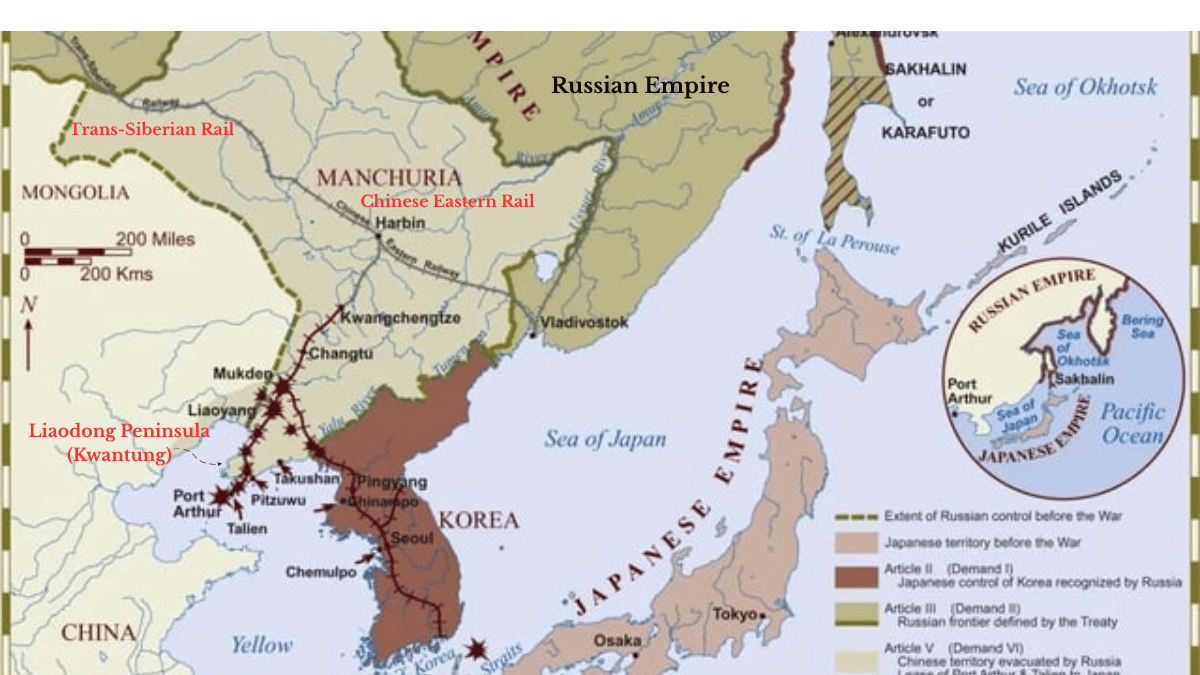
As Japan worked to transition politically, financially and culturally, the 1920s – despite its problems – was one of peace and slowly improving conditions. But there was a different sense within the Imperial Japanese Army (IJA). There were three overseas military commitments in this decade. The first was the intervention in the Russian civil war, which in effect ended in October 1922 when Japanese forces finally withdrew from Soviet mainland territory. The second was a deepening Japanese army involvement in China’s civil wars, most notably after 1926. The third, directly related to the second, was IJA operations inside Manchuria.
Notably, during IJA involvement in China’s civil war and Manchuria, the Japanese military was without guidance from Tokyo and as such set their own rules of engagement, as they decided which side to back in which province or area, and to do so without reference or consultation with Tokyo. The habit, once acquired, was never broken.
In 1924, the Prime Minister reduced the size of the IJA, involuntarily moving officers and senior enlisted personnel into retirement or simply discharged from the military. But for their loyal service many were directed into the state education administration in positions of supervision for a newly introduced scheme of compulsory military training for children. This was especially true outside urban areas and resulted in an imposition of military values on far less well educated children with little job prospects. When we arrived in the 1930s these youths found opportunity in military service as the IJA was expanded – and the veteran’s association became a powerful political voice in the nation..
By the time we reached the 1930s, the IJA had developed a culture of insubordination within the army. The most notable trait was gekokujo, the manipulation of senior officers by their subordinates. Among the most radical/nationalistic members of the IGA this led to the phenomenon of “government by assassination” as cabals of junior officers (colonel and below) assassinated civil leadership leading to the setbacks of nascent parliamentary democracy. Although the Japanese Constitution was amended in 1936 to mandate that four of the six key cabinet positions be occupied by active duty military personnel. By the late 1920s and early 1930s it was a practice politically necessary to form governments under the Prime Minister. The Meiji era civilian control of the military was eroding and beginning to exist in name only. Increasingly the real power belonged to the IJA and IJN.
The Rise of Nationalism
The 1930s saw a marked rise in nationalism within Japan. It is a complex topic whose details are too complex for this series particularly to attempt to explain in terms of cause and effect. But there are “snapshots” that mark the changes.
Prior to 1933 Japanese schoolbooks made reference to non-Japanese western historical figures associated with democratic movements in history, e.g. Washington and Lincoln. After 1933 virtually all western society references were removed. Key figures were replaced by Japanese national heroes. If there were mention of westerners, they tended to be famous military leaders such as Admiral Nelson or Napoleon Bonaparte. Overall the tone of the school curriculum became increasingly nationalistic and strident.
By 1936 the books that taught children to read were no longer based on nature and the richness of Japanese animal life. In their place came topics of the Emperor, soldiers, duty, loyalty to the nation and service/sacrifice. Even cartoon strips were not immune. The Japanese equivalent of Felix the Cat, a dog named Norakuro, joined a regiment of dogs in the army because in the country of the Sheep (Manchuria), the latter had been obliged, because of the aggressiveness of the Pigs (the Chinese), to call in the Dogs (the Japanese), which had chased out the Pigs and created a haven for the Sheep and the Goats (the Mongolians). And in the future the Dogs would have to stand guard because the Pigs had tried to enlist the support of the Bears. Significant? Make of what you will, but it and many other examples begin to paint a picture. Clearly something was afoot that made for a fundamental change of attitudes within Japanese society.
One example can be seen in the expected behaviors of soldiers. Thousands of Japanese soldiers taken prisoner during the Russo-Japanese war of 1904–05 when they were repatriated were seen as heroes and honored. Almost three decades later, in the course of the fighting at Shanghai in January 1932, the Chinese took prisoner a severely wounded and unconscious Japanese officer. He recovered and was exchanged, but he killed himself because of the dishonor he felt for having been made a prisoner. Only after his suicide did the national praise him because he had embraced real Japanese values. In the same conflict three soldiers blew themselves up during the fighting at Shanghai to provide a key action in the battle. They were afforded a degree of national veneration because they had embraced the honorable value of self-sacrifice. It was never determined if the action was accidental or intentional in fact, but it was clear how it was promoted.
Change was afoot across Japanese society.
What were the root causes? While arguable – and scholars all have different takes on the question – a short list of “what” generally includes:
- The Great Depression’s economic devastation, the perceived failures of democracy, a rising belief in Japanese racial superiority, and military leaders’ desire for expansion to secure resources and power. These are some of the factors that led to a surge in ultranationalism, militarism, and imperialist ambitions that challenged both Western influence and Japanese civilian government.
- The economic crises associated with the Great Depression. As elsewhere, following the 1927 banking crisis, the 1929 stock market crash devastated Japan’s export-dependent economy, causing widespread poverty, especially in rural areas, making radical, immediate solutions attractive.
- Civilian governments struggled to handle the economic collapse, leading many to view democracy as weak and ineffective, paving the way for authoritarianism. It must be remembered that the Shogunate period and the local authoritarian leaders were only a few decades past. There was a romanticizing of the “good years” when leaders were strong.
- The military, particularly the army, presented itself as the solution, gaining influence through successful campaigns (like invading Manchuria in 1931) and advocating for expansion as a path to economic security and national strength.
From all this a virulent nationalism emerged. The idea – already and always present – was promoted that the Japanese people were racially superior and divinely destined to lead Asia, with emperors as direct descendants of the Sun Goddess. In essentially one lifetime, national sentiment moved from the isolationist period of the Tokugawa Shogunate to a globalist vision of Japan’s destiny. Nationalists argued that imperialist expansion was necessary to overcome overpopulation and resource scarcity, providing Japan with economic security and a greater role on the world stage.
On the far right was the drum beat of the ultra-Nationalist Movements. They denounced democracy, big business, and Western influence, advocated a return to traditional values, loyalty to the Emperor, and warrior/samurai ethics. They were not restrained in the use of political violence and assassinations.
These are some of the factors combined to hollow out democratic institutions and shift Japan toward a militaristic, expansionist path by the mid-1930s, setting the stage for further aggression in Asia and another step to the broader Asia-Pacific War.
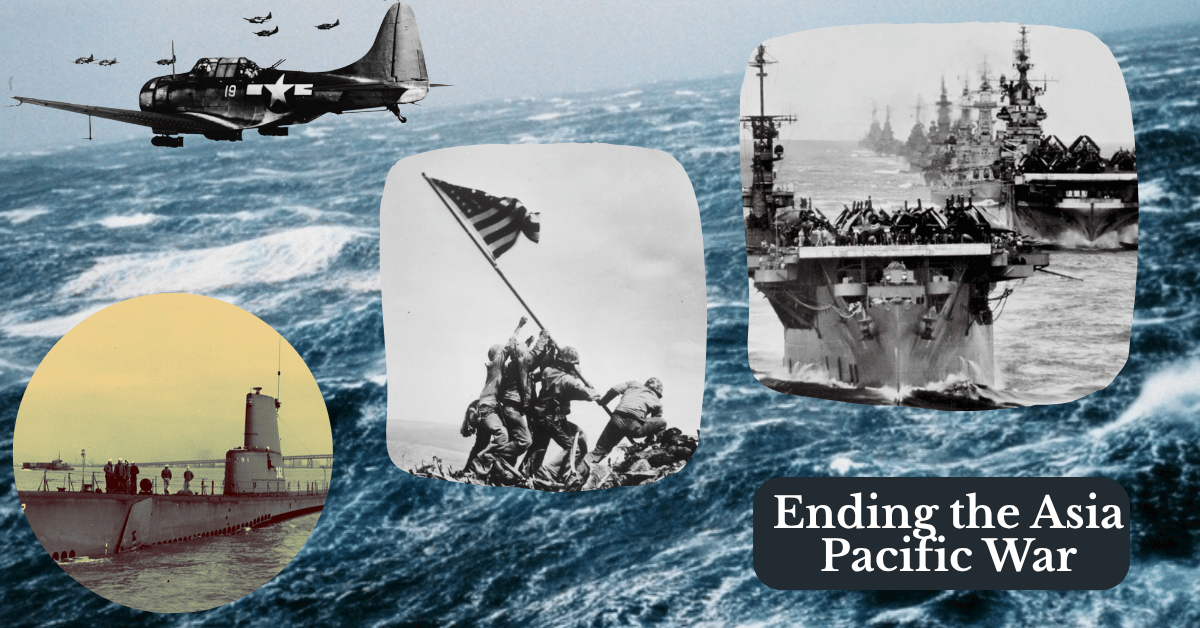
Image credit: various photographs from Naval Aviation Museum, National World War II Museum, and US Navy Archives. Source reference: Gathering Darkness: The Coming of War to the Far East and the Pacific, 1921-1941 by Haruo Tohmatsu and H.P. Willmott (War and Society Book 3)
 friarmusings