God Is With Us: more context

English: Antiphon of Advent Français : Antienn...


Matthew 1:18-24. 18 Now this is how the birth of Jesus Christ came about. When his mother Mary was betrothed to Joseph, but before they lived together, she was found with child through the holy Spirit. 19 Joseph her husband, since he was a righteous man,  yet unwilling to expose her to shame, decided to divorce her quietly. 20 Such was his intention when, behold, the angel of the Lord appeared to him in a dream and said, “Joseph, son of David, do not be afraid to take Mary your wife into your home. For it is through the holy Spirit that this child has been conceived in her. 21 She will bear a son and you are to name him Jesus,  because he will save his people from their sins.” 22 All this took place to fulfill what the Lord had said through the prophet: 23 “Behold, the virgin shall be with child and bear a son, and they shall name him Emmanuel,” which means “God is with us.” 24 When Joseph awoke, he did as the angel of the Lord had commanded him and took his wife into his home. 25 He had no relations with her until she bore a son,  and he named him Jesus.


An Old Testament Context. A key element of the biblical context is Matthew’s use of Isaiah 7:14 in v.23 of the gospel. In the Christian understanding we are called to see the prophesy given centuries before to Isaiah now come to messianic fulfillment in Jesus. The first reading for this Advent Sunday, Isaiah 7:10-14, contains the kernel of the Matthean reference: The LORD spoke to Ahaz, saying: Ask for a sign from the LORD, your God (Is 7:10) Continue reading

God Is With Us: a context

English: Antiphon of Advent Français : Antienn...

Matthew 1:18-24. 18 Now this is how the birth of Jesus Christ came about. When his mother Mary was betrothed to Joseph, but before they lived together, she was found with child through the holy Spirit. 19 Joseph her husband, since he was a righteous man,  yet unwilling to expose her to shame, decided to divorce her quietly. 20 Such was his intention when, behold, the angel of the Lord appeared to him in a dream and said, “Joseph, son of David, do not be afraid to take Mary your wife into your home. For it is through the holy Spirit that this child has been conceived in her. 21 She will bear a son and you are to name him Jesus,  because he will save his people from their sins.” 22 All this took place to fulfill what the Lord had said through the prophet: 23 “Behold, the virgin shall be with child and bear a son, and they shall name him Emmanuel,” which means “God is with us.” 24 When Joseph awoke, he did as the angel of the Lord had commanded him and took his wife into his home. 25 He had no relations with her until she bore a son,  and he named him Jesus.

Context. Our gospel is the traditional reading for the 4th Sunday of Advent (year A) and thus, in addition to its biblical context, this reading also carries a seasonal meaning.

A Seasonal Context. The Fourth Sunday of Advent always tells part of the story that just precedes the birth of Christ. These familiar episodes set the stage for one of the Bible’s best-known passages, the story of Christmas. This reading, as well as the gospels for the 4th Sunday in Advent in the other years, aligns well with the readings of the seven days of Advent that immediately precede Christmas.  Not only do the readings for the daily Masses just before Christmas include the beginnings of the Gospel infancy narratives (Matthew 1 on Dec. 17-18; Luke 1 on Dec. 19-24), but we again get to hear the traditional “O Antiphons,” at Mass. Continue reading

Where is the Joy?

counting joy

It is Gaudete Sunday. The name comes from wording in Philippians 4:4 – Rejoice in the Lord always. I shall say it again: rejoice! While there is evident joy in the first readings and the Psalm, and a call for patience in the second reading, the gospel is not one that I would immediately connect with joy.  It seems to me this is a Sunday whose very name asks us, “What gives you joy?  What is the source of joy in your life?”  A good question. Continue reading

For Whom Are You Looking: a final thougth

Matthew 11:2-11. 2 When John heard in prison of the works of the Messiah, he sent his disciples to him 3 with this question, “Are you the one who is to come, or should we look for another?” 4 Jesus said to them in reply, “Go and tell John what you hear and see: 5 the blind regain their sight, the lame walk, lepers are cleansed, the deaf hear, the dead are raised, and the poor have the good news proclaimed to them. 6 And blessed is the one who takes no offense at me.” 7 As they were going off, Jesus began to speak to the crowds about John, “What did you go out to the desert to see? A reed swayed by the wind? 8 Then what did you go out to see? Someone dressed in fine clothing? Those who wear fine clothing are in royal palaces. 9 Then why did you go out? To see a prophet? Yes, I tell you, and more than a prophet. 10 This is the one about whom it is written: ‘Behold, I am sending my messenger ahead of you; he will prepare your way before you.’ 11 Amen, I say to you, among those born of women there has been none greater than John the Baptist; yet the least in the kingdom of heaven is greater than he..

Some Final Thoughts. Within the narrative of Matthew, John the Baptists helps establish the identity of Jesus – something especially key during the Advent Season. “Whose birth are we preparing for, anyway?”  And this is as important a question for us in our day as it was in the life and time of John the Baptist. Continue reading

For Whom Are You Looking: the herald

Jesus meets John the Baptist


The Third Sunday of Advent


Matthew 11:2-11. 2 When John heard in prison of the works of the Messiah, he sent his disciples to him 3 with this question, “Are you the one who is to come, or should we look for another?” 4 Jesus said to them in reply, “Go and tell John what you hear and see: 5 the blind regain their sight, the lame walk, lepers are cleansed, the deaf hear, the dead are raised, and the poor have the good news proclaimed to them. 6 And blessed is the one who takes no offense at me.” 7 As they were going off, Jesus began to speak to the crowds about John, “What did you go out to the desert to see? A reed swayed by the wind? 8 Then what did you go out to see? Someone dressed in fine clothing? Those who wear fine clothing are in royal palaces. 9 Then why did you go out? To see a prophet? Yes, I tell you, and more than a prophet. 10 This is the one about whom it is written: ‘Behold, I am sending my messenger ahead of you; he will prepare your way before you.’ 11 Amen, I say to you, among those born of women there has been none greater than John the Baptist; yet the least in the kingdom of heaven is greater than he.


Jesus’ View of John. John’s preaching had created a sensation (see 3:5), and the movement into the wilderness had been a remarkable phenomenon. Jesus now examines its motives, to show the real significance of John. The series of three questions and answers suggests motives progressively closer to a true understanding of John. A reed shaken by the wind is a metaphor for a weak, pliable person; John was not such a person, and the implied answer is ‘Of course not’. It was John’s rugged independence which attracted a following. Nor was he dressed in fine clothing; far from it, as 3:4 shows. It was as a man conspicuously separate from the royal palace that attracted them. (There may be an ironical reference to his present residence in a ‘royal palace’—as a prisoner of conscience in Herod’s fortress) His rough clothing in fact points to his real role, as a prophet (see 3:4), and the crowds would gladly have accepted this description of John. But even that is not enough. Continue reading

For Whom Are You Looking: tell what you see and hear

Icon of Jesus Christ from the Cathedral of Hag...


The Third Sunday of Advent


Matthew 11:2-11. 2 When John heard in prison of the works of the Messiah, he sent his disciples to him 3 with this question, “Are you the one who is to come, or should we look for another?” 4 Jesus said to them in reply, “Go and tell John what you hear and see: 5 the blind regain their sight, the lame walk, lepers are cleansed, the deaf hear, the dead are raised, and the poor have the good news proclaimed to them. 6 And blessed is the one who takes no offense at me.” 7 As they were going off, Jesus began to speak to the crowds about John, “What did you go out to the desert to see? A reed swayed by the wind? 8 Then what did you go out to see? Someone dressed in fine clothing? Those who wear fine clothing are in royal palaces. 9 Then why did you go out? To see a prophet? Yes, I tell you, and more than a prophet. 10 This is the one about whom it is written: ‘Behold, I am sending my messenger ahead of you; he will prepare your way before you.’ 11 Amen, I say to you, among those born of women there has been none greater than John the Baptist; yet the least in the kingdom of heaven is greater than he..


Commentary. The Baptist, whose proclamation introduced Matthew’s presentation of the Messiah (3:1–12), is now appropriately called as the first witness to the meaning of Jesus’ ministry. Yet John’s response is equivocal, positive but uncertain. Nonetheless his is a preparatory role for the true time of fulfillment. John remains the one who points forward, even if uncertain. Continue reading

For Whom Are You Looking: Context

Icon of Jesus Christ from the Cathedral of Hag...

The Third Sunday in Advent

Matthew 11:2-11. 2 When John heard in prison of the works of the Messiah, he sent his disciples to him 3 with this question, “Are you the one who is to come, or should we look for another?” 4 Jesus said to them in reply, “Go and tell John what you hear and see: 5 the blind regain their sight, the lame walk, lepers are cleansed, the deaf hear, the dead are raised, and the poor have the good news proclaimed to them. 6 And blessed is the one who takes no offense at me.” 7 As they were going off, Jesus began to speak to the crowds about John, “What did you go out to the desert to see? A reed swayed by the wind? 8 Then what did you go out to see? Someone dressed in fine clothing? Those who wear fine clothing are in royal palaces. 9 Then why did you go out? To see a prophet? Yes, I tell you, and more than a prophet. 10 This is the one about whom it is written: ‘Behold, I am sending my messenger ahead of you; he will prepare your way before you.’ 11 Amen, I say to you, among those born of women there has been none greater than John the Baptist; yet the least in the kingdom of heaven is greater than he.

Context. The “works of the Christ” (Mt 11:2), which have been set out in chapters 5–10, provoked different responses from different groups. These responses, most of which consist of misunderstanding if not outright rejection, are examined in chapters 11–12, and explained in the parables of chapter 13. Further examples of the response to Jesus will occur in chapters 14–16, until the true response is found in Peter’s confession in 16:13–20, which will bring the second main part of Matthew’s Gospel to its climax. This is the thread which runs through these chapters. Through them we are led from a view of Jesus as others saw him to the true confession of him as Messiah which eluded most of his contemporaries, conditioned as they were by erroneous or inadequate ideas of the Messiah. Continue reading

Advent Advice

advent_2ndWe gets lots of advice all through our lifetime. And it comes from many different venues. For example: advice on the best schools, places to live and vacation, and places to dine. If you buy a book on Amazon, they are quick to advise you on other books that you should purchase. We are constantly bombarded with fashion advice. I have to  admit I don’t pay too much attention these days to fashion advice. These days, my wardrobe consists of a basic brown Franciscan habit and minimal accessories – a knotted white cord to be precise. Continue reading

Holy Days That Move?

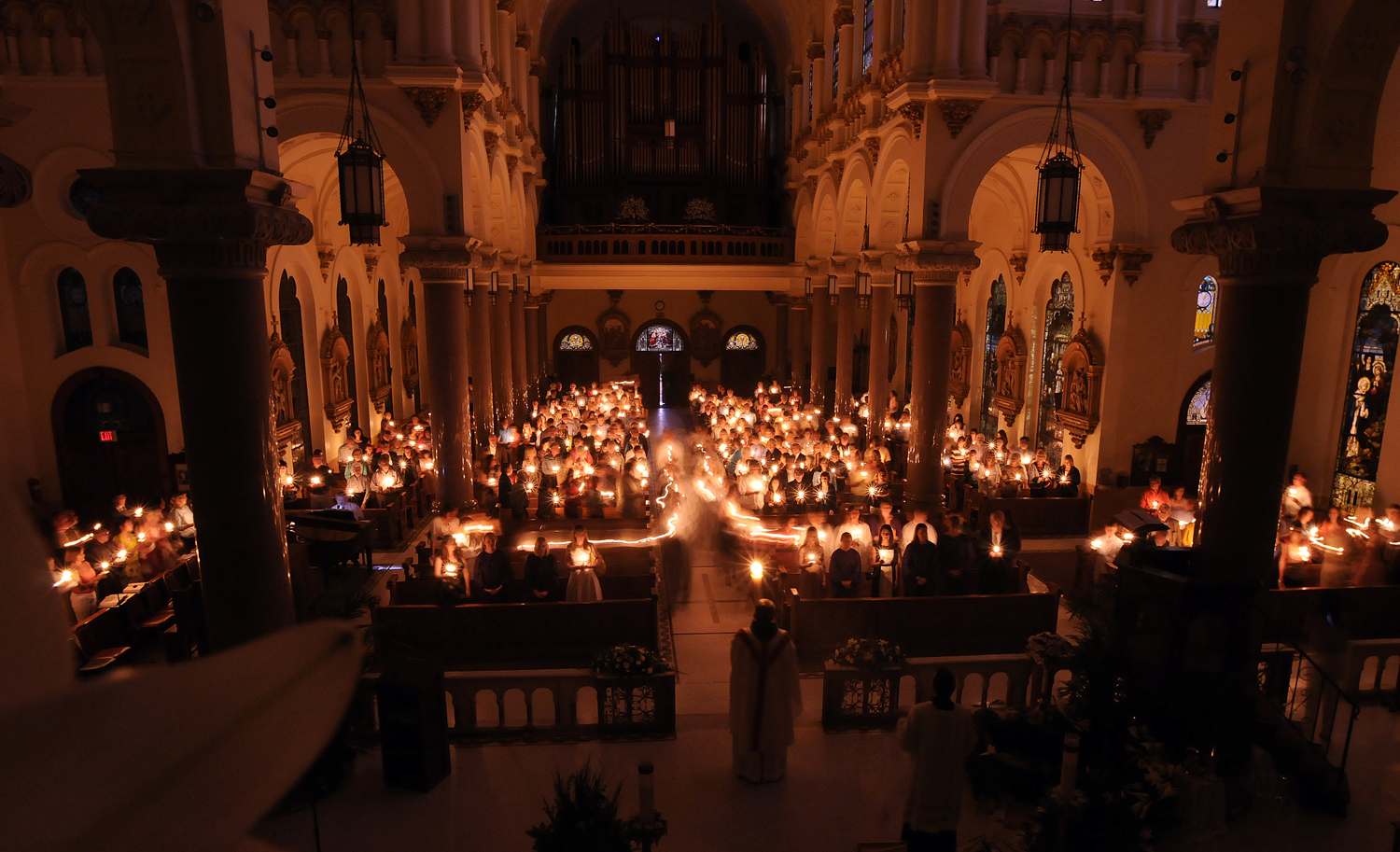
Easter Vigil at Sacred HeartThe Catholic Church draws attention to six days – apart from Sunday – when it calls the faithful to come together in praise, prayer, and Eucharist (thanksgiving) for God’s gifts of love to us.  These are the Holy Days. The six Holy Days are:

  • Solemnity of the Immaculate Conception (December 8th),
  • The Nativity of the Lord (Christmas),
  • Solemnity of Mary the Mother of God (January 1st),
  • Ascension of the Lord (the date moves with Easter),
  • Solemnity of the Assumption (August 15th), and
  • Solemnity of All Saints (November 1st).

Notice that Ash Wednesday is not on the list, even though it’s one of the busiest days of the year for most parishes. Continue reading