
 1 Then he told them a parable about the necessity for them to pray always without becoming weary. He said, 2 “There was a judge in a certain town who neither feared God nor respected any human being. 3 And a widow in that town used to come to him and say, ‘Render a just decision for me against my adversary.’ 4 For a long time the judge was unwilling, but eventually he thought, ‘While it is true that I neither fear God nor respect any human being, 5 because this widow keeps bothering me I shall deliver a just decision for her lest she finally come and strike me.’” 6 The Lord said, “Pay attention to what the dishonest judge says. 7 Will not God then secure the rights of his chosen ones who call out to him day and night? Will he be slow to answer them? 8 I tell you, he will see to it that justice is done for them speedily. But when the Son of Man comes, will he find faith on earth?” Continue reading
Pray without ceasing: context
Reply
 In the first reading, we hear the end of the story of Naaman, a Syrian general, who has just been cured of his leprosy. But we don’t get to hear the start of the story. It turns out that when Naaman comes to Israel he encounters the prophet Elisha. Naaman has come bearing all manner of riches and gifts, but Elisha wants none of it. He simply instructs Naaman to wash seven times in the Jordan. Pretty simple and ordinary, yes?
  I am often given to repeating St. Bonaventure’s wise council: humility is the guardian and gateway to all the other virtues…and the first evidence of it is gratitude. We can all have moments in which we are profoundly grateful, but are we grateful people? The first is a description of a moment in time, deeply remembered; the second is an intrinsic condition of who you are as a person. It is at the root of your being, it is the lens through which you see the world, and it is the mode by which you engage the world. Even as I write that last sentence, I am thinking, “Gosh, I want to be that person!”
 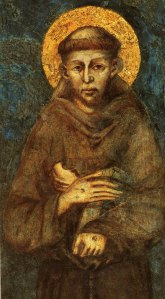 Happy Feast Day to all Franciscans and those Franciscan at heart!
 You have to feel for the disciples. In recent gospels Jesus has been asking some fairly extraordinary things of them – to give away their possessions, to forgive countless times, to take up his cross, and the list goes on. No wonder then, they ask for more faith. They don’t feel up to what is being asked of them, are anxious about the challenges ahead, and just can’t imagine accomplishing what is being asked of them.
 friarmusings