 21 Then Peter approaching asked him, “Lord, if my brother sins against me, how often must I forgive him? As many as seven times?”22 Jesus answered, “I say to you, not seven times but seventy-seven times.23 That is why the kingdom of heaven may be likened to a king who decided to settle accounts with his servants.24 When he began the accounting, a debtor was brought before him who owed him a huge amount.25 Since he had no way of paying it back, his master ordered him to be sold, along with his wife, his children, and all his property, in payment of the debt.26 At that, the servant fell down, did him homage, and said, ‘Be patient with me, and I will pay you back in full.’27 Moved with compassion the master of that servant let him go and forgave him the loan.28 When that servant had left, he found one of his fellow servants who owed him a much smaller amount. He seized him and started to choke him, demanding, ‘Pay back what you owe.’29 Falling to his knees, his fellow servant begged him, ‘Be patient with me, and I will pay you back.’30 But he refused. Instead, he had him put in prison until he paid back the debt.31 Now when his fellow servants saw what had happened, they were deeply disturbed, and went to their master and reported the whole affair.32 His master summoned him and said to him, ‘You wicked servant! I forgave you your entire debt because you begged me to.33 Should you not have had pity on your fellow servant, as I had pity on you?’34 Then in anger his master handed him over to the torturers until he should pay back the whole debt. 35 So will my heavenly Father do to you, unless each of you forgives his brother from his heart.” (Matthew 18:21–35) Continue reading →

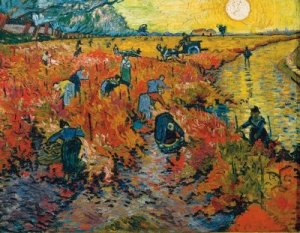 Caught in the Midst of Assumptions. It is interesting that it is the “manager” or “steward” (epitropos), not the owner, who calls the workers and “gives them their pay/reward” (misthos). They are the ones who dispense what the owner considers right and just. They are also the ones who take the flak from those who disagree. I think we can all relate to being the one thrust into the middle of something not necessarily of our own making. Continue reading
  An accelerated bulletin schedule due to Hurricane Irma, a deadline moved up, and busy about hurricane prep, left me without a fresh idea for this week’s pastor column. But some recent events made me recall this previous column which I again offer for your consideration.
  O Good and Loving God, you so loved the world you sent your only Son to live among us and to experience the fullness of humanity in all things except sin. As we wait for the approaching storm, we experience the full range of human emotion, sure and certain, that Jesus our Savior knows our anxiety, our fear, and our trepidations. And so we pray:
 friarmusings