 Wedding and Wine Imagery in Scripture. The image of a gamos = “wedding [banquet]” is used in synoptic gospel parables, as Stoffregen points out:
- “The kingdom of heaven may be compared to a king who gave a wedding banquet for his son” (Mt 22:2-12)
- The kingdom of heaven will be like this….while the ten maidens went to buy more oil, the bridegroom came, and those who were ready went with him into the wedding banquet; and the door was shut (Mt 25:10)
- “be like those who are waiting for their master to return from the wedding banquet” (Lk 12:36)
- “When you are invited by someone to a wedding banquet,… (Lk 14:8).
- In Revelation we have the image of the “marriage [supper]” of the Lamb (19:7, 9).
Also from Stoffregen,
“Wine was very important. It was the normal beverage at meals — and especially at festivals. Wine was a symbol of joy. One ancient rabbi stated, ‘Without wine there is no joy.’ At the same time, drunkenness was a great disgrace throughout scriptures. I don’t believe that Jesus intended all the guests to drink up all the wine that night. There was enough wine to satisfy a large number of guests throughout the rest of the wedding feast week.”
“Although the Greek word oinos is not used in any of the eucharist accounts — they all use ‘cup’ and the synoptics also use the phrase ‘fruit of the vine’ — the Cana miracle and the multiplication of the loaves early in church history became symbols for the bread and wine of the eucharist.”
“In the OT, an abundance of good wine is an eschatological symbol, a sign of the joyous arrival of God’s new age: On this mountain the LORD of hosts will make for all peoples a feast of rich food, a feast of well-aged wines, (Is 25:6a); The mountains shall drip sweet wine, and all the hills shall flow with it (Amos 9:13cd); In that day the mountains shall drip sweet wine, the hills shall flow with milk (Joel 3:18a)”
Minimizing miracles. In many 20th century commentaries, I am always surprised by the tendency among some scripture scholars to seek to explain away the miraculous. More than one (but thankfully not a lot) offers that Jesus, realizing people were well inebriated already, simply ordered the jar filled with water, and then the water taken to the master of the banquet who enters into the merriment while not wanting to embarrass the bridegroom, proclaims this wine to be the best. The bridegroom becomes a silent conspirator as the word spreads – and thus the miracle is born of rumor. Another avenue by which the miraculous is minimized is the suggestion that John adapted an Ancient Near East (ANE) legend. Similarly, several German scholars adopted the position that John had juxtaposed the Cana account with rites associated with the Greek god Dionysos. Gail O’Day [539] writes:
“The central act in the story of the wedding at Cana is the miraculous transformation of water into wine. The contemporary reader, living in a rational, scientifically oriented age, may find this miracle puzzling at best, embarrassing and offensive at worst. Interpreters, therefore, often are tempted to talk around the miracle by focusing on other aspects of the text or to explain away the miracle by focusing on the differences between the biblical worldview and the modern worldview. In preaching this text, however, the preacher should not get caught up in an explanation or apology (just as the preacher should never succumb to the temptation to explain the resurrection). The essence of any miracle is that it shatters conventional explanations and expectations, and this miracle is no exception. It is incumbent upon the preacher not to diminish the extraordinariness of this story in any way. The christological revelation of this story must not be reduced to a discussion about the facticity of the miracle. Contemporary hearers of this story must be allowed to struggle with what this miracle says about Jesus.”

 1:1 Since many have undertaken to compile a narrative of the events that have been fulfilled among us, 2 just as those who were eyewitnesses from the beginning and ministers of the word have handed them down to us, 3 I too have decided, after investigating everything accurately anew, to write it down in an orderly sequence for you, most excellent Theophilus, 4 so that you may realize the certainty of the teachings you have received.
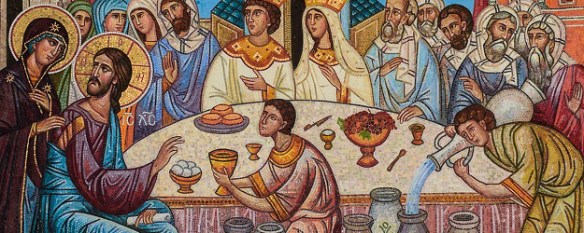 “They have no wine.” It is a simple line spoken by Mary to her son, Jesus. Spoken among the music, the dancing, the celebration, the servants working hard to hide their panic, and wedding guest having no idea that this celebration teeters on the edge of disaster. A simple line spoken in the midst of an account that St. John the gospel writer has filled with so much theological richness.
  Very soon you will receive a mailing from the Diocese regarding the 2019 Annual Pastoral Appeal (APA). It contains a letter from our Bishop, some materials describing the ways in which your annual contribution is needed to support diocesan programs, and of course, the contribution card with a return envelope. It is one means by which the diocese and parish raises funds to support the parish’s payment of general administrative costs and programs operated by the diocese in our name and on our behalf. It is a needed and worthwhile endeavor.
  “In times past, God spoke in partial and various ways to our ancestors through the prophets; in these last days, he spoke to us through the Son” (Hebrew 1)
 This past Saturday morning our children’s sacramental preparation program held a morning retreat for our kids making their first Reconciliation. A part of the morning is called “Friar Time” in which the kids and their parents have a 20-25 minute space of time with the pastor (that’s me…). We use the time to have a final chat about the sacrament and to put them at ease about the upcoming celebration.
 friarmusings