
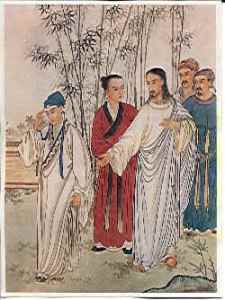
 “The young man said to him, ‘All of these I have observed. What do I still lack?’ Jesus said to him, ‘If you wish to be perfect, go, sell what you have and give to [the] poor, and you will have treasure in heaven. Then come, follow me.’” (Mt 19:20-21)
I would offer that the word “perfect” in the text from today’s gospel is not the best choice for translation for the underlying Greek word teleios – because of the way we understand the word in English. In Classic Greek and in Scripture the word can indeed mean perfect as, without fault, – but those uses are, by in large, references to sacrificial offerings indicated by religious worship. Outside of those cultic uses, the word means to be complete, whole, developed or adult – and generally points to a future time. One might say it looks forward to a time when maturation is complete. In other words, it has a future reference implied in the word itself. Continue reading
 I have two words for you this morning: “thermometer” and “thermostat.” Regular, routine, and household words we rarely give a second thought to: “thermometer” and “thermostat.”
 I never thought about becoming a pastor. As many of you know, I entered the Franciscans as a “delayed” vocation. That’s a nice way of saying I wasn’t in my 20’s any longer. But generally, “delayed” means someone in their 30’s. Fr. Tim Corcoran, the pastor at St. Mary’s in Lutz, a long-time parishioner at Sacred Heart, was already retired as a Federal judge when he entered the seminary. Does that make him, “double-delayed?” I fall in between, received into the Franciscans at the ripe old age of 48 – maybe “delayed plus”? Like Fr. Tim, I entered having discerned that my Time and Talent was meant to be given as a priest, serving the Church and the people of God. It was a decision about Stewardship, which in simple terms, is the act of putting God’s priorities before our own. Good Stewards do four things…
  Have you heard the phrase, “Don’t be a thermometer, be a thermostat”? A thermometer reads the temperature of the room and responds to it. A thermostat sets the temperature.
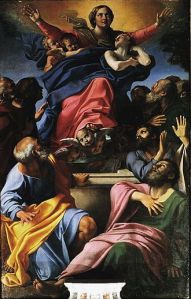 The Assumption was defined as dogma only in the 1950. In our Catholic Church ‘dogma” is defined as a truth revealed by God, which the magisterium of the Church declared as binding upon all Catholics. The term Dogma Catholicum was first used by Vincent of Lérins (450), referring to “what all, everywhere and always believed” – with the emphasis on katholica meaning universal. The term dogma derived from the Greek dogma (δόγμα) meaning literally “that which one thinks is true” and the verb dokein, “to seem good.”
 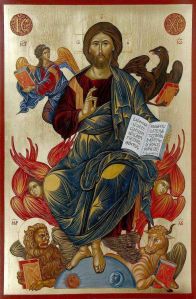 This coming Sunday marks our journey in Ordinary Time, the
 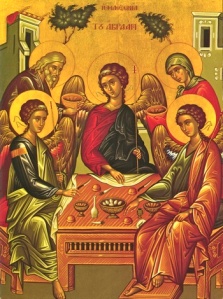 The story of Abraham and Sarah is a story that should begin, “Against all odds….” It is a pretty amazing story of perseverance, endurance, and life lived for a mission greater than one’s self. Abraham and Sarah persevered and endured the long journey from modern-day Iraq to Israel on to Egypt and back to Israel. Even as the reached their older years, they continued to hope for a child of their own. They believed in the Lord’s promises even when his timeline was a whole longer than their timelines. They bore the hopes and expectations of all the people they led. Certainly, they lived out St. Paul’s message from 1 Cor 13:7 “[Love] bears all things, believes all things, hopes all things, endures all things. Love never fails.”
  One of the many times and places that parish priests are called upon includes the hospital. For the friars at Sacred Heart here in Tampa that includes Tampa General Hospital (TGH) a regional trauma center with multiple ICU specialties.Someone asked me how many times I have been called up to celebrate the Sacrament of the Sick (Annointing) or “Last Rites.” My answer was “too many;” I long ago lost count.
  This coming Sunday marks our journey in Ordinary Time, the
  friarmusings