As you know (…or don’t know), September 19th is “Talk Like a Pirate Day.” A day largely consisting of talking like a pirate throughout the course of the day. To that end, this particular post is offering you a short lesson in the key phrases and their etymology – all to better prepare you for the celebration….arrgh! Continue reading →
A reader mentioned that they were surprised that as a former naval officer I had not offered more coverage on the operations of the US Navy during the War in the Pacific. While it was perhaps inevitable given my goals for this series, nonetheless let me recount some of the major fleet actions and operations from Pearl Harbor until late 1944. Fair warning: it is a longer than average post.
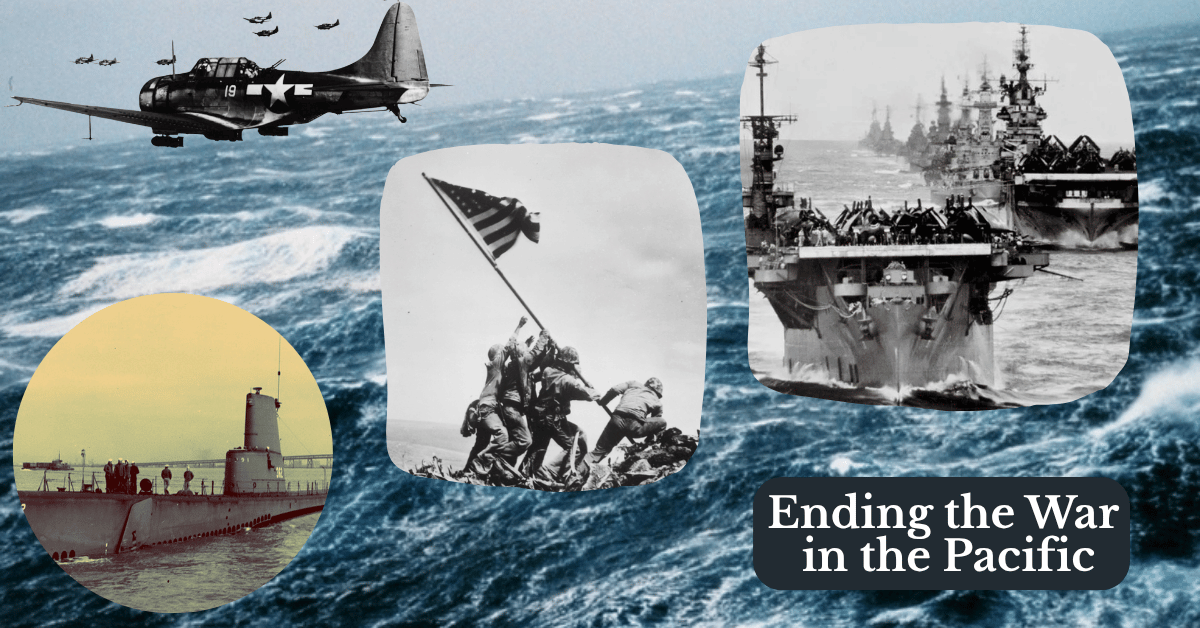
It is important to remember that the first 12 months of the war in the Pacific was focused on stopping the advancing Japanese forces in the Southwest Pacific – especially stopping them from cutting off Australia and New Zealand from communications and supply lines to the US Pacific Forces. This led to a series of major naval battles in 1942 and 1943 miles away from Tokyo and from Pearl Harbor. Battles that were extremely critical to the war effort, yet unless you are interested in naval history, they are battles that are likely unknown to you. They were either surface-v-surface action and on several occasions aircraft carrier-v-carrier battles. Some of the key engagements are listed below.
Battle of the Coral Sea (May 4-8, 1942): The first naval battle fought almost entirely by aircraft carriers, the Battle of the Coral Sea checked a major Japanese offensive towards Australia/New Zealand, specifically an invasion of Port Morsby. The naval battle was fought in an area south east of New Guinea and south of the Solomon Islands. Because of the battle, the invasion convoy turned back, and the operation was cancelled. This was the first major Japanese offensive in the Pacific to be stopped. But it came at the cost of the fleet carrier USS Lexington and a fleet oil tanker – two assets we could ill afford to lose at that point in the war. The Japanese lost one aircraft carrier with a second one heavily damaged. Both of these carriers were expected to be part of the Battle of Midway. Their presence may well have changed the result of that engagement.
The gospel for this coming Sunday is from Luke 16 and begins: “A rich man had a steward who was reported to him for squandering his property.” Swirling in the milieu of our readings are themes of riches, reversals, and hospitality. Chapter 16 of Luke forms an interesting literary grouping. The chapter begins with a parable (the dishonest steward) and ends with a parable (Lazarus and the rich man). Each parable begins with “There was a rich man…” Between the two parables is the identification of the audience, “the Pharisees, who loved money…” It’s easy to lose the manner in which Jesus has been warning against the lure of possessions:
renouncing the greed of the Pharisees and the challenge to give alms (11:39-41),
the rich fool who forfeited his soul for wealth (12:13-21),
the prudent servant who was praised (12:42-48),
the warnings of chapter 12 on how to prepare for the final accounting,
the outcasts called to the great banquet (14:15-42),
giving up all one’s possessions to be a disciple of Jesus (14:33),

 friarmusings