In today’s first reading, St. Paul gives us one of the most quoted lines in all of Scripture today: “The love of money is the root of all evils.” It’s important to notice that he does not say money itself is evil. Money is a tool, something necessary for daily life; life is too complex for a barter system.
At the beginning of this passage, the author warns against those who treat religion as a way of personal gain—using faith to acquire status, comfort, or wealth. For the most part, in our parishes and communities, this is not where most of us fall. Few people come to Mass in hopes of making money. Most are here out of love for God, a desire for prayer, and the need for grace.
But then we go out into the world and go to work … if we are not able to earn it the old fashioned way: inherit it … or win the Powerball lottery.
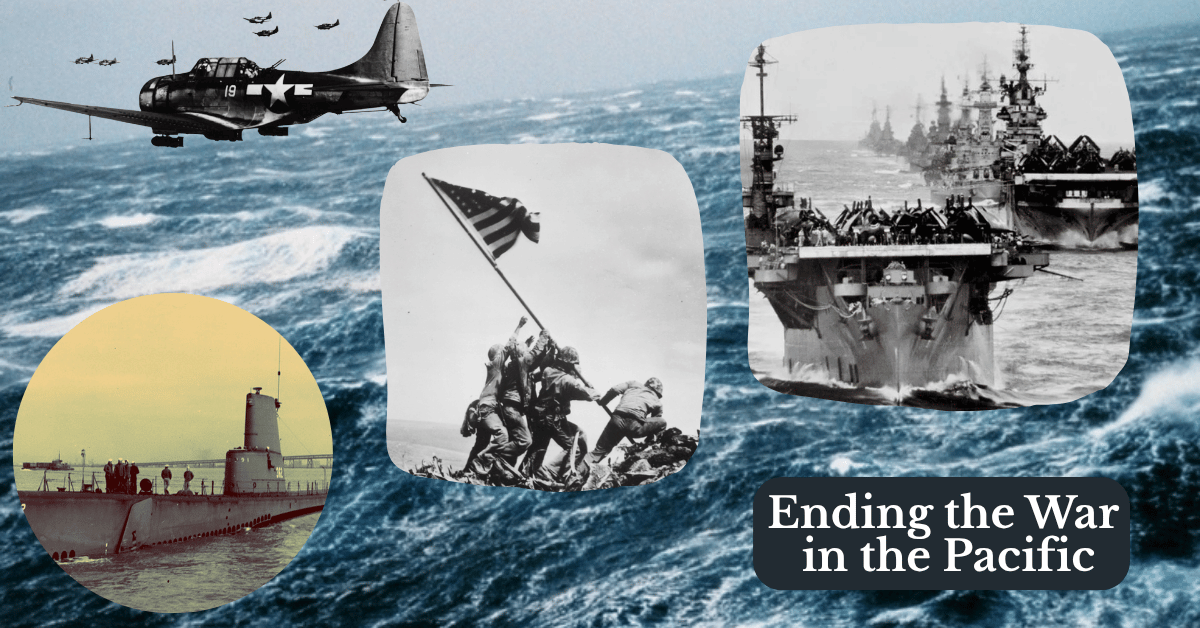
The vast number of islands that were invaded/recaptured by the Allied forces were not highly occupied by civilian populations. Iwo Jima had virtually no inhabitants. Very different experiences were encountered on Saipan, in the Philippines, and on especially on Okinawa whose pre-invasion civilian population was estimated at 300,000 people. Okinawans were Japanese citizens, at least in law.
After the 1879 annexation of the Ryukyu Kingdom, Okinawa was made a prefecture of Japan. By the time of the Allied landings, Okinawans were Japanese citizens in law: subject to conscription, taxation, and wartime mobilization like all other Japanese. Their cultural and social status was something different. The longer and deeper roots of Okinawa were Chinese in custom and perspective and as a result, Okinawans were often regarded by mainland Japanese as a peripheral or inferior people, with distinct language, customs, and history. The Okinawan (Ryukyuan) language was suppressed in schools in favor of standard Japanese. Children caught speaking Okinawan dialects were sometimes punished. Mainland Japanese officials and soldiers stationed in Okinawa frequently treated locals as less disciplined, less loyal, or “not quite Japanese.”
Prior to 1944, Okinawans could join the Japanese military but were rarely assigned to combat ranks, most often serving in labor units, auxiliary roles, or support services. After the fall of Saipan in July 1944, Japan recognized that Okinawa was likely to be the next U.S. target. At that point the 32nd Japanese Army was stationed on Okinawa, and the Japanese authorities began mass mobilization of the Okinawan population. The mobilization had three primary elements:
In yesterday’s post we looked at four interpretations offered by Brian Stoffregen who surveyed the scholarly works and offers several models of interpretation for this notoriously difficult parable: The Dishonest Steward
5. The parable can be about the right and wrong use of money. If the steward or the master were charging a high rate of interest, money may have been the most important thing in their lives. Jesus says to make friends with your money — use it rightly. Use it for human services. The steward gains friends by sharing his profits and helping out the poor debtors. He is our example. Our profits should be used in the service of love — helping to ease the plight of the poor. Otherwise, they can compete with God for our allegiance. This understanding anticipates the parable (Lazarus and the Rich Man) which ends the chapter.

 friarmusings