Without Superpower but with Purpose

In today’s Gospel, Jesus sends out the Twelve with power and authority to cast out demons, to cure diseases, and to proclaim the Kingdom of God. It’s a dramatic moment. They are given extraordinary gifts and a clear mission. But what about us? Most of us are not sent with power over demons. We are not miracle workers. We are not itinerant preachers going from village to village. So how does this Gospel speak to us?

While the form of our mission in the world may differ, the heart of the mission remains the same. Jesus sends the Twelve to do two basic things: proclaim the Kingdom and heal the broken. And that remains our mission in our time and place.

Continue reading

Allied Firebombing

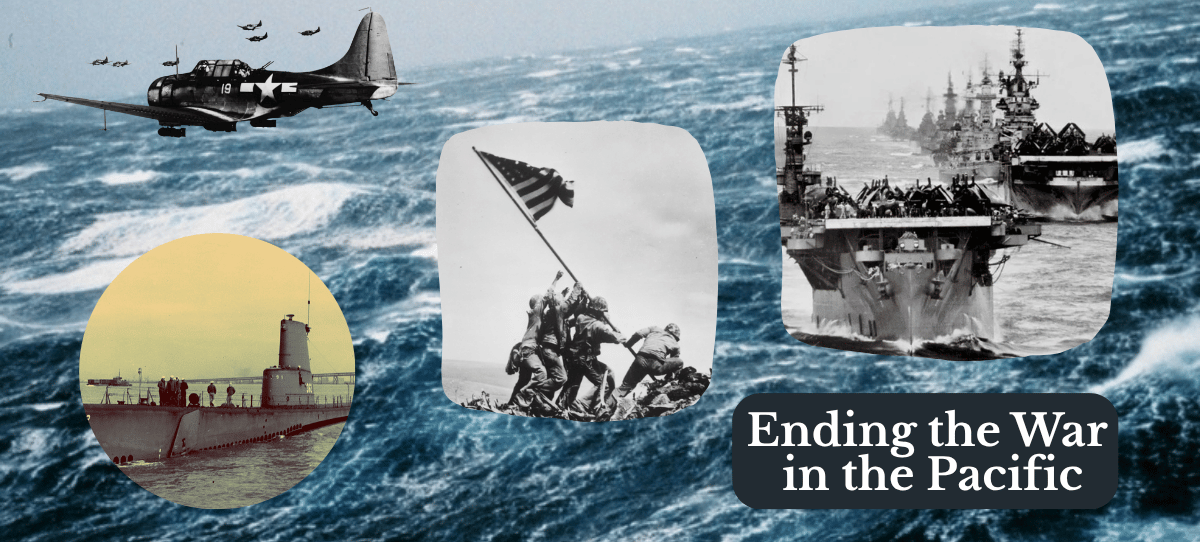
The capture of the Saipan  and Tinian (July 1944) gave the allies air bases for the B-29 Super Fortress bombers.  The home islands of Japan were within range and the Allies were now able to initiate sustained bombing of Japan without risking aircraft carriers which would have operated within range of Japanese counter attacks. The B-29 raids began on November 24, 1944. Tokyo was the first target. It consisted of 111 B-29s striking the Musashino aircraft engine plant on the outskirts of Tokyo. The raid was executed as a high-altitude precision raid (but with little effect). As noted in a previous post, the Allies faced major challenges over Japan: high-altitude jet stream winds disrupted bombing accuracy; weather conditions, especially cloud cover, reduced visibility. 

The bombing campaign was focused on Japanese cities. The goal was to destroy key industrial and military targets such as aircraft factories, shipyards, and transportation hubs. The strategy was modeled on the efforts against Nazi Germany which concentrated production in large factory settings.  Japanese industry was decentralized, with small workshops spread throughout urban residential areas. These workshops were as small as home-based, then feeding large operations, still in residential areas, again working up the supply chains to large operations, often located on the edge of residential areas. While there were critical war production located apart from residential areas, e.g. shipyards, other production (ammunition, airplane assembly, weapons, etc) took place in the labyrinth of major city residential areas.

Continue reading

Act 2 – The Rich Become Poor and the Poor Become Rich

This coming Sunday we continue in the Gospel of Luke with Jesus’ parable of the Rich Man and Poor Lazarus. We are describing the parable as a drama told in three acts. This is Act 2. The Act is briefly told and simply describes the fate of our two characters. “When the poor man died, he was carried away by angels to the bosom of Abraham. The rich man also died and was buried, 23 and from the netherworld, where he was in torment…” (vv.22-23a). We are not told how Lazarus died. Was it starvation? Again we are reminded of Jesus’ admonition to the Pharisees. “Then he said to the host who invited him, “When you hold a lunch or a dinner, do not invite your friends or your brothers or your relatives or your wealthy neighbors, in case they may invite you back and you have repayment. Rather, when you hold a banquet, invite the poor, the crippled, the lame, the blind; blessed indeed will you be because of their inability to repay you. For you will be repaid at the resurrection of the righteous.” (14:12-14).  Was it exposure and hypothermia while the rich man slept nearby? Infected sores while the rich enjoyed baths and healing ointments? Perhaps weakened and unable to defend himself, the dogs took his life.

However his life ends, Lazarus is taken by the angels to the bosom of Abraham. Nothing is said of a burial which brings to mind the bodily translations of Enoch (Gen 5:24), Elijah (2 Kings 2:11) and Moses (Jewish legends) to their eternal rewards. Neglected by others, Lazarus is prized in the sight of God.

The rich man also died – again we are left to speculate by what cause – but notably, he is buried, perhaps “thrown” into his grave as was Lazarus at the gate. 


The Poor Lazarus at the Rich Man’s Door | James Tissot, 1886–1894 | Brooklyn Museum | PD-US

Let us go rejoicing

The year is 587 BC. The armies of Babylon have captured and destroyed the city of Jerusalem – including the Temple built by Solomon. The people are taken into the diaspora that will be known as the Babylonian Captivity. “By the rivers of Babylon, there we sat weeping when we remembered Zion…But how could we sing a song [of joy for] the LORD in a foreign land?” (Psalm 137)  There is no Temple, there is no rejoicing.

In yesterday’s first reading we read that King Cyrus of Persia has freed the Israelites from captivity in Babylon, allowing them to return to Jerusalem along with all the sacred items the Babylonians took from the Temple in Jerusalem some 40 years prior. The king’s instructions were to rebuild the Temple and worship God in their tradition.

Continue reading

Allied Bombing – The First Phase

There was an early phase of B-29 bombings on the Japanese home islands as part of Operation Matterhorn. These were planes launched from China. The airfields in China were highly vulnerable. Supplies and logistics had to be flown over the Himalaya Mountains. There were no accompanying fighter escorts. Targets were typically industrial or military facilities near western coastal cities (e.g., steel works, shipyards, aircraft plants). Damage was limited due to small bomb loads, long flight distances, and weather conditions. All in all, the raids were psychologically unsettling, but neither tactically or strategically valuable. 

That began to change in late November 1944.

Continue reading

A Drama in Three Acts

This coming Sunday we continue in the Gospel of Luke with Jesus’ parable of the Rich Man and Poor Lazarus. Culpepper well describes this parable as a drama in three acts (Luke, 316):

  • Act 1 – a tableau during which the characters are introduced and their way of life is described, but nothing happens
  • Act 2 – a reversal: the rich become poor and the poor become rich as each character has died and received their eternal reward
  • Act 3 – narration give way to dialogue, but between the rich man and Abraham, in three exchanges: about the finality of judgment, about the witness of Moses and the prophets, and about the blindness that prevents even the Resurrection from leading to conversion
Continue reading

Faith That Shines

No one who lights a lamp conceals it with a vessel or sets it under a bed; rather, he places it on a lampstand so that those who enter may see the light.” (Luke 8:16)

Jesus uses a simple image—a lamp—to teach a profound truth about discipleship. 

Think about the purpose of a lamp. Lamps are meant to shine, to give light. We can put them on timers or systems like Alexa.  You can set your family room lights to turn on 20 minutes before sunset. Why? Because we know that’s when the light is needed. That’s when the light can fulfill its purpose: brighten the darkness, illuminate, make clear the way to go, to be the beacon of hope like a lighthouse to a seafarer.

And so it is with our faith.

Continue reading

Before the Bombing – History and Context

Before we delve into the aerial bombing campaign, we should consider an event which was seared into the minds of Tokyo and Yokohama residents – an event which shaped emergency preparedness: the 1923 Tokyo earthquake, also known as the Great Kantō Earthquake (the Kantō plane is the broad area on Honshu island that encompasses some of the great cities of Japan)

The earthquake struck on September 1, 1923, at noon when people were cooking lunch. The ~8.0 magnitude earthquake caused extensive damage that was further exacerbated by widespread fires that swept across the wooden neighborhoods of Tokyo and Yokohama. Both cities were devastated as well as surrounding prefectures. The earthquake caused over 130 fires, some of which merged into firestorms. The most infamous was in the Hongō district, where around 38,000 people perished in an open space where they had taken refuge – heat and oxygen deprivation caused by the firestorm being principal causes.

Tokyo’s infrastructure—including roads, bridges, water supply, and railways—was either damaged or destroyed, crippling transportation and communication. Yokohama, then a major international port, was almost entirely flattened. An estimated 105,000–142,000 people were killed, with over 570,000 homes destroyed leaving more than a million people homeless. The event and its aftermath reshaped Japan’s approach to urban planning, emergency preparedness, and national resilience. 

Continue reading

Rich Men and Lovers of Money

This coming Sunday – the 26th Sunday, Year C – we continue in the Gospel of Luke with more of Jesus’ amazing parables. Recall that in successive weeks we have heard the parable of the Prodigal Son (15:11-32) followed by the story of the Dishonest Steward (16:1-13) – both stories featuring rich men and concern the handling of money (among other key topics). This week our reading again features a rich man but this time in contrast to the poor Lazarus (16:19-31).  The in-between verses, vv.14-18, begin with the phrase, “The Pharisees, who loved money.” Jesus describes these people as an “abomination” (bdelygma) before God (v.15). Johnson (Luke, Sacra Pagina, 255) writes about this word:

Its first and most obvious reference is to “idolatry” in the biblical tradition. But the term is also used in two other important connections in Torah, once in condemning financial misdealing (Dt 25:16), and once in condemning a divorced man cohabiting again with his former wife (Dt 24:4). Idolatry, money, and divorce are joined by the term bdelygma

Continue reading

The optimist in me

This story about the “dishonest steward” follows immediately after St. Luke’s telling of the Prodigal Son in which the young man wastes wealth and opportunity, but comes to his senses, returns home and is restored to the family. The dishonest steward is one who wastes his position and opportunity, comes to his senses and works to restore his future from his pending dismissal. Did Luke intentionally put these two stories back-to-back? Hard to know. I will tell you that the parable of the dishonest steward is one of the most debated parables among scripture scholars. So, if you are hoping that I will unravel the wisdom and mystery of this parable for you … well, that would be a long wait for a train don’t come. But I will give it a go. Continue reading