Using Wealth to Make Friends

The story begins when charges are brought to the rich man that the steward was squandering the rich man’s property.  Similar to the rich fool (12:17), the steward begins an internal dialogue: “What shall I do?” (See the “Note” on Luke 16:1 below) Clearly the steward does not like his options: I am not strong enough to dig and I am ashamed to beg” (v.3).  He thus concocts a plan to be welcomed into another rich man’s home once he has been dismissed from his current position. As the parable unfolds we see that the steward quickly decides and acts and goes about reducing an established debt owed to his current employers.  The first debtor owes 900 gallons of oil; the second owes a huge amount of grain. These are well beyond household quantities and reflect a commercial operation.

Since the steward is technically still the rich man’s agent, the rich man is bound and will not be able to reverse the steward’s actions without a loss of face with the debtors.  Meanwhile the steward will have acquired a debt of honor and gratitude that hopefully will ensure goodwill toward the steward in the future.

That is the “who” and “what” of the story.  The difficulties about the “why” begin to come to the fore when the parable continues: “And the master commended that dishonest steward for acting prudently” (v.8).  We’ll begin to explore that tomorrow – but in the meantime how many different interpretations of this parable can you imagine?


Parable of the Unjust Steward | A.N. Mironov | Wikimedia Commons | CC BY-SA 4.0

Cutty Sark

cutty_sark_1
cutty_sark

Today is International Talk Like a Pirate Day. In case you missed it, Sunday afternoon I posted a short vocabulary of pirate expressions to aid your celebration. Today we celebrate more things nautical. Not one of my usual post, but then again I am always fascinated by words – for example, the expressions “cutty sark.”  Many folks are familiar with that word because of the brand of whiskey. Others might know that the expression has an earlier origin – the whiskey’s name inspired by the legendary clipper ship “Cutty Sark”

But did you know, the name of the ship was inspired from an even older source?

Continue reading

The Battle of Manila

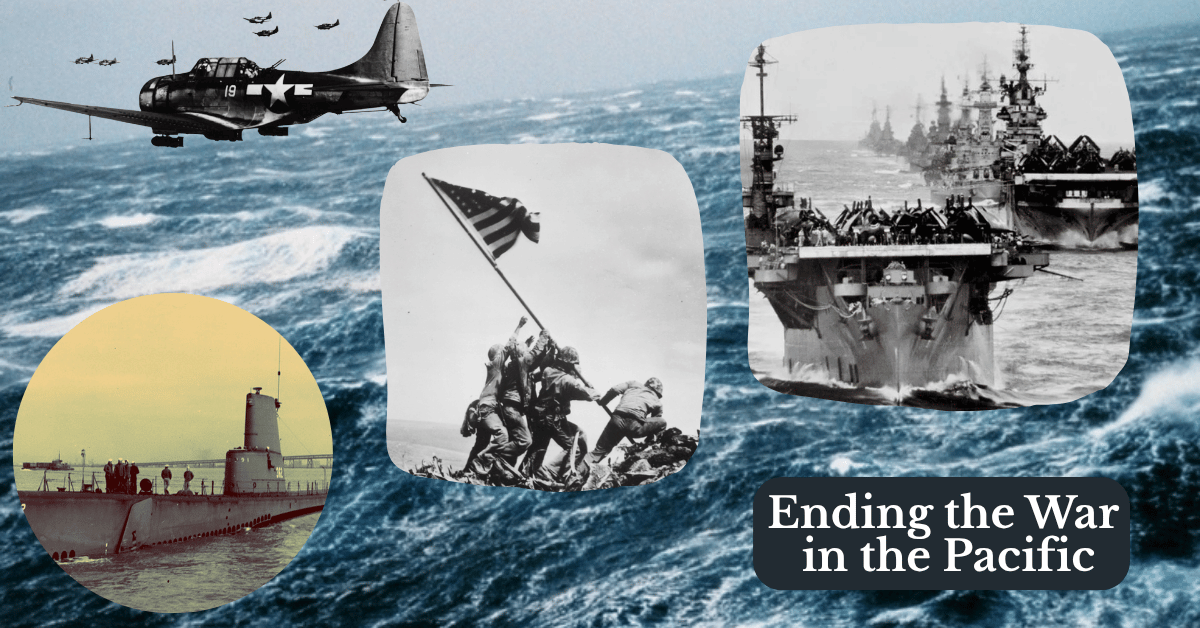
In yesterday’s long post I attempted to bring together naval fleet, air and Marine Corps-Army amphibious efforts up to the end of 1944 and into early 1945. In earlier posts, we considered key engagements and their impact on the shape and prosecution of the war: Saipan (strategic importance and civil deaths) and a post, Battles that Changed War Strategy (Biak, Peliliu, and the air battles at Philippine Sea and Formosa) which pointed to the changing tactics and objectives of Japan as the war approached the home islands. The implications of all this was hinted at in the post Ketsu-Go outlining the strategic and tactical defense of the home islands. By the autumn of 1944 all roads led to the Philippines – from both MacArthur’s Southwest Pacific command and Nimitz’s Central Pacific command.

The Philippine Islands have their own unique history with the United States as friend and foe, but by 1941 it was home to a large number of Americans, American Corporations, and Gen. Douglas MacArthur who served as commander of U.S. Army Forces in the Far East. Manila had been his home since 1924.

Manila was known as the “Pearl of the Orient.” It was an international city that was the nexus of Filipino, Spanish, American and Asian cultures. In addition, the city’s population included Chinese, Japanese, Germans, British, Indians, and small groups from most European countries. The city was a center for universities and colleges, convents, monasteries and churches, and their accompanying treasures – including art, literature, and especially architecture – dated to the founding of the city. 

Continue reading

The Role of Stewards

Jesus returns to the theme of use of wealth; the chapter begins and ends with parables. The story of the scheming steward has been a problem for interpreters, hence its reputation as one of the most difficult parables to interpret. The root problem is the commendation (v.8) of the steward who is so plainly dishonest. 

The figure of the steward has some significance in Christian thinking regarding one’s relationship with God. In the OT, a steward  could be a chief slave/servant put in charge of a master’s household or property (Gen 43:16, 19; 44:1, 4; Is 22:15). Joseph was a steward in the house of the Pharaoh (Gen 39:4-5).  The earth is the Lord’s house (Ps 24) and Moses is his steward (Num 12:7; Heb 3:1-6).  In Jesus’ parables, stewards are expected to invest their talents and when fruitful are given even greater responsibilities (Lk 19:12-27).

Episcopoi are called stewards (Titus 1:5-9) and are expected to possess holy qualities as they manage the household of God. The apostle Paul also saw himself as a steward (1 Cor. 4:1-2) who would have to give an account of his stewardship (1 Cor. 4:3-4; cf. 2 Tim. 4:7-8) as the Apostle to the Gentiles (Eph. 3:2; Gal. 2:7-8; Rom. 1:5-6; 13-15). There is also a sense in which every Christian is a steward entrusted with a divine gift (1 Pet. 4:10).

These are just some of the images of stewards that part of the Christian imagination regarding the understanding of stewards.


Parable of the Unjust Steward | A.N. Mironov | Wikimedia Commons | CC BY-SA 4.0

The Big Blue Fleet

A reader mentioned that they were surprised that as a former naval officer I had not offered more coverage on the operations of the US Navy during the War in the Pacific. While it was perhaps inevitable given my goals for this series, nonetheless let me recount some of the major fleet actions and operations from Pearl Harbor until late 1944. Fair warning: it is a longer than average post.

It is important to remember that the first 12 months of the war in the Pacific was focused on stopping the advancing Japanese forces in the Southwest Pacific – especially stopping them from cutting off Australia and New Zealand from communications and supply lines to the US Pacific Forces. This led to a series of major naval battles in 1942 and 1943 miles away from Tokyo and from Pearl Harbor. Battles that were extremely critical to the war effort, yet unless you are interested in naval history, they are battles that are likely unknown to you. They were either surface-v-surface action and on several occasions aircraft carrier-v-carrier battles. Some of the key engagements are listed below.

Battle of the Coral Sea (May 4-8, 1942): The first naval battle fought almost entirely by aircraft carriers, the Battle of the Coral Sea checked a major Japanese offensive towards Australia/New Zealand, specifically an invasion of Port Morsby. The naval battle was fought in an area south east of New Guinea and south of the Solomon Islands. Because of the battle, the invasion convoy turned back, and the operation was cancelled. This was the first major Japanese offensive in the Pacific to be stopped. But it came at the cost of the fleet carrier USS Lexington and a fleet oil tanker – two assets we could ill afford to lose at that point in the war. The Japanese lost one aircraft carrier with a second one heavily damaged. Both of these carriers were expected to be part of the Battle of Midway. Their presence may well have changed the result of that engagement.

Continue reading

There was a rich man

The gospel for this coming Sunday is from Luke 16 and begins: “A rich man had a steward who was reported to him for squandering his property.” Swirling in the milieu of our readings are themes of riches, reversals, and hospitality. Chapter 16 of Luke forms an interesting literary grouping. The chapter begins with a parable (the dishonest steward) and ends with a parable (Lazarus and the rich man). Each parable begins with “There was a rich man…”  Between the two parables is the identification of the audience, “the Pharisees, who loved money…” It’s easy to lose the manner in which Jesus has been warning against the lure of possessions:

  • renouncing the greed of the Pharisees and the challenge to give alms (11:39-41),
  • the rich fool who forfeited his soul for wealth (12:13-21),
  • the prudent servant who was praised (12:42-48),
  • the warnings of chapter 12 on how to prepare for the final accounting,
  • the outcasts called to the great banquet (14:15-42),
  • giving up all one’s possessions to be a disciple of Jesus (14:33),
  • the prodigal son (15:14-32), and
  • now the dishonest steward (16:1-13)
Continue reading

Journey On

The gospel for today includes the well known passage from John 3:16, “For God so loved the world that he gave his only Son.” It also includes a perhaps not as well known passage: “And just as Moses lifted up the serpent in the desert, so must the Son of Man be lifted up” I think folks quickly get “Son of Man…lifted up” as a reference to Jesus’ crucifixion and death on Good Friday. But the part, “And just as Moses lifted up the serpent in the desert…” is perhaps unfamiliar and is easy to get lost in the fame of John 3:16.

The first reading today is from The Book of Numbers, the fourth book of the Old Testament. Numbers is the title of the book in English, but the Hebrew title is Bemiḏbar, “in the wilderness” which is a better description as the whole book recounts a large part of the 40 years in the wilderness between Israel’s enslavement in Egypt and reaching the Promised Land. It has not been an easy journey and the people have complained about… well, about everything. It is an ongoing litany of “what have you done for us lately.” The people even go so far as to complain to Moses:  “Why have you brought us up from Egypt to die in the wilderness, where there is no food or water? We are disgusted with this wretched food!” These are not happy campers on this wilderness trek.

Continue reading

Something a little different

My usual Saturday 6 am post is a reflection on some aspect of the gospel reading after a week of posts and commentary on the reading itself. Since tomorrow’s Sunday celebration is the Exaltation of the Cross (instead of the 25th Sunday in Ordinary Time), I thought I might do something a little and explore the question I have been asked over the years by folks: Why did Jesus have to die?

At one time or another I think every believing Christian has asked that question. It is a question that is central to Christian theology and  has been thought about since the earliest days of the Church. It has also been written about by the Church patriarchs who have offered a range of perspectives often overlapping but emphasizing different aspects. 

Continue reading

The War that Waits

In the previous posts we paused to look back to the historical currents that shaped Japan in the 19th and 20th centuries. The posts were an attempt to provide a sense of the influences, perspectives, aspirations, and national identity that formed Japan to see its destiny as the leader of an Asia-Pacific region – and the rise of nationalism and militarism that were the means to accomplish its vision. The posts also pointed to the body-politics that was Japan: a divine Emperor, a civil government that resembled Britain, a constitution that assured a premier place for the military, and yet a great deal of uncertainty on how it all was governed. Historians agree about many things, but not the role of the Emperor, especially his degree of responsibility and decision authority for the war that engulfed the Asia-Pacific region in 1941.

Returning to the timeline of the unfolding war, in general, we have not gone into detail about naval and land battles. We have spoken about key engagements and their impact on the shape and prosecution of the war: Saipan (strategic importance and civil deaths) and a post, Battles that Changed War Strategy (Biak, Peliliu, and the air battles at Philippine Sea and Formosa) which pointed to the changing tactics and objectives of Japan as the war approached the home islands. The implications of all this was hinted at in the post Ketsu-Go outlining the strategic and tactical defense of the home islands.

Continue reading