
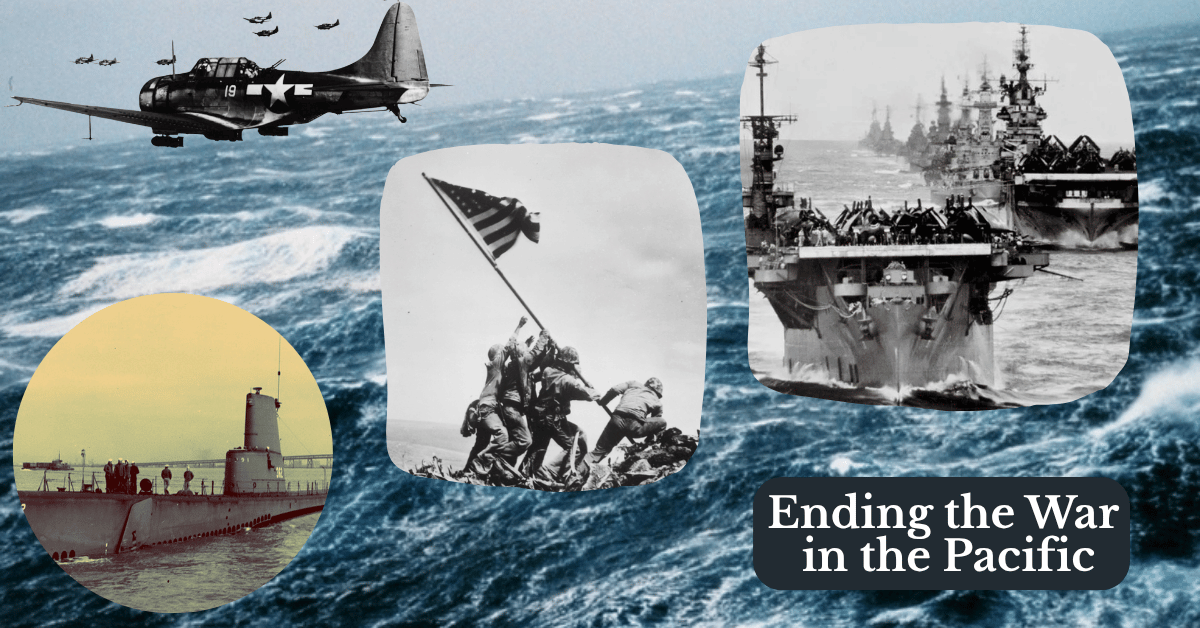
Exploring the Moral Landscape of the Asia-Pacific War (1937-1945)

The title may have caught your eye and caused you to wonder about the dates. Shouldn’t the War in the Pacific be dated from December 7, 1941, the attack on Pearl Harbor, until September 2, 1945 and the surrender of Japan aboard the USS Missouri? Certainly those are the dates which involved the United States and her allies. But war in the Asia-Pacific region had already started with the Sino-Chinese war, long simmering, but breaking out into open warfare in 1937. Japan had occupied Manchuria since 1931, but then invaded much of China from 1937 onward, including Beijing, Shanghai, Nanjing, and the coastal regions). French Indochina (Vietnam) was invaded next: the North in 1940 followed by the South in 1941. Well before Pearl Harbor troops were already in position to launch attacks against Cambodia, Laos, Thailand, Burma, Indonesia (Dutch East Indies), Malaysia and Singapore, Brunei and Borneo, Hong Kong, parts of New Guinea, the Marshall Islands, Truk, Palau, the Marshalls, and other Micronesian islands.  It should also be remembered that Japan ruled the Korean people during the 20th century.

The United States was drawn into a war already underway for more than 4 years.

Continue reading

Operation Downfall Planning

The preliminary planning for Operation Downfall – the invasion of the Japanese home islands of Kyushu and Honshu – began in the waning months of 1944. These were preliminary plans at best and were secondary to battle planning for Leyte, Luzon, Iwo Jima, Okinawa and the naval aircraft carrier raids on Formosa, as well as the massive logistics planning to support all the amphibious landings.

By April 1945 only the amphibious landings at Okinawa remained – the other islands had been secured, although scattered actions continued on Luzon until the end of the war. It was at this point that area commanders (Nimitz and McArthur) were ordered to develop detailed, actionable plans for the invasion of the southern island of Kyushu (Operation Olympic). As noted in the previous post there were multiple planning units that were providing estimates. The operations and logistics details were massive, but each unit knew the “hard question” would be their estimates of allied casualties for Operation Olympic. 

But that question depended on their battle plan/order of battle and intelligence estimates of enemy troop strength and deployment. As will be made clear in subsequent posts, all the above was a moving target that was being shaped by a range of factors from the concrete and measurable to the personal and not quantifiable. The first phase of planning occurred in the Pacific theatre of operation from Nimitz’s and MacArthur’s operations group. This planning phase (and its iterations) lasted until May 25, 1945 at which point the Joint Chiefs of Staff (JCS) issued a formal directive to Nimitz, MacArthur, and Arnold, instructing them to begin detailed planning for Operation Olympic. We’ll come back to that date.

Continue reading

The Kingdom Among Us

On the 28th Sunday in Ordinary Time the story of the 10 lepers and the portions of Luke’s gospel that precede those verses, dealt with forgiveness, faith and gratitude. There is a portion of Luke’s gospel that is passed over in the Ordinary Time sequence – Luke 17:20-37.  The passage is known in the New American Bible as “The Coming of the Kingdom of God” and “The Day of the Son of Man.” You can find the passage here. At first read this somewhat apocalyptic text seems misplaced – aren’t those readings located in Jerusalem just prior to the Passion? But Luke has a logic for inclusion of vv.20-37. 

The disciples had asked that their faith be increased and they were told that they did not understand the nature of faith (17:5-6). As almost a counterpoint, the one leper who returns in gratitude to Jesus (vv.15-16) is told that his faith has saved him (v.19). The experience of the leper, seeing his healing and praising God, offers an apt illustration that the kingdom of God is among you (v.21) even as the Pharisees ask in v.20 when the kingdom of God would come.

Continue reading

Grateful

On his way to Jerusalem, Jesus meets 10 lepers. They ask for mercy, they are cured, and told to show themselves to the priest who will verify their healing and ritually cleanse them so that they can re-enter society. Only one returns to thank Jesus. Some folks conclude that the others are not grateful.

I don’t think so… who wouldn’t be grateful to be cured of this dread disease? Who wouldn’t be grateful for being restored to their family and community?  No longer banished from the towns, the market, and the usual ebb and flow of life.  No longer consigned to beg day upon day without end.

Why don’t they come to thank Jesus? Well…. They are doing what He told them, “show yourself to the priest.” They are grateful for the “thing,” the healing, but they fail to see, to realize the One who healed them.  But one of them was able to see deeper; was able to connect the dots from the good thing that had just happened to the One who was the source of the healing power.

And one of them, realizing he had been healed, returned, glorifying God in a loud voice; and he fell at the feet of Jesus and thanked him . 

Continue reading

Planning for Success

I used to keep track of all the couples I prepared for the Sacrament of Marriage. By the time the list grew into the hundreds, the notebook I used was filled…and I never quite got around to the next notebook. That is just a way to say I have done a fair amount of helping couples prepare for married life. It is a process that surprises couples. They assume it will be all about “church stuff.”  It certainly talks about the sacramental aspect of marriage, the place of marriage and family in God’s plans for human flourishing, and more, but it also talks about many things, especially communications. In the end perhaps one couple said it best when they remarked, “This was great. It got us to talk about so many things and brought us even closer. We have friends that are being married in another denomination that don’t do anything like this.” They went on to describe what a loss it was for their friends. I think the Catholic Church’s requirement for marriage preparation is a great aid to the couples in their planning for success.

Continue reading

Gratitude as an Expression of Faith

This coming Sunday is the 28th Sunday in Year C with the gospel taken from Luke 17.  In yesterday’s post we considered how mercy and gratitude interplay in this narrative account. Today, let us turn to Alan Culpepper for a final thought (Luke, 328):

This story also challenges us to regard gratitude as an expression of faith. At the end, Jesus says to the Samaritan, “Your faith has saved you.” That faith was expressed not primarily in the leper’s collective cry for help, but in the Samaritan’s act of recognition and cry of grateful praise. Only his “loud voice” of praise matched the leper’s raised voices to call out for help at the beginning of the story.

In what sense, then, is gratitude an expression of faith? Does gratitude follow from faith? Or is gratitude itself an expression of faith? If gratitude reveals humility of spirit and a sensitivity to the grace of God in one’s life, then is there any better measure of faith than wonder and thankfulness before what one perceives as unmerited expressions of love and kindness from God and from others?  Are we self-made individuals beholden to no one, or are we blessed daily in ways we seldom perceive, cannot repay, and for which we often fail to be grateful? Here is a barometer of spiritual health: If gratitude is not synonymous with faith, neither response to God is separable from the other. Faith, like gratitude, is our response to the grace of God as we have experienced it. For those who have become aware of God’s grace, all of life is infused with a sense of gratitude, and each encounter becomes an opportunity to see and to respond in the spirit of the grateful leper.


Image credit: Jesus Healing Ten Lepers | James Tissot, 1886 | Brooklyn Museum | PD-US

Behind the American Curtain

It is time to introduce the key figures “behind the curtain” of the United States. Apart from the human and political intrigue native to any human enterprise, the chain of command was clear. In wartime, the President of the United States was the “Commander in Chief.” He possessed the unilateral power to make decisions, was active in soliciting discussion, and most often took the advice of his military leaders. But it was clear that the “buck” stopped on the desk of the President.

The American operational leadership of the Asia-Pacific war effort was established and consistent from the inception of war to its conclusion in 1945. 

Continue reading

Gratitude

This coming Sunday is the 28th Sunday in Year C with the gospel taken from Luke 17. The Samaritan fell at the feet of Jesus and thanked him.  Some might argue that it reads too much into the posture to say that it is an act of worship (although I think that is a fair reading of Luke) – but in any event, is it an act of humility.  St. Bonaventure, sometimes referred to as the second founder of the Franciscan friars, wrote in his work The Tree of Life that humility is the guardian and gateway of all the other virtues and that gratitude is its first evidence.

While it is easy to become focused on the miracle, perhaps the more important lesson is the response from one who has been touched with God’s mercy.  Among the lepers there is the one, the Samaritan, who recognizes that God has acted through Jesus and thus he glorifies God (v.15). Glorifying God is a common response to manifestations of God’s saving work in Luke (2:20; 5:25-26; 7:16; 13:13; 18:4; 23:47) – and so returns to Jesus in gratitude. Gratitude may be the purest measure of one’s character and spiritual condition. The absence of the ability to be grateful reveals something also – perhaps a high degree of self-centeredness or a sense that we deserve more than we have received – thus there is no need to be grateful.

Continue reading

The Potsdam Declaration

We jump ahead on the timeline for a moment to complete the Allied thought that began at the  Jan 1943 Casablanca Conference: terms of surrender for Germany and Japan. 2.5 years after Casablanca, after Nazi Germany had unconditionally surrendered, the Allies prosecuting the war in the Pacific met. On July 26, 1945, US President Harry S. Truman, UK Prime Minister Winston Churchill, and President of China Chiang Kai-shek issued a document, which outlined the terms of surrender for the Empire of Japan. The Potsdam Declaration (Proclamation Defining Terms for Japanese Surrender) was a statement that called for the surrender of all Japanese armed forces. The ultimatum (and it was worded as an ultimatum) warned: “We will not deviate from them. There are no alternatives. We shall brook no delay.” The ultimatum was clear: if Japan did not unconditionally surrender, it would face “prompt and utter destruction.” By this time in the war Japan was already devastated by bombing and only possessed defensive capability. The war was all but lost by any conventional standard. The Potsdam statement was released only 11 days before the atomic bombing of Hiroshima.

Continue reading

Your faith has saved you

This coming Sunday is the 28th Sunday in Year C with the gospel taken from Luke 17. Green (The Gospel of Luke, 627) writes about the declaration, “your faith has saved you”:

Here, something more than healing must be intended, since (1) the efficacy of faith is mentioned and (2) all ten lepers experienced cleansing. The Samaritan was not only cleansed, but on account of faith gained something more – namely, insight into Jesus’ role in the inbreaking kingdom. He is enabled to see and is thus enlightened, itself a metaphor for redemption.

The Samaritan was enabled to see the Messiah and so “returned, glorifying God in a loud voice; and he fell at the feet of Jesus and thanked him.” The writer Robert Barron puts it another way:

Christianity is, above all, a way of seeing. Everything else in Christian life flows from and circles around the transformation of vision. Christians see differently, and that is why their prayer, their worship, the action, their whole way of being in the world, as a distinctive accent and flavor. What unites figures as diverse as James Joyce, Caravaggio, John Milton, the architect of Chartres, Dorothy Day, Dietrich Bonhoeffer, and the later Bob Dylan is a peculiar and distinctive take on things, a style, a way, which flows finally from Jesus of Nazareth.

Continue reading