
Prevenient Grace

This time of year the OCIA meetings are well into the Sacraments of the Catholic Church. There are a lot of discussions and questions about grace and the terms the Church uses to describe grace: sanctifying, actual, sacramental, charismatic and prevenient. It is the last one that people are least likely to be familiar with.

Prevenient (from the Latin: comes before) grace is a concept that refers to the grace of God that comes before any human action. It is the grace that enables a person to respond to God’s call and to choose to follow Him.  It has been described as God’s safety net placed beneath everyone, giving them a chance to choose whether to grab onto it or fall. It’s God’s ongoing, prior work in every life, making salvation a real possibility for all, not just a few.

St. Augustine of Hippo developed the concept of prevenient grace (Latin: gratia praeveniens, “grace that precedes”) as God’s divine initiative, a grace that comes before any human action, drawing people toward faith by overcoming the bondage of sin, enabling a desire for God, and preparing the soul for conversion. Prevenient grace can be understood as God’s initial help that allows us to respond to Him and make good choices. It’s about God reaching out to us first, even before we realize it or take any steps toward Him.

St. Basil Great has a wonderful description of prevenient grace in his Detailed Rules for Monks:

Love of God is not something that we can be taught.  We did not learn from someone else how to rejoice in light or want to live, or to love our parents or guardians.  It is the same, perhaps even more so, with our love for God:  it does not come by another’s teaching.  As soon as the living creature (that is, man) comes to be, a power of reason is implanted in us like a seed, containing within it the ability and the need to love.  When the school of God’s law admits this power of reason, it cultivates it diligently, skillfully nurtures it, and with God’s help brings it to perfection.

God desires that all be saved (1 Timothy 2:3-4) and before our first moment of being is already at work in our lives.
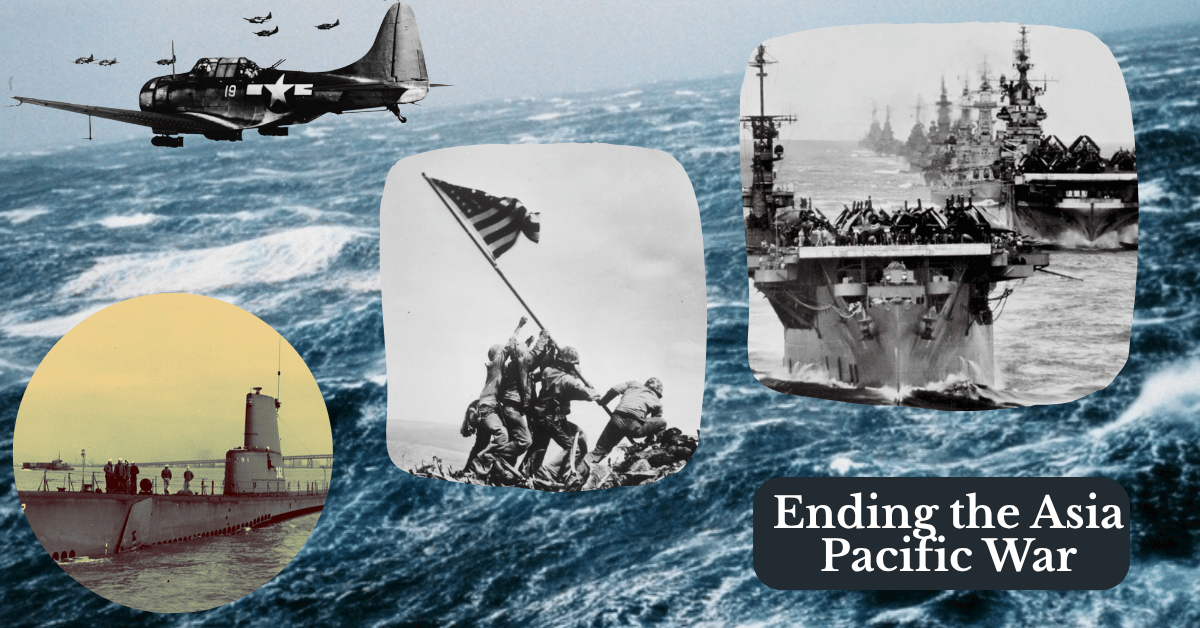
China Trade and US Expansion in the Pacific

U.S. merchants had been sailing to China since the first U.S. merchant, Empress of China, departed from New York on February 22, 1784. In its wake came a steady flow of merchants in search of wealth. During the first decades of the 19th century, U.S. merchants amassed sizable fortunes. As this trade grew, U.S. traders built a small outpost in China and their interactions with Chinese subjects became more complex and occasionally contentious. The U.S. Government realized that it had to establish formal diplomatic ties in order to protect the interests of its citizens. In the wake of war between Britain and China, and the subsequent opening of diplomatic relations between those two countries, the United States moved to negotiate its own treaty with the Chinese Government. The resulting agreement, the Treaty of Wangxia, was ratified in 1844, and soon thereafter U.S. ministers and consuls took up residence in China’s capital and port cities.

Making the journey to China and maintaining the U.S. presence there also required a network of ports extending across the Pacific Ocean, and as such, the China trade soon drove the United States to expand its presence throughout the Pacific region.  At its root, Perry’s primary mission was to establish a foothold that would strengthen the U.S. position for trade and diplomacy in the region. In other words, the United States opened relations with Japan in large part to enhance its status in China. On a smaller scale, as U.S. merchants began to stop at many of the Pacific Islands to replenish supplies and acquire goods to trade with Chinese merchants, the U.S. Government appointed consuls to several of these places. For example, consulates were established in Fiji in 1844, Samoa in 1856, and the Marshall Islands in 1881. The U.S. presence in Hawai’i grew out of the need for a substantial base of operations in the Pacific to support U.S. interests in China. Ultimately this need became so great, and the U.S. presence so large, that the United States annexed the islands in 1898.

The process of U.S. maritime expansion in the Pacific eventually became a goal in and of itself, culminating in the acquisition of the Philippines from Spain in 1898. The Spanish-American War began with a dispute over Cuba, but a rising tide of interest in an overseas empire among U.S. leaders, such as President William McKinley and future President Theodore Roosevelt, helped expand the conflict to Spanish possessions in Asia. After a swift victory over Spain, the United States set up a temporary military administration to govern the islands and promote their political, economic, and social development. The United States established full colonial rule over the Philippines in 1900 during the Philippine-American War.

U.S. expansion across the Pacific fundamentally changed the global position of the United States. In 1800, the United States held closely to George Washington’s advice to avoid “entangling alliances” while pursuing foreign relations based upon trade. By 1900, the United States was a recognized world power with substantial commercial, political, and military interests and territorial holdings throughout the Pacific region. Maritime expansion led to the proclamation of an Open Door policy for China and set the stage for much greater involvement in local and regional politics and trade during the early 20th century.

But we are getting ahead of ourselves. Between Admiral Perry’s arrival in Tokyo Bay in the summer of 1853 and the beginning of the 20th century, there are a lot of major events, changes, and nascent problems that are being birthed into the world.


Image credit: various photographs from Naval Aviation Museum, National World War II Museum, and US Navy Archives. Source Credit: “The United States and the Opening to Japan, 1853” and “United States Maritime Expansion across the Pacific during the 19th Century” | Office of the Historian, Department of State.

The Lamb of God

The exact expression “lamb of God” does not appear in the Old Testament, however, the idea and imagery behind that title, especially when read through the lens of the New Testament, is deeply rooted in several Old Testament sacrificial themes. The primary image is that of the Passover lamb described in the Book of Exodus. In Exodus 12 each family is to take “a lamb, one for each household” (v.3). The lamb must be “a year-old male and without blemish” (v.5). Its blood is placed on the doorposts so that the Angel of Death passes over the house (v.13). The Passover lamb is the lamb appointed by God for Israel’s deliverance; in this way it is the “Lamb of God.” Another way to describe this imagery is a divinely appointed lamb whose blood saves God’s people from death. The Baptist’s use of the phrase anticipates Jesus’ death on the Cross which saves God’s people from something far worse than death.

Exodus 29 and Numbers 28 point to a daily morning and evening offering of lambs understood as offerings to the LORD, commanded by Him as an ongoing and atoning sacrifice on behalf of God’s people. Again, although not titled “Lamb of God,” the imagery is clear when seen through NT lenses.

The reference with the most theologically charged background comes from Isaiah 53 and is associated with Lent and Good Friday. “Like a lamb led to slaughter, or a sheep silent before shearers, he did not open his mouth.” Isaiah 53 describes the Suffering Servant whose life becomes an offering for sin as “The LORD laid upon him the guilt of us all” (v.6) and “He shall take away the sins of many” (v.12). This lamb is not literally a sacrificial animal but a figure of a person who fulfills the role of a sacrificial lamb given by God for sin.

In Genesis 22 we read the account of the binding of Isaac the son of Abraham. The father tells his son: “God himself will provide the sheep for the burnt offering.” (v.8) And indeed, God provides the lamb for the offering that will redeem all humanity. “For God so loved the world that he gave his only Son, so that everyone who believes in him might not perish but might have eternal life.” (John 3:16)

When the Baptist proclaims “Behold, the Lamb of God, who takes away the sin of the world” – there is a whole story of promise, covenant, and redemption that is being announced. It is time to prepare.


Image credit: Saint John the Baptist Preaching to the Masses in the Wilderness | Pieter Brueghel the Younger | Galerie de Jonckheere, Paris | Wikimedia Commons, PD-US