Note: apparently I did not post my homily for the 2nd Sunday of Lent. Here it is…
Did you ever wonder why the Church the story of the Transfiguration is always the reading for the 2nd Sunday of Lent? I mean, the Feast of the Transfiguration already has its own day – August 6th every year. It is not a paucity of readings or a lack of imagination. It is a well chosen reading that deepens meaning and understanding of the Lenten journey. Let me give you five reasons.
First, Lent is a journey toward the cross not away from it. The first Sunday of Lent was a story of Jesus in the wilderness, tempted by the devil. But the direction of the story is not clear at least as far as Lent is concerned. By the Second Sunday of Lent, the Church wants us to be very clear about where this road leads. The Transfiguration occurs after Jesus has spoken about his suffering, rejection, and death. The disciples have just heard words they do not want to hear. Confusion and fear have entered the picture. Into that void comes speculation, rumor, and conversations among the disciples of what Jesus meant – all fueling the uncertainty. If that was all we proclaimed in the gospel then Lent becomes a grim endurance until we can finally get to the Resurrection.
The Transfiguration does not cancel the Cross. It reveals who Jesus is as he goes toward it. It is about learning to walk with Christ through suffering, trusting that God’s presence and glory is not absent from it.
We are not unlike the disciples. We have uncertainties, things that keep us up at night, and events that are unfolding in ways not our liking. We are left apprehensive, perhaps even fearful – but do we feel the presence of Christ in and around us during all this or are we just grimly enduring?
The second reason: God strengthens us before the hard part. For Jesus the hard part is that He is heading to Jerusalem, there to be betrayed, scourged, and crucified – and He has told his disciples all that is coming. But Jesus does not wait until after the Resurrection to show them his glory. He gives Peter, James, and John a glimpse before the events unfold. Why? You know why. We want assurance things will turn out well. Jesus knows the disciples are having a difficult time taking this all in and discipleship is about to overwhelm them. They need the strengthening the experience of the Transfiguration will give them.
And so, the Transfiguration functions as consolation given in advance. It is a memory meant to sustain faith when everything later seems to contradict it. Lent works the same way. Prayer, fasting, and almsgiving are not ends in themselves. They train the heart to trust God when stress increases, things slip out of control, and when obedience becomes costly. The Church places this Gospel here to remind us that God never asks us to walk into darkness without first giving us light.
Lent is a journey towards the cross and God strengthens us before the hard part. Third, “Listen to Him” is a Lenten command. At the center of the Transfiguration is not the light, but the voice: “This is my beloved Son… listen to him.” Lent is fundamentally about learning to listen again – stripping away distractions, quieting false voices, and letting Christ’s word reorient our lives. Notice that Moses and Elijah, the Law and the Prophets, testify to Jesus, point to him and then fade away. What remains is Jesus alone. This is not accidental. Lent is a season of re-centering, where all religious practices are meant to lead us back to one thing: attentive listening, reflection and obedience to Christ.
Lent is a journey towards the cross and God strengthens us before the hard part, “Listen to Him” is a Lenten command and fourth: Glory is revealed through obedience. “Obedience” from the Latin, obe dire, to listen through. The Transfiguration shows Jesus radiant but not because he avoids suffering. His glory flows from his total alignment with the Father’s will. That matters for Lent, because it reframes holiness. Glory does not come from success or visibility – it comes from faithful obedience, even when misunderstood. Just as Peter misunderstands. But he hangs in there and eventually figures it out.
The Church offers this Gospel early in Lent to prevent a distortion: Lent is not self-improvement. It is a gift of memory and hope that we can be assured even if we don’t yet understand, Jesus is present and we’ll eventually figure it out.
Fifth and finally, Hope is essential to conversion. The Church knows something about being human: no one perseveres without hope. The Transfiguration is hope made visible. It tells us repentance and change is worth it, obedience is not meaningless in a world amiss, and suffering does not have the final word. It didn’t for Jesus or the Apostles nor with us. Hope reminds us that suffering does not have the final word. Lent with the Transfiguration leads us to trustful surrender.
Lent is a journey toward the cross not away from it
God strengthens us before the hard part
“Listen to Him” is a Lenten command
Glory is revealed through obedience
Hope is essential to conversion
Lent begins in the desert. But this Sunday, the Church teaches us how to walk the Lenten road:
with eyes fixed on Christ,
with hearts strengthened by hope,
with ears open to the Father’s voice,
and with courage to follow Jesus through the Cross, trusting that glory lies on the other side.
Amen
Image credit: Photo by Free Nature Stock on Pexels.com
Throughout October, most Japanese military leaders at cabinet level, at one point or another, left ample evidence of their doubt of success – but these doubts were not expressed at council meetings. In an October joint staff conference, Admiral Fukudome noted that if a war with the U.S. extended into a third year, at-sea losses and limited shipbuilding capacity meant that Japan’s merchant shipping capacity would be nil. At the same conference Admiral Ngano, Chief of Navy staff, reported that Fleet Commander Admiral Yamamoto, the architect of the Pearl Harbor attack, had informed hom that there was little chance war with the U.S. could be successful and should not be fought.
The Total War Research Institute Report was formally presented to senior officials, including members of the cabinet and military leadership. Its reception revealed the core dysfunction of Japanese decision-making in 1941. Leadership regarded the report as accurate and there was no serious challenge to the analysis and yet it did not seem to change the direction or momentum of Japan’s movement to widen the Asia-Pacific War. Military leaders argued that Japan had no alternative, given the oil embargo, because together with political leaders, they feared that abandoning already approved Imperial Conference objectives would cause domestic collapse or military revolt.
Ironically, the Institute report did not prevent war; it only clarified its risks. Its work reinforced the mindset that Japan was facing a closing window: if war was inevitable, it must be fought sooner rather than later, before oil reserves ran out. While the Institute stood as one of the clearest voices warning against war and was evidence that Japan went to war knowing it was likely to lose, but believing the political and strategic costs of restraint were even greater.
When all this was discussed at an October 4th liaison conference, Army Minister Hideki Tojo offered several revealing comments: the Institute report does not account for unpredictability, nor the fighting spirit of the Japanese army, and it dishonors the 200,000 IJA lives already lost in the struggle. While the report noted that war against the U.S. would be strategically irrational unless Japan fundamentally altered its political objectives it did not account for the impact of honor in the mindset of Japanese leaders.
In 1932, Lt. Joseph Rochefort, USN, was studying Japanese while living in Tokyo. Rochefort was later the officer-in-charge of Station HYPO, the Pacific Fleet communications intelligence unit that “broke the code” leading to the June 1942 success at the Battle of Midway. At a social gathering in 1932, Rochefort struck up a conversation with a senior executive of the Mitsui Corporation. Rochefort asked the man about Japan’s involvement in Manchuria and as far as Shanghai, noting that Japan could not possibly defeat the Chinese. The executive responded, “That’s right. But you are forgetting one thing. Our honor has become involved in this, and when honor becomes involved you should forget all the realistics…Caucasians and Americans don’t understand this at all… when honor is involved, we don’t care about anything else.” (Joe Rochefort’s War, p.56).
What the U.S. would see as strategic irrationality, the Japanese saw as a matter of honor.
That placed each cabinet leader “between the rock and the hard place.” There was the Imperial Conference directive from September and the issue of national honor. A good example was Navy Minister Oikawa. Privately he would tell Prime Minister Konoe that if he accepted U.S. demands, the Navy would back him. Navy Chief of Staff Ngano agreed to support Konoe. Yet at the Oct 4th Liaison Conference, Ngano and Oikawa called for setting a timetable. Two days later at a naval leadership conclave, the admirals talked about how to convince the Army to avoid a war with the U.S. But when given the chance to confront Tōjō and the IJA, the moment passed.
Following this, as Konoe realized the momentum to war was increasing even though the best minds in Japan argued against the possibility of success, he asked Army Minister Tōjō, the minister replied: “Occasionally, one must conjure up enough courage, close one’s eyes and leap off the veranda of the Kiyomizu Temple.” He was alluding to a well-known Japanese proverb and historical image associated with Kiyomizu-dera in Kyoto, whose main hall stands on a high wooden veranda supported by pillars over a steep drop. In Japanese usage it means to take a desperate, all-or-nothing gamble; to act with resolve in the face of fear; and to commit fully when hesitation seems worse than risk
Tōjō was pressing the argument that continued hesitation/endless negotiation was more dangerous than decisive action: Japan must choose war and embrace the risk even if the outcome was uncertain. His use of the metaphor was pointed and framed the choice of war and its uncertainty was the choice of courage, moral superiority and honor. Tōjō’s remark was a classic Japanese proverb, instantly recognizable, emotionally charged, and intentionally used to reframe war as an act of noble resolve rather than strategic necessity. It was rhetoric designed not just to persuade, but to shame hesitation.
To Konoe it implied that further diplomacy was dishonorable, a true leader must be willing to risk catastrophe, and moral resolve mattered more than material calculation. In this sense, the phrase neatly captures the psychological and cultural climate of late 1941 Japan, where symbolic courage increasingly outweighed strategic realism.
Konoe resigned Oct 16th, Tōjō became Prime Minister, who was widely perceived in Washington as a hardliner. In Tokyo, however, Tojo initially continued negotiations—though now within a framework that treated war as an acceptable outcome rather than a catastrophe to be avoided. With the fall of the Konoe cabinet, Prime Minister Tōjō appointed new cabinet members. Realists such as Navy Minister Oikawa were replaced by those more supportive of war.
October in Washington DC
By October 1941, U.S. policy toward Japan was shaped by three hard realities. Japan remained at war in China and showed no intention of full withdrawal. The economic pressures of the embargo had not seemed to modify Japanese behavior or intent. And, U.S. leaders increasingly believed Japan might strike south (or against the U.S.) if diplomacy failed. Despite this, the Roosevelt administration still hoped to avoid immediate war while holding firm to core principles. October diplomacy was therefore about testing whether Japan would make decisive concessions, not about crafting a new grand bargain.
Throughout October, negotiations formally continued between Secretary of State Cordell Hull and Ambassador Nomura – but there was little new as Hull remained firm on his Four Principles. Hull believed that anything less would reward aggression and undermine the international order the U.S. hoped to restore after the war in Europe. While the tone remained diplomatic, Hull, already skeptical of Japan’s honesty and sincerity regarding diplomacy, became increasingly skeptical. He doubted Nomura had authority to negotiate real concessions and so U.S. officials drew the conclusion that Japan was using talks to buy time while preparing for war.
By October 1941, U.S. leaders had access to extensive intelligence from MAGIC intercepts of Japanese diplomatic traffic. These intercepts revealed that Tokyo had set a deadline on negotiations and was pursuing parallel diplomatic and military planning. While MAGIC did not reveal operational attack plans, it confirmed U.S. suspicions that diplomacy was being conducted under severe Japanese internal constraints. This intelligence reinforced Hull’s conviction that the U.S. should not offer interim concessions and any agreement must be substantive and final, not temporary.
In late October, Japan decided to send Kurusu Saburō to Washington as a special envoy. His arrival was viewedcautiously. Some saw it as a last attempt at compromise. Others viewed it as a tactical move to extract limited economic relief. Hull and Roosevelt agreed that no change in U.S. principles should occur simply because Japan added another negotiator. Kurusu’s arrival did not materially alter U.S. policy in October—but it did set the stage for the November proposals.
Kurusu was a senior, well-connected diplomat who had negotiated the Tripartite Pact in Berlin, pPersonal familiarity with Western diplomats, and had a reputation for directness and political realism. Tokyo chose him precisely because he was not a routine Foreign Ministry channel.
By October 1941, Japan sensed that Washington had concluded Ambassador Nomura lacked authority. Sending Kurusu was meant to signal that Japan was serious about reaching an agreement, even though Tokyo was unwilling to alter its basic positions on China or the alliance with Germany. Kurusu’s presence was intended to restore credibility to Japanese diplomacy without changing policy.
Japanese leaders hoped Kurusu’s personal rapport might ease American suspicions, encourage flexibility from Cordell Hull, and possibly reopen the idea of a modus vivendi (temporary agreement). This reflected a persistent Japanese belief that the impasse was partly due to misunderstanding or tone, rather than incompatible objectives.
By this time, Japan’s oil reserves were dwindling rapidly. Kurusu’s mission was also tactical in that it was hoped they could gain time for Japan’s military preparations as, in parallel, explore whether limited economic relief, especially oil, could be secured without major withdrawals.
Kurusu arrived too late and with too little authority. He was unable to offer full withdrawal from China, or renounce the Tripartite Pact. While Kurusu improved the tone, he could not bridge the substantive gap. Japan sent Kurusu because it wanted peace without surrender, time without retreat, and flexibility from the U.S. without changing its own strategic commitments. Kurusu’s mission revealed not diplomatic innovation but revealed the final limits of what Japan was willing to concede.
October 1941 was not a month of dramatic diplomatic initiatives. It was a month when each side consolidated and repeated their positions. By the end of October Roosevelt and Hull believed Japan faced a choice, not a misunderstanding. Japan’s leadership had concluded that diplomacy was unlikely to secure oil without unacceptable concessions Thus, October became the bridge between a season of extended negotiation (summer 1941) and and the final crisis diplomacy during November 1941.
October at Sea
In October 1941, the Imperial Japanese Navy (IJN) moved from contingency planning to quiet but definitive operational preparation for a possible December conflict with the U.S. The shifts were deliberate and carefully constructed to appear as normal fleet readiness operations. The key inflection point had been the Imperial Conference of September 6th, past which detailed operations orders began to be issued, and special projects brought from field testing to weapons preparation. IJN Commander-in-Chief of the Combined Fleet, Admiral Yamamoto, had already insisted that if war came, it must begin with a decisive opening blow to the Pacific Fleet at Pearl Harbor.
In early October, the Combined Fleet was placed on heightened readiness as war plans moved from theoretical exercises to rehearsed operations, especially among the aircraft carrier divisions. There was intensified training on coordinating multiple carriers with multiple strike groups, all acting as one attack force. In the history of naval aviation this had never been done before. Carrier divisions began systematic coordination, air groups practiced mass takeoff, long-distance navigation, and coordinated attack profiles. There was an emphasis on torpedo and dive-bombing accuracy. Torpedoes were specially modified to compensate for the relatively shallow waters of Pearl Harbor. By the end of the month the First Air Fleet became a functionally unified striking force, even as they remained geographically dispersed.
October also saw less visible but critical moves: fuel stockpiling at forward bases, coordination of fleet fuel oil tanker movements and underway refueling, logistics support, and scheduling of maintenance so that key vessels would be available by late November.
Meanwhile, in October 1941, the U.S. Pacific Fleet was active in routine, but enhanced training. Aircraft carriers were active and ferrying planes to bases in Hawaii. Cruisers, destroyers, and battleships were active training for nighttime engagements. And other activities, but not so much as to move to a wartime footing.
Both Army Air Corp (B-17s) and the Navy (PBY Catalinas) had limited planes available for patrol and reconnaissance. Admiral Kimmel requested an additional 100 PBYs to provide the minimum air space monitoring. There weren’t 100 and what was available were being assigned to the Atlantic Fleet as part of anti-submarine patrols and convoy escorts. Kimmel received 8 additional planes.
Neither the Army or Navy had access to the MAGIC intelligence gathered by Washington at Fleet Main. They were sent what headquarters believed they needed. What they did receive emphasized the possibility of Japanese action in Southeast Asia, risks to the Philippines and British possessions, but there was no specific intelligence indicating Hawaii as a target. As a result local command in Hawaii might be threatened at some point, but only after a Japanese strike elsewhere.
Preparedness can be described as training routinely, not urgently while being defensively oriented, and unaware that Japan was already transitioning to an operational attack posture
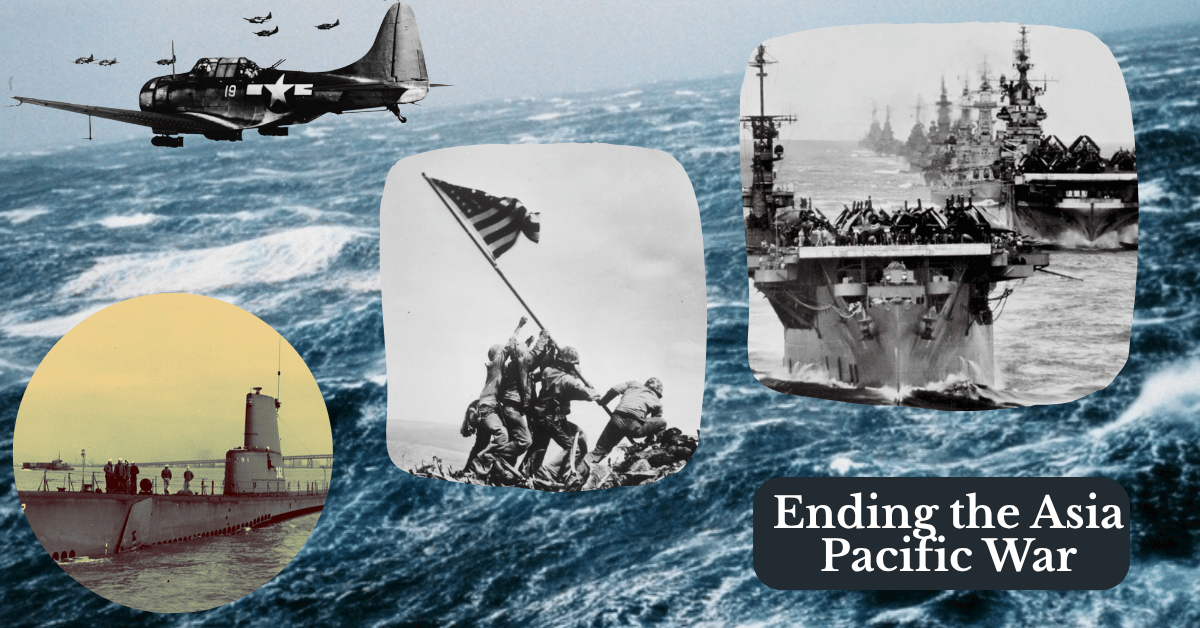
Image credit: various photographs from Naval Aviation Museum, National World War II Museum, and US Navy Archives.
John brings the Samaria narrative to a close by focusing on the success of the Samaritan mission. Verse 39 notes the faith in Jesus of many Samaritans and explicitly attributes the people’s faith to the woman’s “testimony” (martyria). She, like John the Baptist, is a witness who brings people to faith in Jesus. Also like John the Baptist (3:30), the woman’s witness diminishes in importance when the Samaritans have their own experience of Jesus (vv.40-42). The Samaritans invite Jesus to stay with them, and he stays for two days (if. 40). The use of the verb for “stay” (menō) recalls 1:38 and Jesus’ meeting with his first disciples. To stay with Jesus is to enter into a relationship with him (cf. 15:4, 7). Many more persons come to faith in Jesus as a result of this stay (v.41), and in v.42 those who believe acknowledge that their own encounter with Jesus supplants the woman’s word. This is the model of witness and faith in the Fourth Gospel: The witness that leads to Jesus is replaced by one’s own experience of Jesus.
The Samaritans’ acclamation of Jesus as the savior of the world (v.42) is the most sweeping christological confession yet encountered in the Gospel. Salvation may be from the Jews (v.22 b), but it is not limited to the Jews. Ethnic and religious distinctions that figured prominently in this text (vv.9, 20-22) are dissolved in this recognition of the universality of salvation available in Jesus (cf. 3:17). The Samaritans’ confession evidences the truth of Jesus’ words in vv.21-24; the hour has indeed come when neither this mountain nor Jerusalem will define the worship of God
Christ and the Woman of Samaria | Pierre Mignard, 1681 | The North Carolina Museum of Art, Raleigh | PD

 friarmusings