The connection between the first reading and the Gospel becomes much deeper when we notice how the Servant imagery in Isaiah quietly anticipates the way Jesus speaks about Himself in John’s Gospel. I think the two connections are especially striking. Isaiah 49 belongs to the Second Servant Song (Isaiah 49:1–13). In this passage God appoints His Servant to restore Israel and bring salvation to the nations. God says: “I will keep you and give you as a covenant to the people…to say to the prisoners: Come out! to those in darkness: Show yourselves!” This Servant is presented as the one through whom God’s saving work reaches the world. Now listen to the language Jesus uses in John 5: “Just as the Father raises the dead and gives life, so also the Son gives life to whom He wills… the dead will hear the voice of the Son of God, and those who hear will live.” I am struck by the parallels:
| Isaiah 49 The Servant Who Restores Life | John 5 The Son Who Gives Life |
| God appoints a Servant to restore the people | The Father sends the Son |
| The Servant liberates prisoners | The Son calls the dead to life |
| The Servant brings people out of darkness | The Son’s voice awakens the spiritually dead |
What Isaiah describes poetically as release from captivity, Jesus interprets at a deeper level as the gift of divine life. In other words, Jesus is presenting Himself as the fulfillment of the Servant’s mission.
When these connections are noticed, the readings create a unified message. Isaiah presents God’s promise that He has not forgotten His people and will send a Servant to restore them. John reveals the fulfillment that His Father is still at work and that the Son carries out that work by giving life and bringing judgment.
The tenderness of Isaiah—“Can a mother forget her child?”—finds its concrete expression in Christ’s mission. God does more than merely remember His people. He comes among us in the person of the Son to restore our life. What Isaiah promised in poetry, Jesus accomplishes in person.
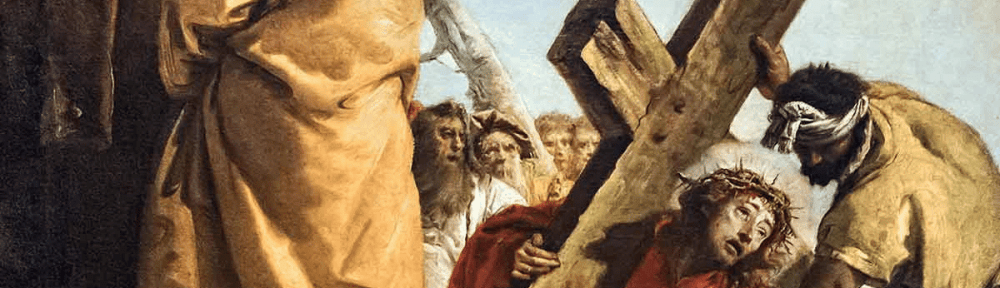
Image credit: detail of Jesus Falls the Second Time by Giovanni Domenico Tiepolo, c. 1745-49 | Church of San Polo (Venice) | PD – Wikimedia Commons
Discover more from friarmusings
Subscribe to get the latest posts sent to your email.
 friarmusings