31 Then Jesus said to them, “This night all of you will have your faith in me shaken, for it is written: ‘I will strike the shepherd, and the sheep of the flock will be dispersed’; 32 but after I have been raised up, I shall go before you to Galilee.” 33 Peter said to him in reply, “Though all may have their faith in you shaken, mine will never be.” 34 Jesus said to him, “Amen, I say to you, this very night before the cock crows, you will deny me three times.” 35 Peter said to him, “Even though I should have to die with you, I will not deny you.” And all the disciples spoke likewise. (26:31-35) Continue reading →
26 While they were eating, Jesus took bread, said the blessing, broke it, and giving it to his disciples said, “Take and eat; this is my body.” 27 Then he took a cup, gave thanks, and gave it to them, saying, “Drink from it, all of you, 28 for this is my blood of the covenant, which will be shed on behalf of many for the forgiveness of sins. 29 I tell you, from now on I shall not drink this fruit of the vine until the day when I drink it with you new in the kingdom of my Father.” 30 Then, after singing a hymn, they went out to the Mount of Olives.(26:26-30) Continue reading →
20 When it was evening, he reclined at table with the Twelve. 21 And while they were eating, he said, “Amen, I say to you, one of you will betray me.” 22 Deeply distressed at this, they began to say to him one after another, “Surely it is not I, Lord?” 23 He said in reply, “He who has dipped his hand into the dish with me is the one who will betray me. 24 The Son of Man indeed goes, as it is written of him, but woe to that man by whom the Son of Man is betrayed. It would be better for that man if he had never been born.” 25 Then Judas, his betrayer, said in reply, “Surely it is not I, Rabbi?” He answered, “You have said so.” (26:20-25) Continue reading →
The scene in today’ gospel (a woman caught in adultery) is a mixture of zealous righteousness that seeks to enact the law without pardon or quarter, the leadership who want to trap Jesus between mercy and the Law, and a woman caught in sin, fearing for her life. True righteousness would have some measure of concern for her soul. True righteousness would be free from deceitfulness, not hiding behind loyalty to Moses for other intentions.
This situation is apparently just an attempt to entrap Jesus (v. 6). If he is lax toward the law, then he is condemned. But if he holds a strict line, then he has allowed them to prevail in their merciless treatment of this woman and has opened himself up to trouble from the Romans, for he will be held responsible if the stoning proceeds. The leaders of Israel are putting God to the test in the person of his Son, repeating the Israelites’ historical pattern on more than one occasion in the wilderness at Meribah and Massah (Ex 17:2; Num 20:13).
When Jesus heard what the teachers of the law said, Jesus bent down and started to write on the ground with his finger. This action has been variously interpreted. When the Pharisees and scribes kept on questioning him, Jesus straightened up and said to them, ‘If any one of you is without sin, let him be the first to throw a stone at her.’ According to the law, witnesses to a capital offense had to cast the first stone when the accused was condemned to death (Deut. 17:7). Jesus regarded the teachers of the law as witnesses to the offense. Therefore, they should begin the execution if it were to go ahead. But Jesus’ words challenged the accusers, implying that none of them was without sin and therefore they were in no position to condemn this woman. What sin Jesus was implying they were guilty of is not clear. Perhaps they too were guilty of adultery. Perhaps they were malicious witnesses in terms of Deuteronomy 19:15–21, because they were not interested in seeing justice done, but only in trapping Jesus.
An optimistic reading of Jesus’ call for the one without sin to cast the first stone is “all the people” have been turned away from their murderous intentions onto the path of life as they withdraw to reflect on their own sinfulness before God. Those who came to condemn ended up condemning themselves by not casting a stone.
Jesus is left alone, sitting on the ground, bent over and writing, with the woman standing before him. As Augustine says, “The two were left alone, misera et misericordia” (“a wretched woman and Mercy”; In Augustine’s commentary John 33.5). He straightens up and asks for a report of what happened, as if he had been totally oblivious to what took place as he concentrated on his writing on the ground. He does not ask her about the charges but rather about that aspect of the situation most heartening to the woman: Where are they? Has no one condemned you? (v. 10).
But there is one left who could still execute the judgment–the only one present who was without sin and thus could throw the first stone. Is she hopeful at this point or still quite frightened? We can only speculate as to whether the woman was familiar with Jesus and his embodiment of the mercy of God. In any case, she becomes a memorable example of the fact that “God did not send his Son into the world to condemn the world, but that the world might be saved through him” (3:17). Jesus says to her, “Neither do I condemn you. Go, and from now on do not sin any more” (8:11). Jesus grants pardon, not acquittal. Here is mercy and righteousness. He condemned the sin and not the sinner. But more than that, he called her to a new life. The gospel is not only the forgiveness of sins, but a new quality of life that overcomes the power of sin.
Without love, there is no forgiveness. With love, a whole new life is possible.
Image credit: Detail of “Christ and the Adulteress” Rembrandt, 1644 | National Gallery London | PD-US
The scene in today’ gospel (a woman caught in adultery) is a mixture of zealous righteousness that seeks to enact the law without pardon or quarter, the leadership who want to trap Jesus between mercy and the Law, and a woman caught in sin, fearing for her life. True righteousness would have some measure of concern for her soul. True righteousness would be free from deceitfulness, not hiding behind loyalty to Moses for other intentions.
This situation is apparently just an attempt to entrap Jesus (v. 6). If he is lax toward the law, then he is condemned. But if he holds a strict line, then he has allowed them to prevail in their merciless treatment of this woman and has opened himself up to trouble from the Romans, for he will be held responsible if the stoning proceeds. The leaders of Israel are putting God to the test in the person of his Son, repeating the Israelites’ historical pattern on more than one occasion in the wilderness at Meribah and Massah (Ex 17:2; Num 20:13).
When Jesus heard what the teachers of the law said, Jesus bent down and started to write on the ground with his finger. This action has been variously interpreted. When the Pharisees and scribes kept on questioning him, Jesus straightened up and said to them, ‘If any one of you is without sin, let him be the first to throw a stone at her.’ According to the law, witnesses to a capital offense had to cast the first stone when the accused was condemned to death (Deut. 17:7). Jesus regarded the teachers of the law as witnesses to the offense. Therefore, they should begin the execution if it were to go ahead. But Jesus’ words challenged the accusers, implying that none of them was without sin and therefore they were in no position to condemn this woman. What sin Jesus was implying they were guilty of is not clear. Perhaps they too were guilty of adultery. Perhaps they were malicious witnesses in terms of Deuteronomy 19:15–21, because they were not interested in seeing justice done, but only in trapping Jesus.
An optimistic reading of Jesus’ call for the one without sin to cast the first stone is “all the people” have been turned away from their murderous intentions onto the path of life as they withdraw to reflect on their own sinfulness before God. Those who came to condemn ended up condemning themselves by not casting a stone.
Jesus is left alone, sitting on the ground, bent over and writing, with the woman standing before him. As Augustine says, “The two were left alone, misera et misericordia” (“a wretched woman and Mercy”; In Augustine’s commentary John 33.5). He straightens up and asks for a report of what happened, as if he had been totally oblivious to what took place as he concentrated on his writing on the ground. He does not ask her about the charges but rather about that aspect of the situation most heartening to the woman: Where are they? Has no one condemned you? (v. 10).
But there is one left who could still execute the judgment–the only one present who was without sin and thus could throw the first stone. Is she hopeful at this point or still quite frightened? We can only speculate as to whether the woman was familiar with Jesus and his embodiment of the mercy of God. In any case, she becomes a memorable example of the fact that “God did not send his Son into the world to condemn the world, but that the world might be saved through him” (3:17). Jesus says to her, “Neither do I condemn you. Go, and from now on do not sin any more” (8:11). Jesus grants pardon, not acquittal. Here is mercy and righteousness. He condemned the sin and not the sinner. But more than that, he called her to a new life. The gospel is not only the forgiveness of sins, but a new quality of life that overcomes the power of sin.
Without love, there is no forgiveness. With love, a whole new life is possible.
Image credit: Detail of “Christ and the Adulteress” Rembrandt, 1644 | National Gallery London | PD-US
It is one thing to plan war and conduct war games. It is quite another to authorize the war.
In the previous posts we have considered what lay behind the scenes in terms of the cultural, political, diplomatic, economic, industrial, and military capabilities – not just in the two nations, but with the factions that created strategy and moved the levers of power – the limitations each faced. Japan needed Southwest Pacific oil to fuel its ambitions. The United States needed Japan to stay “contained” as the defeat of Nazi Germany was the priority. The summer of 1941 had the world in a precarious and unstable balance – and then Japan invaded Southern Indochina and Nazi Germany invaded the Soviet Union. The world was like an automobile with brakes that were marginal at best on level ground and now the world tilted markedly downhill. The automobile was speeding up and blowing through one stop sign after another. The war was expanding at an exponential rate.
Liaison and Imperial Conferences
Japan’s movement toward war in 1941 can be understood most clearly by tracing the sequence of Liaison Conferences held between the Japanese cabinet and the Army and Navy high commands. These meetings held frequently between September and December 1941were the working sessions where policy was debated, revised, and gradually hardened. By the time the issue reached an Imperial Conference before Emperor Hirohito, the essential decisions had already been reached.
In the days leading up to the September Imperial Conference, several Liaison Conferences refined the document titled “Outline for the Execution of the Empire’s National Policy.” The key points of discussion were the impact of the American oil embargo imposed after Japan moved into southern Indochina, the demands of the U.S. to withdraw from China versus military expansion into Southeast Asia, and readiness of the military to support such a decision. The leadership adopted a dual-track policy: continue negotiations with the United States and prepare for war by late October if diplomacy failed. This policy was formally ratified by the Emperor at the Imperial Conference of September 6, 1941.
Following the September decision, Liaison Conferences focused on practical preparations for possible war. Major topics included Army planning for invasions of Malaya, the Philippines, and the Dutch East Indies and Naval strategy for neutralizing the U.S. Pacific Fleet. It was during this period that Navy planners finalized the concept for the carrier strike on Pearl Harbor. The Navy leadership, particularly Admiral Isoroku Yamamoto, argued that if war with the United States became unavoidable, Japan must begin with a surprise blow that would cripple the American fleet. The Pearl Harbor operation was being prepared in detail.
In October 1941 a political crisis in Japanese leadership led to the fall of Prime Minister Konoe and the rise of General Tojo into that leadership position. At this point the military was firmly in control of the majority of key positions and were able effectively control Liaison Conference recommendations.
New Liaison Conferences convened shortly after the formation of the Tojo government in late October 1941. Prime Minister Tojo initially ordered a review of the September war decision. Military and civilian leaders examined whether negotiations with the United States might still succeed. Several weeks of discussion produced two possible diplomatic Proposal A and B. Details of these two proposals were covered in the post November 1941. These proposals were intended as Japan’s final diplomatic effort. The U.S. response was described in that same post.
A Liaison Conference on November 5, 1941 decided how Proposal A and B would be delivered to the U.S. Department of State. If negotiations failed by early December, Japan would initiate the wider Asia-Pacific war. At this stage the IJN was completing the operational plan for Pearl Harbor. IJA forces were already assembling for offensives across Southeast Asia. The Imperial Conference later that day formally approved this policy.
Between November 10 and November 20 leaders monitored the progress of negotiations in Washington but the daily reports were not promising as Japanese diplomats reported that American leaders were unwilling to compromise on the core issue: Japanese withdrawal from China. Meanwhile, military preparations intensified: the Southwest Pacific invasion fleets assembled, troops moved into staging areas in southern China and Indochina, and Naval forces prepared to sail to Pearl Harbor. Although negotiations technically continued, the military assumed that war was increasingly likely.
On November 26 the Liaison Conference received the Hull Note effectively ending diplomatic efforts. As the discussion continued, the Kido Butai, the Pearl Harbor attack force set sail from Japan. The last decisive Liaison Conference took place on December 1. Leaders concluded that negotiations had failed and Japan’s strategic situation would worsen if it delayed implementing the already developed plans.
It was recommended that military operations should begin as planned; a recommendation immediately presented to the Emperor at the Imperial Conference of December 1, 1941. There the decision was formally approved by Emperor Hirohito to begin war against the United States, Britain, and the Netherlands.
Planning Pearl Harbor
The earliest known proposal for a surprise attack on the American Pacific Fleet came in January 1941. Admiral Yamamoto believed that if Japan went to war with the United States, it would have only a limited window of opportunity before American industrial power overwhelmed Japan. He therefore argued that Japan must begin the war by crippling the U.S. Pacific Fleet in a surprise strike. The concept departed sharply from traditional Japanese naval doctrine, which envisioned drawing the U.S. fleet westward across the Pacific for a decisive battle near Japan. Many naval leaders initially considered Yamamoto’s proposal risky and unrealistic.
During the February and March of 1941, Yamamoto directed staff officers in the Combined Fleet to study the feasibility of an attack on Pearl Harbor. Key planning questions included: could aircraft carriers approach Hawaii undetected? Would torpedoes function in the shallow waters of Pearl Harbor? Could a carrier-based strike destroy enough ships to delay American operations? The staff undertook the planning of possibly launching a large-scale carrier attack from long distance. This meant transiting almost 3,000 miles of the Pacific undetected, achieving surprise as it launched coordinated aircraft strikes from six carriers (a feat no navy had ever attempted).
By September, as national policy debates intensified in Tokyo, the Navy began extensive fleet training exercises. Carrier aircrews practiced long-range navigation, coordinated multi-carrier launches, torpedo attacks against ships in shallow harbor waters, and training primarily in the remote northern Kagoshima Bay, whose geography resembled the harbor at Pearl Harbor – and was far away from prying eyes. Meanwhile, Japanese intelligence monitored American fleet movements in Hawaii. By October the Pearl Harbor operation had matured into a complete war plan. In early November the full attack force began assembling in northern Japan. Kido Butai, the Combined Fleet, includes six carriers with supporting forces consisting of battleships, cruisers, destroyers, submarines, and supply ships.
On November 26 the Japanese carrier force sailed from Hitokappu Bay in the Kuril Islands. The fleet moved under strict radio silence across the North Pacific along a remote northern route designed to avoid shipping lanes. The route was also outside the range of American reconnaissance and was further aided in that winter weather in the North Pacific discouraged patrol flights and submarine picket patrols.
At dawn on December 7 (December 8 in Japan) the IJN fleet was 300 miles north of Oahu. Aircraft from the carrier task force launched the attack on Pearl Harbor. There were two waves of aircraft struck that attacked Battleships and airfields (Navy, Army and Marine) across Oahu. The attack severely damaged the U.S. Pacific Fleet and brought the United States into the war.
What the United States did not want, what Japan concluded was inevitable and necessary, was now underway. 13 million had already died in the Asia-Pacific War. Another 17 million would perish before it was over.
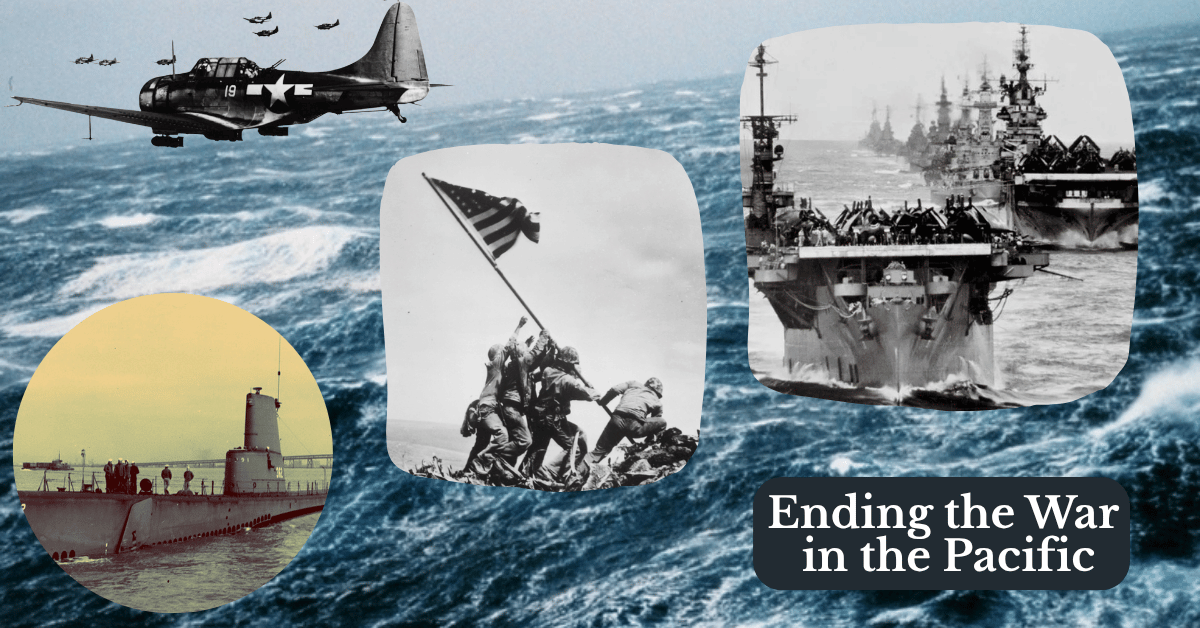
Image credit: various photographs from Naval Aviation Museum, National World War II Museum, and US Navy Archive
17 On the first day of the Feast of Unleavened Bread, the disciples approached Jesus and said, “Where do you want us to prepare for you to eat the Passover?” 18 He said, “Go into the city to a certain man and tell him, ‘The teacher says, “My appointed time draws near; in your house I shall celebrate the Passover with my disciples.’” 19 The disciples then did as Jesus had ordered, and prepared the Passover. (26:17-19)
Despite the intrigue, these verses show us Jesus in charge of the situation. He knew the priests’ purpose before they had formulated it (v. 2), and he is already well aware of Judas’ role (vv. 21–25). He now initiates the process which will lead without interruption to its climax on the cross. Its context, we are not allowed to forget, is the Passover, and it is with Jesus’ ‘Passover’ meal, giving startling new meaning to a familiar ritual, that the process begins. Continue reading →
14 Then one of the Twelve, who was called Judas Iscariot, went to the chief priests 15 and said, “What are you willing to give me if I hand him over to you?” They paid him thirty pieces of silver, 16 and from that time on he looked for an opportunity to hand him over. (26:14-16)
There is only one previous reference to Judas (10:4) – even there we were informed that Judas betrayed Jesus. In these few verses we discover the nature of that betrayal: (a) it is at Judas’ initiative, and (b) Judas asks for money. The text gives no reason for the betrayal, but the actions stand in stark contrast to the woman (26:6-13) who has just anointed Jesus’ head – something Jesus identifies as a preparation for burial – which Judas is seemingly arranging. Continue reading →
On the sixth Sunday during Lent we have a unique liturgical feature: two gospels. At the start of the Mass, there is a gospel proclaimed that recalls Jesus’ entry into Jerusalem, the event we remember as “Palm Sunday.” What follows the reading of that gospel is a procession which serves as the entry of the priest celebrant into the sanctuary. The celebration of the Mass continues. Then, as part of the Liturgy of the Word, there is a second gospel proclaimed: the Passion narrative. It is the proclamation of the two gospels that gives the Sunday its formal name. While we often refer to it as Palm Sunday, the correct title of the celebration is “Palm Sunday of the Lord’s Passion.” Continue reading →
This week the posts focus on the Passion Narrative from Matthew’s gospel which will be proclaimed this coming Sunday on Palm Sunday of the Lord’s Passion. As you well know it is a long reading. And so I have broken the commentary on the gospel into 18 posts spread from today until Saturday morning. And still some of the posts will be long, e.g. the arrest of Jesus and his crucifixion. Over the course of the week you can expect that there will be 3-4 posts per day. I hope this makes reading the commentary a little more manageable.


 friarmusings