Today’s first reading is from the Book of Jonah. There is a large gap in the storyline from yesterdays’ reading and reflection. Long story short, the crew of the ship that was giving passage to Jonah, throws him overboard into the tempest. John is swallowed by a large fish, has a conversion of some kind, the “deposited” on the beach when the whale regurgitates him (Jonah 2:11)
Jonah has been given a second chance. In its own way it parallels the life of St. Peter whose forgiveness for denying Jesus was sealed by the repetition of his initial summons “Follow me,” (John 21:19) Jonah is called again to be the divine messenger to Nineveh: “The word of the LORD came to Jonah a second time: ‘Set out for the great city of Nineveh and announce to it the message that I will tell you.’” (Jonah 3:1-2)
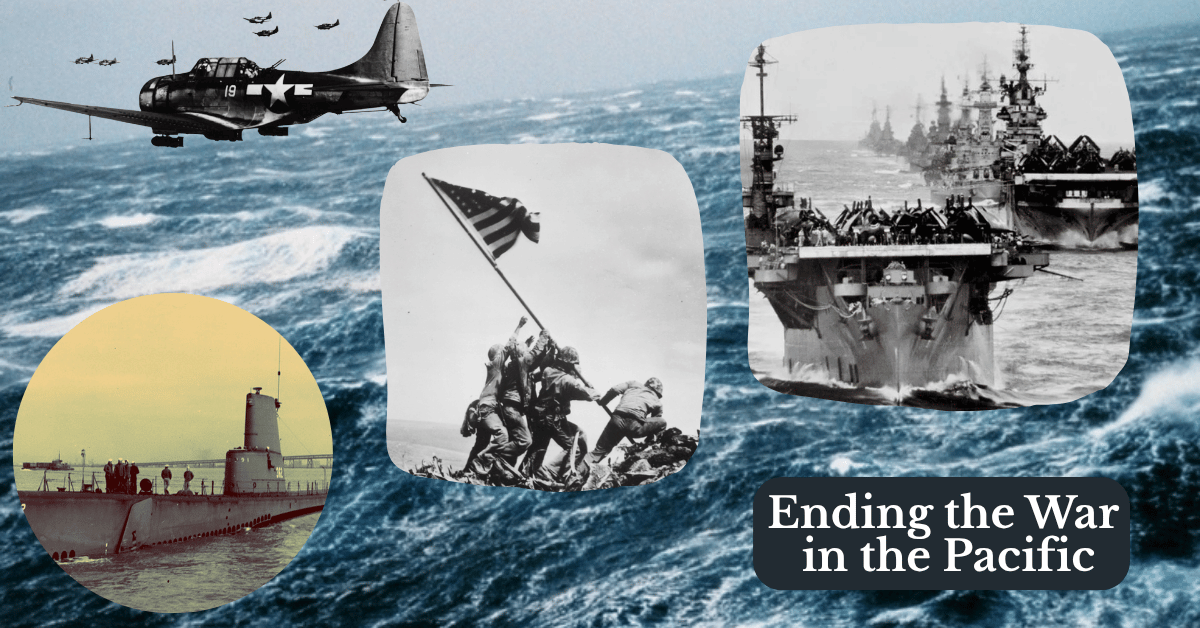
The two previous posts were meant to give the reader a sense of the Emperor’s role in war-time governance in Japan. To be sure, I have not done the topic justice as just like “Washington insider” machinations (then and now) Japan had its own “system” to navigate to achieve decisions. Some of this was already covered. A review of two posts would be helpful: Ketsu-Goand Governance and Ketsu Go. The former describes Japanese plans for the “decisive battle” that would bring the Allies to a negotiation table and away from their demands for unconditional surrender. The latter describes the sequence of events that took Ketsu-Go from a strategic idea (January 45) to a formally approved plan of action (March 45) – and gave some sense of the internal factions within the government along with their agendas. In this post we look “behind the curtain.”
The previous posts have tried to show that Hirohito, as Emperor, moved from “self-induced neutrality” in decisions to a more animated Emperor in decisions about the war. He was briefed and was aware of war progress and failures. He asked critical questions. He knew of cases where the military subverted his expressed views. And he deftly navigated the reach and influence of his power while remaining the Emperor in a constitutional monarchy where the power lay with the military.
What is uncertain was the quality of information the Emperor was receiving. While there were cases in which military leaders hedged reports, these same leaders were at the mercy of field commander reports which often were greatly exaggerated. This was especially true among Imperial Army (IJA) ranks; less so from the Imperial Navy (IJN). It was hard to obfuscate the loss of aircraft carriers, battleships, cruisers and more. A subtext of much of the reports, as the historian Edward Drea notes, was a dismissive view that “Americans [were] products of liberalism and individualism and incapable of fighting a protracted war.” This is what drove the Japanese to find the “Decisive Battle” to bring the Allies to a negotiation to end the war. Midway, Guadalcanal and especially Saipan were to be those battles. And yet the allies pressed forward with the war. The Emperor supported the drive to bring about the decisive battle – but as a necessary precursor to his end-game: a negotiated peace. Or perhaps a negotiated continuity of the Imperial Household.
This coming Sunday is the 28th Sunday in Year C with the gospel taken from Luke 17.
They stood at a distance from him 13 and raised their voice, saying, “Jesus, Master! Have pity on us!” 14 And when he saw them, he said, “Go show yourselves to the priests.” As they were going they were cleansed. 15 And one of them, realizing he had been healed, returned, glorifying God in a loud voice; 16 and he fell at the feet of Jesus and thanked him. He was a Samaritan. 17 Jesus said in reply, “Ten were cleansed, were they not? Where are the other nine? 18 Has none but this foreigner returned to give thanks to God?”
The telling of this encounter seems straight forward: (a) Jesus encounters a group of lepers on the road to Jerusalem, (b) they ask for his mercy, (c) they are cured, but (d) only one returns to thank Jesus and that one is a Samaritan. A simple miracle story, yes? A narrative about faith as the foundation of healing? Such simple summaries, even if true, miss several key aspects of the encounter and the chance to reflect further on our own life of faith in Jesus.
Today’s first reading is from the Book of Jonah, one of my favorites. It is about our calling, our mission in life, our choices, and the unintended consequences for others.
The Lord called Jonah to go to preach repentance to the Assyrian capital city of Nineveh, the home of Israel’s most feared enemy. There was his mission laid before him by the Lord. But Jonah made ready to flee to Tarshish away from the LORD. He went down to Joppa, found a ship going to Tarshish. Why Tarshish? Take a look at the map. A picture is worth a thousand words.
In the summer of 1942, as outlined in the post “Before the War”, Japan pursued parallel paths: diplomacy and war preparations. The military (members of the cabinet, IJA Headquarters, and influential flag officers) flush with success in Manchuria, China and French Indo-China (Vietnam) wanted to unleash the Army against the entire Asia-Pacific region in order to establish the Empire of Japan under the guise of the Greater East Asia Co-Prosperity Sphere. The Navy was circumspect with part of its leadership desirous of some means to achieve “glory for the Emperor” as the Army had already done. But another part of its leadership understood that meant taking on the US and British Pacific Fleets. The United States was particularly worrisome given three factors: (1) the fleet at Pearl Harbor, (2) that US shipyards were already building a new generation of aircraft carriers, battleships, cruisers and fleet tankers that would be commissioned in 1942, and (3) that was without the full engagement of the industrial base of the nation. That meant the war plan “decisive battle” would not be engaged in Philippine Island waters, but needed to be a “knockout blow” at Pearl Harbor to take out battleships and aircraft carriers.
In the autumn of 1941 there were a series of Imperial Conferences (Gozen Kaigi) where Emperor Hirohito, his cabinet, and senior military leaders debated the U.S. demands for a diplomatic settlement and Japan’s course of action. The first of these conferences was held September 6, 1941 – “Imperial Conference on the Empire’s Future Policy.” The cabinet and military presented Hirohito with two paths: (a) continue negotiations with the U.S. and Britain and (b) preparation for war if negotiations failed. Hirohito approved a resolution: negotiations would continue, but war preparations must be ready by late October if talks broke down. The Emperor made it clear that diplomacy was the priority (for reasons outlined in the previous post) and so he accepted the parallel path, but also set a firm deadline for agreement or war.
The Second Imperial Conference was held November 5, 1941 after weeks of inconclusive Army-Navy-Cabinet debates it was agreed that the military would strike Pearl Harbor while also moving into Malaya, the Dutch East Indies, and the Philippines. At a final Imperial Conference on December 1, 1941. The cabinet reported to Hirohito that diplomatic negotiations had failed. The Army and Navy both argued that war was now unavoidable. Hirohito approved the resolution that war with the United States, Britain, and the Netherlands would begin in early December. Diaries record Hirohito as somber, but he gave no objection. His silence ratified the decision. Hirohito performed the ritual reading of the imperial rescript that authorized hostilities. The debate was closed. The Combined Fleet had already set sail for Pearl Harbor on November 26th. Army troops were already being deployed throughout the Asia Pacific region.
This coming Sunday is the 28th Sunday in Year C with the gospel taken from Luke 17. The narrative of the Journey to Jerusalem (begun in Luke 9:51) returns; new characters are introduced – ten lepers – the disciples play no role in this story. For a brief moment the on-going theme of forming discipleship seemingly takes a backseat, as the accent is upon God’s mercy and salvation. Several commentators hold that this account marks a new turn in Luke’s telling of the gospel moving from an accent on discipleship to the larger theme of “Responding to the Kingdom” as the cleansing of lepers is taken as a sign of the in-breaking of the Kingdom.
This story is only in Luke. (While at first glance Mark 1:40-45 may appear parallel to our passage, it is considered parallel to Luke 5:12-16.) Culpepper notes that there are two instances of seeing that serve a lynchpins to the narrative:
And when he [Jesus] saw them (v.14)
And one of them, realizing he had been healed (v.15) – the word translated as “realizing” is idōn whose primary meaning is to literally “see” in a way that leads to insight and perception.
You have to feel for the disciples. In recent gospels Jesus has been asking some fairly extraordinary things of them – to give away their possessions, to forgive countless times, to take up his cross, and the list goes on. No wonder then, they ask for more faith. They don’t feel up to what is being asked of them, are anxious about the challenges ahead, and just can’t imagine accomplishing what is being asked of them.
It is a theme I hear a lot from you, the disciples of this age. The world around us seems to be going off the rails: war in Ukraine and Gaza continues; gun violence seems more widespread; inflation is slowly gaining speed; the federal government is in shutdown; and there is a spirit of acrimony that has gripped the nation. Add to all that the very personal details of our own lives – and too often I hear, “Father, it feels like my faith is under attack…I wish God would give me more faith.”
St. Francis of Assisi knew that same experience all too well. He led a carefree and spoiled life, funded by his indulgent parents. As a youth and young man, Francis imagined himself as destined for the exciting, notable, and extraordinary. Seeing himself the gallant, medieval knight, he had his father buy him a horse and suit of shining armor, and galloped off to war. Francis faced his first crisis and crumbled.
“Who among you would say to your servant who has just come in from plowing or tending sheep in the field, ‘Come here immediately and take your place at table’? 8 Would he not rather say to him, ‘Prepare something for me to eat. Put on your apron and wait on me while I eat and drink. You may eat and drink when I am finished’? 9 Is he grateful to that servant because he did what was commanded? 10 So should it be with you. When you have done all you have been commanded, say, ‘We are unprofitable servants; we have done what we were obliged to do.’” (Luke 17)
This parable presents an opposite picture of the master and slaves given in Luke 12:37. There the master has been out traveling and when he returns home, he has the slaves sit down to eat and he serves them. There one hears the theme of the great reversals so prevalent in that portion of Luke. Here, Alan Culpepper expresses the meaning of this parable very succinctly: “The disciples can do what God requires – through faith – but disciples never do more than is required” (324).
“To the Lord our God belongs justice; to us, people of Judah and inhabitants of Jerusalem, to be shamefaced, as on this day” (Baruch 1:15)
These words from the prophet Baruch are not just a historical lament of the first wave of exiles to Babylon. It is not a “woe-is-me” indulgence. It is a realization that the choices they made have led them to this moment: exile. The people of Israel, in exile, finally recognize the root of their suffering: their refusal to listen to God, their stubbornness, and their idolatry. It’s a moment of collective repentance, a turning back to the Lord. They should be a mirror held up to every generation, including our own.
In Jesus’ time the cities of Chorazin, Bethsaida, and Capernaum were probably faithful people, no foreign gods among them. Where Baruch’s generation turned back to God, here and now, God turns to the people in the person of his Son who performed signs and miracles. But people are unmoved. They chose indifference to the grace that was evident to them. Jesus’ words are a lament of love rejected.
In our modern spiritual lives, these readings challenge us in two profound ways: having the courage to confess and an urgency to respond.
To understand in the inner workings of the wartime governance of Japan there are three keys to keep in mind:
Cabinet and Supreme War Council recommendations to the Emperor must be unanimous and if unanimity can not be reached, the government collapses and a new cabinet and council must be promoted.
In accord with the Meiji Constitution, certain cabinet members must be filled by active duty members of the military. In the context of #1 above, this means that the military holds a de facto veto on anything with which it does not agree. A single military member can either “filabuster” or simply resign – either achieve the same thing: collapse of the government.
In accord with the Meiji Constitution, the Emperor is a Constitutional Monarch, but at the same time is “Supreme Commander” of the Military (daigensui).
Does #3 mean that the “buck stops” with the Emperor? Hardly. As described in earlier posts, the received tradition was that the Emperor was not an absolute monarch – and that is consistent with the Meiji Constitution. Then again, the Emperor was not a symbolic monarch like the King of England. In practice, the Emperor’s role lived somewhere between the two on a spectrum of direct influence, passive influence, and removed from decision making. Emperor Hirohito’s father was quite removed from decision making or shaping the future of Japan. Hirohito was… well, that has been the subject of debate by historians for the last 80 years and more.
The post-war tribunals placed the blame and responsibility for the war on the military, ultranationalists, and the zaibatsu (financial clique). But Emperor Hirohito escaped post-war tribunals because Gen. MacArthur (SCAP – Supreme Commander for Allied Powers) excluded him from the tribunals for reasons associated with SCAP’s vision for post-war Japan. This provided a post-war orthodoxy that Emperor Hirohito was a peace loving constitutional monarch who could not prevent the military from their desire for war. That view could not withstand the passage of time and the declassification of wartime documents.



 friarmusings