

 Many Catholics are aware of Pope Francis’ encyclical Laudato Si (Praise Be to You) which carries the subtitle “on care for our common home.” In this encyclical and in other documents the Pope critiques capitalism, not as an economic theory in itself, but in its divorce from the human condition and Creation. In Laudato Si’, Pope Francis wrote: “The economy accepts every advance in technology with a view to profit, without concern for its potentially negative impact on human beings. Finance overwhelms the real economy…Some circles maintain that current economics and technology will solve all environmental problems.” (#109). Continue reading
Bitcoin and Care for Creation
2


 Today is the
 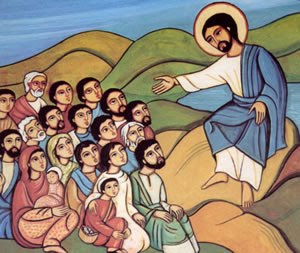 Jesus said to his disciples: “In praying, do not babble like the pagans, who think that they will be heard because of their many words. Do not be like them. Your Father knows what you need before you ask him” (Mark 6:7-8) This is the verse that comes just before the Markan version of the Lord’s Prayer/Our Father. Depending o the translation one is viewing you will read references to “babbling” in prayer, vain repetitions, empty phrases, needless words – all referring to the pattern of prayer used by the pagans of Jesus’ time.
  In most bibles that give heading titles to sections (which are helpful, but not part of the original text), today’s gospel is labelled, e.g., The Call of Simon the Fisherman. James and John, the sons of Zebedee, get second billing in this account. However Jesus never “calls” them. He never utters a “follow me” to them, like in the accounts of calling the same fishermen in Mark 1:16-20 and Matthew 4:18-22. In our text, Jesus only talks to Simon. Later Jesus will give the command, “Follow me,” to Levi (Luke 5:27), who like these fishermen, “leaves everything and follows him” (5:11, 28). Jesus announces to Simon (and only to Simon!) what Simon will now be doing. This call/announcement comes not in a “holy” place such as the temple or synagogue, but at work. The call comes not to extraordinary, designated holy people such as priests or Pharisees, but to a fisherman; one who knows his sinfulness.
 Today’s
  Today’s
  In yesterday’s homily, I noted that God’s Word is always related to human need. If a person is dying of cancer, the gospel is God’s strong word of resurrection. If a person is permeated with guilt, the gospel is God’s assurance of forgiveness. If people experience extreme suffering, God’s word is our refuge and strength.
 This coming Sunday, the 23rd Sunday of Ordinary Time in Year B, we will hear the
