The sequence of these weeks in which the Gospel has been the Bread of Life discourse from John 6 is interrupted by our celebration of the Assumption, a key holy day in the life of the Church. The readings for that Solemnity replace the planned reading from John 6:51-28, a critical set of verses which are a kind of capstone of the discourse. And so…. I will post the whole of the commentary for those verses in this one very long post.
I am the living bread
51 I am the living bread that came down from heaven; whoever eats this bread will live forever; and the bread that I will give is my flesh for the life of the world.” 52 The Jews quarreled among themselves, saying, “How can this man give us (his) flesh to eat?” 53 Jesus said to them, “Amen, amen, I say to you, unless you eat the flesh of the Son of Man and drink his blood, you do not have life within you. 54 Whoever eats my flesh and drinks my blood has eternal life, and I will raise him on the last day. 55 For my flesh is true food, and my blood is true drink. 56 Whoever eats my flesh and drinks my blood remains in me and I in him. 57 Just as the living Father sent me and I have life because of the Father, so also the one who feeds on me will have life because of me. 58 This is the bread that came down from heaven. Unlike your ancestors who ate and still died, whoever eats this bread will live forever.” (John 6:51-58)
Context
We are in the midst of a sequence of Gospel readings taken from John 6 – the Bread of Life discourse. We coming to a critical point in the narrative as Jesus alternatively has addressed two groups: the crowd of people who followed Jesus and his own disciples. Everything began with the miraculous feeding of the 5,000 (plus) people whose response is that they want to take Jesus away and declare him “king.” (v.15) But Jesus knows their hearts and withdraws – but the crowd follows. They are astounded by the miracle of the feeding, but missing the “sign” it was meant to convey. The want more; they follow – they will want more signs.
Jesus challenges them on what they are seeking (v.26), but again the people misunderstand and the conversation descends into the people beginning to understand the bread is a gift and that the real bread they should be seeking is eternal – but since it is “too good to be true” they want to know “what’s the catch – what do we have to do.” Jesus replies: 27 Do not work for food that perishes but for the food that endures for eternal life, which the Son of Man will give you. For on him the Father, God, has set his seal.” 28 So they said to him, “What can we do to accomplish the works of God?” 29 Jesus answered and said to them, “This is the work of God, that you believe in the one he sent.” Jesus replaces their “works of God” with the singular “This is the work of God, that you believe in the one he sent.” There is one thing needed: faith, trust in the person of Jesus. If they are looking for what they must do, then Jesus has answered their question. Will they make the move from “performance” to giftedness?
The short answer is “no” or at least “not yet.” The crowd asks for more signs but at least they seem to have changed their impression of Jesus from “miracle worker” to perhaps a “great prophet like Moses.” Naturally they ask for sign akin to Moses delivering manna in the Sinai desert. But Jesus is essentially responding, “look past the miracle and see the sign.”
32 So Jesus said to them, “Amen, amen, I say to you, it was not Moses who gave the bread from heaven; my Father gives you the true bread from heaven. 33 For the bread of God is that which comes down from heaven and gives life to the world.” 34 So they said to him, “Sir, give us this bread always.” 35 Jesus said to them, “I am the bread of life; whoever comes to me will never hunger, and whoever believes in me will never thirst.
In essence, look past the bread that perishes and see the one who gives life eternal – the person of Jesus come down from heaven in order to give life to the world. This is when the grumbling begins. This does not make sense to the crowd, I mean, they know his family, they know him. And the crowd grumbles exactly as did the Israelites in the desert. The sign they need to see is that Jesus is the son of God (1:17); his earthly family holds no key to his identity. The people’s misplaced certitude about Jesus’ origins blinds them to his true origins.
In v.47 the ante is upped. Jesus completes the comparison between the bread of heaven of which the crowd speaks and the bread of heaven of which he speaks. Previously, we read: 31 Our ancestors ate manna in the desert, as it is written: ‘He gave them bread from heaven to eat.’” 32 So Jesus said to them, “Amen, amen, I say to you, it was not Moses who gave the bread from heaven; my Father gives you the true bread from heaven. 33 For the bread of God is that which comes down from heaven and gives life to the world.” In vv. 50–51, Jesus continues to interpret that citation, this time focusing on the verb “to eat” (esthiō) – “…this is the bread that comes down from heaven so that one may eat it and not die. 51 I am the living bread that came down from heaven; whoever eats this bread will live forever; and the bread that I will give is my flesh for the life of the world.”
What does it mean for Jesus to speak of the gift of his flesh for the life of the world? First, the language at the end of v.51 recalls both 1:14 (“and the Word became flesh”) and 3:16 (“God so loved the world that he gave his only Son”). Verse 51 thus evokes the incarnation, the gift of Jesus’ life out of God’s love for the world. Second, it is possible to see an allusion to Jesus’ death in the language of v. 51c: Jesus will give up his life, his flesh, as an expression of the same love manifest in the incarnation (10:17–19; 15:13). Finally, any Christian reader of v. 51, from the Fourth Gospel’s first audience to the contemporary church, would hear eucharistic connotations in these words. The eucharistic imagery is not yet fully explicit (that will occur in vv. 52–58), but the direction of the imagery for the Christian reader is clear.
If the people were grumbling before, now they have move to a more serious contention: “The Jews quarreled among themselves, saying, ‘How can this man give us (his) flesh to eat?’” v.52)
That is s short summery of the text to this point. Let us turn to the details of the text for this Sunday’s gospel.
Commentary
The Quarrel. 51 I am the living bread that came down from heaven; whoever eats this bread will live forever; and the bread that I will give is my flesh for the life of the world.” 52 The Jews quarreled among themselves, saying, “How can this man give us (his) flesh to eat?”
The “Jews” themselves make the first direct statement about eating Jesus’ flesh, as they combine Jesus’ words in v.51 into one statement. What shocks the crowd is that until Jesus’ words in v. 51, Jesus’ language has focused on the metaphor of the bread of life, but now the metaphor shifts. The content of the crowd’s protest in v.52 makes clear that the sticking point is the language about “flesh”—namely, its use to refer to Jesus himself.
The quarrel is not limited to those who heard the words from Jesus. The quarrel has continued, especially in the age during and since the protestant reformations of the 16th century and following. The language about “flesh” is a contentious point in Johannine scholarship and vv.51-58 are undoubtedly the most contentious verses in the Fourth Gospel. Here is a sample of what I think are representative positions of noted biblical scholars (list developed by Gail O’Day, 605):
- Rudolf Bultman “maintains that the eucharistic references in these verses were imported into the text of the Fourth Gospel by a later editor in order to correct the anti-sacramental tendencies of the Fourth Evangelist.” This understanding of the whole of the Gospel of John and it sacramental theology is also held by many other German Protestant scholars – but note that it does hold some sacramental understanding.
- A German evangelical scholar Ernst Haenchen maintains that any inclusion of the sacraments contradicts “the heart of [the Evangelist’s] proclamation” This is also the view of D. A. Carson, a North American evangelical scholar who rejects the anti-sacramental reading, but because he does holds that the Fourth Gospel is not sacramental at all.
- Lagrange, a French Catholic scholar, maintains that the allusion to the eucharist is evident in v. 51 and “could not be missed by anyone, except for Protestants who misconstrue the terms.”
- The preeminent Johannine scholar, Fr. Raymond Brown adopts a middle-of-the-road position. He holds that vv. 51–58 are the sacramental doublet of the more teaching-revelation oriented bread of life discourse of that occurs in vv. 35–50. Brown holds that b vv. 35–50 and vv. 51–58 preserve authentic Johannine traditions. He maintains that the doublet within the bread of life discourse complement each other along the lines of word and sacrament in the liturgy of the mass.
You will note the clear Protestant/Reformer – Catholic divide in our sample. Why do I present a snapshot of the scholarly debate over John 6:51–58? Because it is important to every reader of the Gospel of John in that it reveals the presuppositions and assumptions out of which every interpreter works and how those assumptions affect interpretation. Fr. Gerald Sloyan, a Catholic scholar, has wisely observed about this discussion: “Some applaud the move to the sacramental plateau, others deplore it—but both seem to do so more on the basis of a Catholic or Reformation heritage than of hard data provided by the Fourth Gospel.” I think this is true for many (or most) internet-found discussions. Catholic and non-Catholic apologists simply assert their positions, recycle their rehearsed arguments, and do not often engage readers or interlocutors
Before we undertake our study of vv. 51-58, I would offer O’Day’s [605-7] comments as regards the place our verses have in the overall picture of chap. 6. Here she will argue against all the positions above – to some degree – and suggest there is intentionality and continuity with these verses within all of John 6:
“First, in order to have a clear vantage point from which to assess the divergent views of 6:51–58, it is important to look again at vv. 51–52 in their full narrative context. The crowd set the topic for Jesus’ dialogue and discourse with its evocation of the manna miracle (6:31). In response, Jesus repeatedly stated that the manna was not the true bread from heaven; he is (6:35, 41, 48, 51a). The true bread from heaven gives life to the world, and as early as 6:35, Jesus suggested that eating the bread was the way to receive its gift of life (see also 6:49–50). In v. 51, then, Jesus takes the replacement of the manna with himself to its ultimate conclusion by equating his flesh with the bread of heaven. The “Jews’ ” protest in v. 52 indicates that they have followed the logic of the discourse, that they understand that Jesus himself now stands in place of the manna their ancestors ate.”
“It appears, then, that v. 51 does not mark a dramatic break from what preceded, but that the language and imagery of v. 51 are consistent with his preceding words and have been carefully prepared for. Readings that insist on a “faith-alone” or “sacrament-alone” outlook disregard the care with which themes and images overlap throughout the discourse of John 6. This is particularly true for vv. 53–58. Key words and themes from 6:25–51 form the heart of this passage. On literary grounds, there is no compelling case for labeling these verses as secondary or even complementary to the “main” discourse of 6:35–51. [O’Day is taking exception to the positions of Bultman and Brown] Rather, the language and style of vv. 53–58 suggest that those verses are an integral part of one continuous discourse.”
“Second, the scholarly debate about vv. 51–58 largely ignores the narrative structure of John 6. Verse 51 does not mark the beginning of a new section; it is the conclusion of the second section of the bread of life discourse and is tightly linked to the “Jews’ ” protest in v. 52. As noted already, the “Jews’ ” protests serve as the pivot for each of the subsections of the discourse (6:35–42, 43–52, 53–59). Each section concludes with a statement by Jesus and the protest that it evokes from the Jews, so that the next section of the discourse builds on both the claim and the protest. John 6:51–58 is no exception. Jesus’ words in v. 51 evoke the “Jews’ ” protest (6:52), and beginning in v. 53 Jesus addresses the heart of their protest. John 6:51–52 thus prepare for the eucharistic language of 6:53–58. When vv. 51–58 are discussed as if they were an independent theological treatise on the eucharist, the narrative integrity of chap. 6 is destroyed, and an interpreter’s sense of what constitutes theological coherence leads to explanations that appeal to independent traditions.”
“Third, there is a circular logic to questioning (or even rejecting) the eucharistic imagery of vv. 53–58 on the grounds that the Fourth Gospel contains no account of the institution of the eucharist comparable to that found in the Synoptics (Matt 26:26–29; Mark 14:22–25; Luke 22:14–23). It is possible that vv. 53–58 are the “institution text” in John, but presented in Johannine, not synoptic, categories.”
At the heart of the matter. 53 Jesus said to them, “Amen, amen, I say to you, unless you eat the flesh of the Son of Man and drink his blood, you do not have life within you. 54 Whoever eats my flesh and drinks my blood has eternal life, and I will raise him on the last day.
Most all scholarly works hold that v.53 is at the heart of the matter. In addition to the Protestant/Reformed – Catholic divide, there is a more subtle divide among scholars. Consider the position of Leon Morris [332] vis-à-vis these verses:
“This is the section of the discourse that is claimed most confidently to refer to the Holy Communion. The language of eating the flesh and drinking the blood is said to be explicable only, or at least most naturally, in terms of the sacrament. But is this so? Surely not! The objections already urged remain, and the very strength of the language is against it. The eating and drinking spoken of are the means of bringing eternal life (v. 54), and they are absolutely unqualified. Who is going to argue seriously that the one thing necessary for eternal life is to receive Holy Communion? Nothing is said, for example, about faith; is it not necessary to believe if we are to have life? Again, “flesh” is not commonly used with reference to the sacrament. In every other New Testament passage referring to it the word is “body.” Ryle further points out that to take the view we are opposing “is to interpose a bodily act between the soul of man and salvation. This is a thing for which there is no precedent in Scripture. The only things without which we cannot be saved are repentance and faith.” I am not contending that we cannot apply the passage helpfully to the sacrament. But I very strongly doubt whether this is the primary meaning. It seems much better to think of the words as meaning first and foremost the appropriation of Christ.”
[Note: In Hebrew and Aramaic of Jesus’ day, there really was no word for “body.” John’s use of “flesh” (whereas the synoptic Eucharistic accounts use “body”) is perhaps closest to the language of Jesus. The earliest writers of the church, e.g. Ignatius and Justin Martyr use the language of “flesh” in their discourses and letters regarding the Eucharist. Clearly the first Christian communities recognized the Eucharistic theme of John’s verses.]
Consider Morris’ interpretive restriction: John’s language cannot stray from the synoptic standard. What Morris seems to take as a given is one of the very challenges facing every reader and scholars: how are we to consider the Gospel of John as regards the synoptic gospels? Morris looks to the synoptic tradition and its sacramental word “body.” He makes a similar move in citing Ryle. These are not arguments to ignore, but does this means that the synoptic and broader NT vocabulary are normative for John? Then again consider O’Day’s [607] insight: “The interpreter must begin with the miraculous feeding and Jesus’ revelation of himself as the bread of heaven, not with the synoptic Gospels and an imported notion of normative eucharistic theology and practice in the early church. If interpreters of John 6 can free themselves from preconceptions about how a Gospel writer “should” present the eucharist, they will enjoy a fuller understanding of the bread of life discourse and of the eucharist.”
To my mind, this latter point comes across when Morris writes: “Nothing is said, for example, about faith; is it not necessary to believe if we are to have life?… The only things without which we cannot be saved are repentance and faith.” Nothing is said about faith? If you are considering vv.51-58 alone and apart from the rest of John 6 you can perhaps mount an argument. But if one, as O’Day argues, is considering the continuity and integrity of John 6, then faith is the precursor and necessary commitment to this section. Consider 6:29 – “This is the work of God, that you believe in the one he sent” and 6:35 “I am the bread of life; whoever comes to me will never hunger, and whoever believes in me will never thirst.” There seems to be a quite clear path in which coming to/belief in Jesus is being framed as that which satisfies hunger and thirst. But ignoring the continuity and integrity of the whole chapter is the very thing O’Day warns against.
Is anyone surprised that anyone hearing this discourse in person would be naturally perplexed? Up to this point the dialogue has centered on “bread from heaven,” “living bread,” and references aplenty to the manna of the Exodus (and from who the gift came).
51 I am the living bread that came down from heaven; whoever eats this bread will live forever; and the bread that I will give is my flesh for the life of the world.” 52 The Jews quarreled among themselves, saying, “How can this man give us (his) flesh to eat?”
Now Jesus says quite clearly that the bread is his “flesh.” Naturally, one would wonder how this would all be possible. But then this is the same Johannine pattern seen in the chapters 2, 3, and 4. Those present in the Temple who hear Jesus will raise a destroyed temple in three days; Nicodemus who wonders how to be born again/from above; and the Samaritan woman who is initially puzzled by flowing/living waters – some call the pattern misunderstanding. Others would call it a way in which to get people to discern more deeply as to the mystery of God who stands before them. Not all will understand. The Samaritan woman alone sees that Jesus is the promised Messiah. The people in this narrative also face the same doorway. Will they pass through and discover new meaning or will the practical mechanics of “how is this possible” deter them from Truth.
It is hard to know how firmly to hold to the Johannine “misunderstanding” pattern. It is clear if Jesus simply means to use bread and flesh in a metaphorical fashion, then it is lost on the people. Where Nicodemus and the Samaritan woman have choices there are no as-readily apparent choices available to the people. They are confused and one thing is clear: Jesus does not stop and say, “Sorry, let me explain the metaphor.” In fact, he ratchets up language and begins with a quite solemn proclamation – for the fourth time in this Bread of Life Discourse. For Jesus, what follows is paramount.
Flesh and Blood. 53 Jesus said to them, “Amen, amen, I say to you, unless you eat the flesh of the Son of Man and drink his blood, you do not have life within you. 54 Whoever eats my flesh and drinks my blood has eternal life, and I will raise him on the last day.
The language is graphic and direct, including images and actions that would have been abhorrent to faithful Jews: eating flesh and drinking blood (Gen 9:4). But is the language meant to be realistic or one of metaphor. Morris’ approach [335] to this question seems fairly standard among those who do not hold to the sacramental, Eucharistic understanding of this text. “Both ‘eat’ and ‘drink’ are aorists, denoting once-for-all action, not a repeated eating and drinking, such as would be appropriate to the sacrament. And this eating and drinking are absolutely necessary for eternal life. Those who do not eat and drink in the way Jesus says have no life. Eating and drinking Christ’s flesh and blood thus appears to be a very graphic way of saying that people must take Christ into their innermost being.” I would suggest that it is hard to make this argument and at the same time demand also other biblical sources inform the understanding.
Jesus is referring to eating of his flesh. He recounts this action verb several other times between vv. 51-58, while adding the drinking of his blood to the command. There is no doubt as to Jesus’ intent. And there is little doubt as to context into which his words will be heard. “To eat someone’s flesh” appears in the Bible as a metaphor for hostile action (Ps 27:2, Zech 11:9). In fact, in the Aramaic tradition, the “eater of flesh” is the title of the devil. The drinking of blood was looked upon as a horrendous thing forbidden by God’s Law (Gen 9:4, Lev 3:17, Dt 12:23, and Acts 15:20). Outside Temple rituals, its symbolic meaning was that of brutal slaughter (Jer 45:10). In Ezekiel’s vision of apocalyptic carnage (Ez 39:17), he invites the scavenging birds to come to the feast: ‘You shall have flesh to eat and blood to drink.’ Thus if Jesus’ words in v.53 are metaphor, it argues against a very strong grain in biblical understanding. This would also be a radical departure from Jesus in John’s gospels. It is hard to think of another metaphor Jesus offers that does not reside upon positive imagery from Jewish biblical thought.
In reality the suggestion of eating flesh and drinking blood is repugnant to a faithful Jew. The use of such language as metaphor is a bit much and not really needed. Jesus has already said that believing in him and coming to him constitute the work of God. But this is the juncture one is stuck at when one does not let the whole of John 6 develop, but insists that nothing new can be said in v.51 and following that was not said prior to v.51.
Perhaps a small thing, perhaps not – one thing that does change is the verb used to describe “eating.” Prior to v.51, phagein and esthiein are found in a number of places and contexts in the Fourth Gospel to describe the normal human activity of eating. That changes here – and perhaps to make a point? The verb trōgein is used 6:54-58 (and found only here and in 13:18. Both of these passages have eucharistic background.) The verb trōgein used in this and following verses is not the classical Greek verb used of human eating, but that of animal eating: “munch,” “gnaw.” It has many uses that are quite graphic as though an animal ripping flesh from the bone. Hardly the soft, spiritual meaning.
Perhaps the daunting question is how can the language of eating flesh and drinking blood be given a positive understanding? A similar question would be how the cross, the symbol of Roman domination and torture, can be understood in a positive light? The answer to both is that Jesus can transform them. When Jesus says, “I am the bread of life,” these images of bread drawn from the scriptural tradition are transformed. The traditional metaphors are redefined by the very person of Jesus. Metaphors that pointed to God in the Hebrew Scriptures now point to God through Jesus. This focusing of the rich OT symbols on the person of Jesus is the context in which the Eucharistic images are to be read and, indeed, out of which they grow. I would suggest the same is true for eating flesh and drinking blood.
[Note: The prohibition of consuming blood is quite old, first found in Genesis 9:4. What is the reason for that prohibition? Because a living being dies when it loses most of its blood, the ancients regarded blood as the seat of God-given life, and therefore as sacred, belonging to God along. It is why the blood of the sacrifice is poured on the altar – returning it to God. It is why blood was sprinkled on the people as the sign of the covenant – returning them to God. Consider what is being offered when Jesus directs the people to “drink my blood.” The very author of all life, is offering the seat of God-given eternal life.]
What has been put negatively is now stated positively in a way typical of this Gospel: “Whoever eats my flesh and drinks my blood has eternal life, and I will raise him on the last day.” Earlier Morris had noted: ““Both ‘eat’ and ‘drink’ are aorists, denoting once-for-all action, not a repeated eating and drinking, such as would be appropriate to the sacrament.” In v.54 the verb changes and the tense changes so that a more precise rendering would be “Whoever continues to eat…”
Returning to O’Day [608]: “The third-person Son of Man language gives way to first-person pronouns. [Continually] Eating the flesh and blood of Jesus leads to the gift of eternal life and the promise of resurrection on the last day, complementary eschatological promises that run throughout the bread of life discourse (6:39–40, 44, 50–51). A comparison of vv. 40 and 54 shows that eating Jesus’ flesh and drinking his blood parallels seeing the Son and believing in him. Participation in the eucharist and the faith decision are parallel in the Fourth Gospel, not either/or acts. Verse 55 states succinctly why Jesus’ flesh and blood are the source of life. Jesus’ flesh and blood thus fulfill the promise in 6:35 of food and drink that will end hunger and thirst.”
Apart from the already cited issues of understanding John 6, O’Day points to another axiom of questionable standing. So many commentaries, which rightly hold to the emphasis on Jesus as the Word of God and the needed faith response prominent in 6:24-50, then rigidly apply the logic, “since it was Word and faith before it can’t be Eucharistic now … it is either this or that, not both.” The false dichotomy of either/or, the insistence on harmonization with Eucharistic institution narratives with the synoptic tradition, and other interpretative impositions, simply combine to not let the Bread of Life discourse develop past 6:50. Such development leads to a Eucharistic understanding and a faith understanding – both/and.
Death or Life. Morris [335] offer this: “There is, moreover, a reference to the death of Christ, as we saw on verse 51. Flesh and blood in separation point to death. The words, then, are a cryptic allusion to the atoning death that Jesus would die, together with a challenge to enter the closest and most intimate relation with him.134 They are to be interpreted in the light of verse 47.” While most would accept the intuition of Jesus’ atoning death are implied, there are none that argue that is a major theme. Yet Morris strains against established biblical meaning. In Hebrew, the double formula “flesh and blood” emphasizes the reality and corporeality of human existence.
Not apart from the atoning death of Jesus, but v.53 builds upon the fulfillment of the promise made in 6:27 (Do not work for food that perishes but for the food that endures for eternal life). The flesh and blood of the Son of Man are the food that endures for eternal life. The Son of Man is the one who has descended from heaven to give his life for the salvation of the world (3:13, 16). The gift of his flesh and blood belongs to that saving work; it is the food that gives eternal life.
To this point in the Johannine narrative, death has not been a focal point. Outside and especially within John 6, the focus is on the gift of life. O’Day [608] makes this clear:
“The syntax of v. 53 (‘unless …’) makes clear that eating the flesh and drinking the blood of the Son of Man is a condition for receiving the gift of life. That Jesus’ words focus on life should not surprise the reader; Jesus as the source of life has been a central theme of the first six chapters of the Gospel. What is new is the explicit linkage of participation in the eucharist to this gift of life. The strong emphasis on the eucharist reflects a shift in the primary audience to whom the Fourth Evangelist understands these words of Jesus to be addressed. The primary audience is no longer the audience in the story (the Jewish crowd), but the readers in John’s own time. Such a shift is a regular part of the literary strategy of Fourth Evangelist (3:31–36; 6:60–71; 9:18–23). The Fourth Gospel narrative frequently plays itself out on a ‘two-level stage,’ so that the events in Jesus’ life and the events in the life of the Evangelist’s community are presented simultaneously.”
“The insistence in v. 53 on both the fullness of the incarnation and the participation in the eucharist may be the Evangelist’s attempt to counter developing docetic or gnostic tendencies within his community that wanted to deny the bodily aspects of Christ and of Christian experience. In that regard, it is noteworthy that nowhere in vv. 53–59 are the eucharistic elements of bread and wine mentioned. The Fourth Evangelist’s focus remains on the flesh and blood of Jesus, not their sacramental representations, in order to underscore Jesus’ gift of his whole self, which is enacted in the eucharist (cf. 6:51).”
Promises. 55 For my flesh is true food, and my blood is true drink. 56 Whoever eats my flesh and drinks my blood remains in me and I in him. 57 Just as the living Father sent me and I have life because of the Father, so also the one who feeds on me will have life because of me. 58 This is the bread that came down from heaven. Unlike your ancestors who ate and still died, whoever eats this bread will live forever.”
Earlier in v.53 it was stated that not eating/drinking means one does not have life within them. Verse 54 states it positively that whoever eats/drinks will be raised on the last day. Verse 55 states succinctly Jesus’ flesh and blood are the true source of life. Jesus’ flesh and blood thus fulfill the promise in 6:35 of food and drink that will end hunger and thirst.
Stated positively, negatively, or flat out – all these verses and all that has come before them in John 6 are building to an important aspect in Johannine Eucharistic theology: being in deep spiritual, full-bodied relationship with Jesus. At the heart of v. 56 is the verb “to abide” (menō). This verb is used in John 15:4 – “Remain in me, as I remain in you. Just as a branch cannot bear fruit on its own unless it remains on the vine, so neither can you unless you remain in me.” There is expresses the interrelationship of Jesus and the believer; the interrelationship that is the source of the believer’s life now and in life everafter. Yet the interrelationship of Jesus and the believer is actually an extension of the interrelationship of God and Jesus (6:57). Verse 57 builds on the claims of 5:21, 26–27: God shares God’s life with Jesus. The one who eats Jesus (also the one who feeds on me – note the substitution of “me” for flesh and blood) receives life because that person shares in the life-giving relationship of God and Jesus (cf. 1:4). Johannine eucharistic theology is one of relationship and presence (O’Day 608).
This verse serves as the conclusion to the whole bread of life discourse, tying together themes that have run throughout the discourse (e.g., 6:31, 37, 49–51b) with its final restatement of the life one receives from eating the bread from heaven.
It does not seem right to have written this much and not offer something from the great Johannine scholar, Fr. Raymond Brown. Brown [292-93] writes: “And so it is that, while the Synoptic Gospels record the institution of the Eucharist, it is John who explains what the Eucharist does for the Christian.” What does it do? The text itself speaks to the benefits:
- You have life in yourself (v. 53 — present tense)
- You have eternal life (v. 54 — present tense)
- You will be raised by Jesus on the last day (v. 54 — future tense)
- You remain in Jesus and he in you (v. 56 — present tense)
- You will live through Jesus (v. 57 — future tense)
- You will live forever (v. 58 — future tense)


 …is an interesting occurrence. The Church will celebrated the Solemnity of the Assumption which happens to fall on a Sunday this year. It is celebrated instead of the normal 20th Sunday of Ordinary Time. Since the 17th Sunday we had been reading from Chapter 6 of the Gospel of John, whose central/key verses are part of the 20th Sunday gospel. And so that is why I posted a longer piece on those key verses that you can read here. But you might be asking, why does the Solemnity of the Assumption replace the 20th Sunday? Continue reading
  In the short span of 12 years (1209-1221), the Franciscans had grown from a small, Assisi-based fraternity consisting of Francis and four other brothers, to a large, “multi-national,” religious order with an approved Rule of Life, a Cardinal Protector (who would soon become Pope), and more than 5,000 brothers. There was nothing in Francis’ life that prepared him for leadership of such a far-flung fraternity, which was already spanning the European continent and parts of the Middle East and North Africa. He had been a spoiled dilatant, a would-be knight, a wounded warrior, a solitary figure, living a quasi-hermetical life, and now he was the “leader” of a growing, international community of brothers. In the beginning, things just seemed to unfold, signs appeared along the way, and Francis followed the path in faith. And people followed Francis. Now most Franciscans had never met Francis and Francis’ model of leadership by example, which worked in 1209, but was not the one needed in 1221. And so he stepped down as leader, leaving the Order in the care of the Church – at least as far as discipline and administration. Yet it was also clear that he hoped to preserve a superior authority, of a spiritual type, demonstrated in the way in which he lived the Rule of Life.
 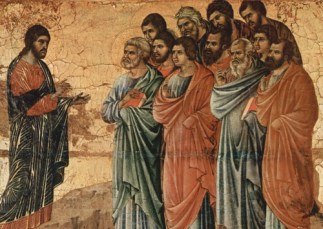 47 Amen, amen, I say to you, whoever believes has eternal life. 48 I am the bread of life. 49 Your ancestors ate the manna in the desert, but they died; 50 this is the bread that comes down from heaven so that one may eat it and not die. 51 I am the living bread that came down from heaven; whoever eats this bread will live forever; and the bread that I will give is my flesh for the life of the world.”
 When the 1960s came around, the “Greatest Generation” – those men and women who served during World War II were still largely and stoically silent about their wartime experiences – but the television networks began television shows about the war. Series such as “Combat,” “12 O’Clock High,” and “Men at War” became staples of prime time viewing. Knowing things about WWII became part and parcel of determining one’s status within the pack (and here I am referring to Cub Scouts). Sure, you might be able to identify the German Messerschmidt 109 fighter aircraft from a flash card, but the real test was could you identify the difference between 109-C and the 109-G series (except the 109-G6 which was soooo… obvious). Clearly such things were critical to national defense among the Cub Scouts. Or so it seemed at the time.
 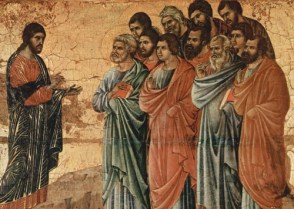 43 Jesus answered and said to them, “Stop murmuring among yourselves. 44 No one can come to me unless the Father who sent me draw him, and I will raise him on the last day.
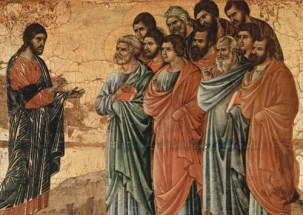 41 The Jews murmured about him because he said, “I am the bread that came down from heaven,” 42 and they said, “Is this not Jesus, the son of Joseph? Do we not know his father and mother? Then how can he say, ‘I have come down from heaven’?”
 In
In 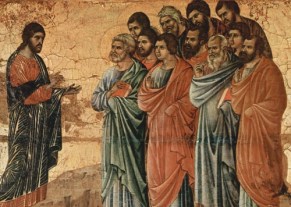 This coming Sunday,
 This coming Sunday,
