

 Did you know that a “new year” begins with Advent? We begin a new liturgical year, a year when most of the gospels will be from the Gospel of Luke (referred to as “Year C”). While the years and readings change, there are constants with the arrival of Advent.
Advent is a time when we commemorate the adventus of Jesus — his coming, arrival, or birth into the days and nights of our world. Christians live in normal time just like everyone else — our normal chronos as time ticks off the days, weeks, months, and years. The early Christian thinkers held that God lives in kairos, a “time” when past, present, and future are but a single moment. The awesome moments of salvation history are when chronos and kairos meet. Continue reading

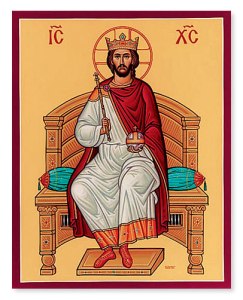 If you are reading this you have successfully navigated Thanksgiving, Black Friday, and holiday travel. You’re doing great! And I know you will do great navigating Cyber Monday, Giving Tuesday, and all that comes with the holiday season. Here in the betwixt and between we celebrate Christ the King Sunday. What should this solemnity mean in your life?
 I am grateful for a day in which we, as a people, pause to give thanks. And who do we have to thank for this holiday? Your answer is likely “The Pilgrims.” You would not be wrong, but then not completely correct, either. Certainly, Thanksgiving and the religious response of giving thanks to God is as old as time. When one considers enduring cultures, one always finds men and women working out their relationship to God. There is almost always a fourfold purpose to our acts of worship: adoration, petition, atonement, thanksgiving. Such worship is part and parcel of life. And yet, there is still a very human need to specially celebrate and offer thanksgiving on key occasions and anniversaries. Since medieval times, we have very detailed records of celebrations marking the end of an epidemic, liberation from sure and certain doom, the signing of a peace treaty, and more.
  friarmusings