Unknown's avatar

About Friar Musings

Franciscan friar and Catholic priest at St. Francis of Assisi in Triangle, VA

Imperial Rivalry

In previous posts there have been references to internal dynamics within the governance structures of Japan. By the 20th century that structure would best be described as a constitutional monarchy, somewhat akin to Great Britain which served as the model for the Meiji Constitution. Akin, but not exactly a match. The differences involved the role of the king/emperor and the makeup of the cabinet.  If you’d like to learn more, take a look at the post, In the Beginning. In more recent posts there have been references to the rise of ultra-nationalism, militarism, and other movements within Japanese society. The rise in nationalism is a natural consequence of pride in its language, culture, and uniqueness – as well as a reaction to the incursion of western imperialism into the world of East Asia. In recent memory of the nation is not only the samurai culture, but also the recent military victories in the First Sino-Japanese War as well as the Russo-Japanese War. True, each of these victories came at a cost of lives and led to wartime sacrifice, but Japan was a nation that had never been defeated. Those victories, from the centuries earlier Mongol invasions, turned back by divine winds (kamikaze) to the more recent victories were guided by the hand of Emperor, descendant of the sun goddess. 

The military rose to great prestige in civil society’s eyes because of Japan’s war victories. These reinforced the idea that military strength was central to Japan’s survival and success especially against the intrusion of western influences. The Meiji Constitution of 1889 gave the military independence from civilian control: the army and navy were responsible only to the Emperor. In addition, the cabinet required that the Army and Navy ministers be active-duty officers, giving the military an essential veto over government policies. This structural design later allowed military leaders to dominate politics in the 1920s and 1930s. Combine this with the military indoctrination of bushidō focused on reverence for the Emperor and you have an environment where militarists could claim to act in the Emperor’s name for the good of Japan.

Within the Japanese government this gives rise to a moderate wing who believe the diplomatic path is the way forward for Japan to take its place in the world order. Opposing them will be the militarist wing which holds up evidence of the U.S. Immigration Act of 1924 and other western impositions as evidence of the weakness and ultimate failure of diplomatic efforts. In their minds, respect, dignity and the place in the world order would be achieved with demonstrations of military power and the will to use it.

The problem is that the Japanese military was not of one mind, vision, purpose or strategy.

The Roots of Imperial Rivalry

From the beginning there was a natural divide between the Imperial Japanese Army (IJA) and Navy (IJN) that can be traced to the Meiji decision to emulate western military power and structure as a means to ensure Japan did not fall to the same fate as China in the 19th century. The IJA was formed by Prussian advisors whose experience was limited to ground warfare. The Prussian model emphasized discipline, mass conscription, and decisive land battles which were closely tied to Japan’s mainland Asia strategy and the Emperor as supreme commander.

The IJN was formed and modeled on the British Navy who, as expected, faced seaward. The emphasis was professionalism, technology, and command of sea lanes with an oriented toward commerce protection and fleet engagements. While professionalism might seem an odd thing to mention, it stands out within the IJN mainly because within the IJA we will see repeated instances of junior office initiative/insubordination (sometimes a thin line) that had major consequences on national policy and on the battlefield. The IJN did not experience anything similar.

From their formation the two branches of the military developed distinct institutional cultures, different strategic geographies (mainland vs. ocean), and separate professional identities from the very beginning.

Back Home

As mentioned above, the Meiji Constitution placed the Army and Navy directly under the Emperor, outside normal cabinet and parliamentary control. Which meant there was no direct civilian control of the military. In addition, there was no unified command/organization such as the (later) U.S. Joint Chiefs, or a single Department of Defence/War as a cabinet position. Each branch of the military had its own Ministers at the cabinet level as well as their own General Staffs. The results were many, but one was that with independent budgets there would always be major infighting for funds based on their strategic geographical forces. As one might expect, the structure encouraged competition rather than coordination, political intrigue, and direct appeals to the Emperor. But also, the cabinet included both Ministers as well as the head of the Army and Navy.  Very often the Ministers were either active duty or retired military leaders. Together or separately, the armed forces had political leverage through institutional veto power.

The Experience of Combat

The success of the First Sino-Japanese War (1894-95) and the Russo-Japanese War (1904-05) brought success, victory, but very different conclusions. In the earlier war the Navy’s victory at the Yalu River secured sea control which they believed enabled the Army’s rapid victories on land by interfering with Chinese logistics. Those same victories reinforced the Army’s belief in offensive spirit as the critical success factor. Each service thus drew different lessons. The Army believed moral superiority and offensive will were decisive while the Navy concluded sea control and modern fleets were decisive. There was no structure where unified doctrine was examined. As a result, rather than fostering joint doctrine, success hardened service parochialism.

The critical element to Japan’s victory in the Russo-Japanese War was … well it depended upon who you asked. The Army was victorious on land, but at a great cost of manpower. The casualties in Manchuria were enormous, but it reinforced their belief in sacrifice as the key to mainland success which in turn was the essential element to safeguard Japan from foreign incursions. The Navy was phenomenally successful at sea from its peremptory strike against the Russian Eastern Navy at Port Arthur at the beginning of the war, to its devastation of the Russian Baltic Fleet at the Battle of Tsushima. These two battles became almost mythic within naval circles and confirmed their commitment to the Mahanian doctrine of sea power as the key to national security and empire. (Alfred Thayer Mahan, naval strategist, whose work The Influence of Sea Power on History was the framework of Japanese and U.S. naval strategies in the 20th century.)

After 1905 the Navy saw itself as Japan’s strategic shield against great powers while the Army saw itself as the nation’s blood-paying guardian on the continent. Both believed they had saved Japan. A rivalry was born.

The Infighting

As mentioned in earlier posts, the Russo-Japanese War resulted in territorial gains, but not the war indemnities that had enriched the national coffers after the earlier Sino-Japanese War. Now Japan faced heavy war debts, limited industrial capacity, and finite state resources. At the time there was a need to resupply and replenish the Army so that it would be able to secure and hold the recent gains in Manchuria and Korea, recruit and train new soldiers, begin to enhance the recently acquired Southern Manchurian Railroad, and build supporting garrisons.

The Navy’s priority was the development of their 8-8 plan: 8 battleships and 8 heavy cruisers in order to form two battle fleets inspired by Admiral Satō Tetsutarō’s Mahanian theories This meant a huge capital investment in shipyards and new construction, recruiting and training to man the new ships, technological innovation, and the development of bases and coaling stations.

Budgeting became a zero-sum competition, not a joint planning exercise.

World War I did not help the rivalry. The Army was largely sidelined with no active role in the war in which Japan fought against Germany on the side of the British and Americans. The Navy benefited from expanded operations and increased prestige via its experience in coalition warfare with Britain. 

Japan neutralized German naval forces in East Asia, protected sea lanes vital to British imperial communications and supply in the Western Pacific and parts of the Indian Ocean, providing security of sea lanes from Southeast Asia to the Mediterranean. In addition, a flotilla of Japanese destroyers deployed to the Mediterranean conducting convoy escort, anti-submarine patrols and search and rescue operations. At the same time, the IJN hunted German commerce raiders in the Pacific and laid siege to German commerce ports in China (Shandong ) which would later become Japanese possessions, as well as the Mariana, Caroline, and Marshall Islands.

Coalition warfare reinforced several naval convictions about sea power, technology and alliances (this latter conviction would be shattered in the post-war naval conferences). Meanwhile the IJA was largely on its own in China and Manchuria. As a result the IJN took on a more internationalist, technocratic view of its role and developed realistic views about industrial limits.  Unlike the Army, the Navy could not avoid confronting industrial constraints because warships required steel, precision machining, turbines, armor plate, fire control systems and ships took years, not months, to build. Costs were enormous and easily quantified. The IJN understood that their mission was directly tied to fleet size which depended on shipyard capacity and industrial throughput. All this made industrial limits impossible to ignore.

The Army was far more dependent upon simple manpower although they too needed the industrial capacity for production of weapons, artillery, and ammunition – all of which, by comparison, we “light” industry. Their concerns centered more on suspicion of diplomacy, the priority of unilateral continental action, and that they were becoming the “little brother” to IJN. As a result, within the IJA there was a renewed emphasis on spiritual purity, bushidō, and a national destiny to be fulfilled on the Asia mainland. Lacking coalition experience, there was a suspicion of internationalism in general, but with the turn inward, there was a marked increase in the politicization of Army officers, especially among the junior officers.

After the War

Based on their experience during the First World War, the IJN expected to have won and secured continued recognition as a British partner in maritime matters. During the war they had partnered so that Japan was responsible for maritime security in the western Pacific and eastern Indian Ocean – they expected this division of responsibilities to continue. It was believed they had achieved parity with the western navies. Then came the shock of:

  • Indifference of British willingness to prioritize the alliance as they assumed responsibility for maritime security of their own Pacific colonial interests.
  • 1922 Washington Naval Conference and what seemed to be an Anglo-American effort to contain and diminish the IJN.
  • 1924 U.S. immigration exclusion

The 1922 Washington Naval Conference was a moment that would fracture the cohesiveness of the Imperial Navy, deepen the sense of needing to set its course and destiny independent of the view and consensus of western powers.

Up next: 1920s – the decade of treaties


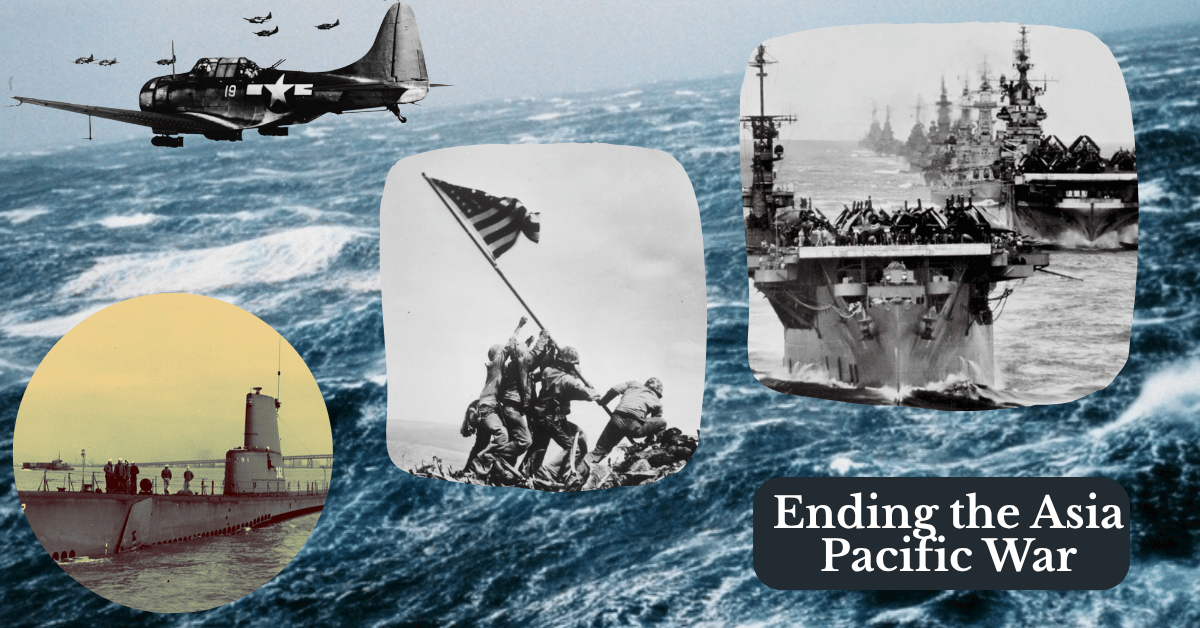
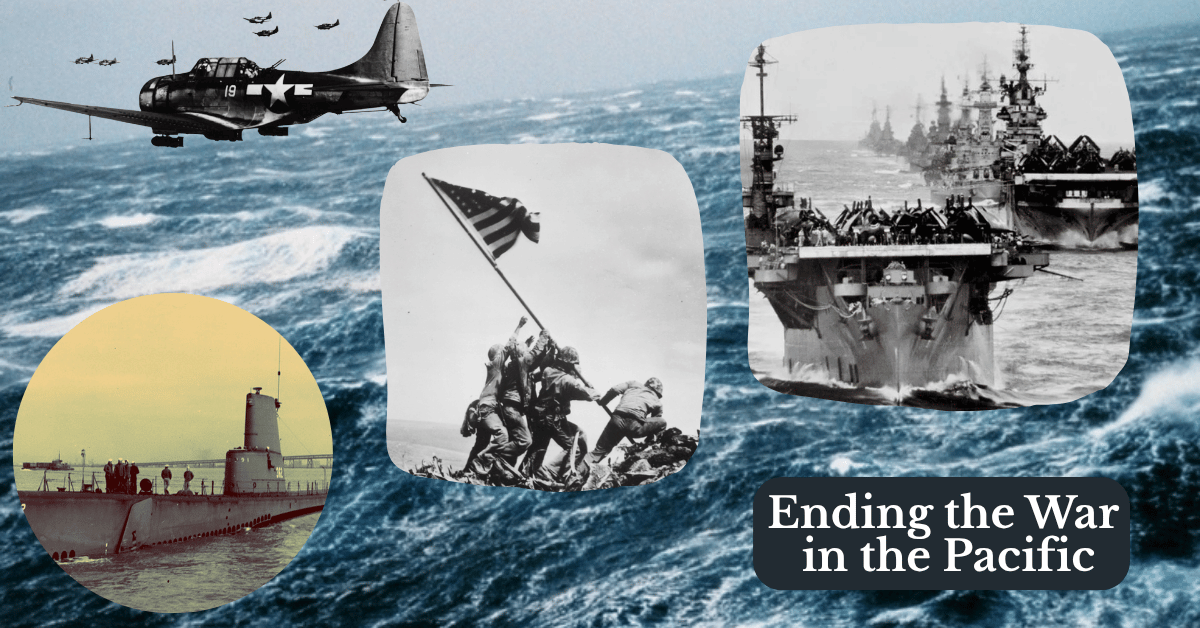
Image credit: various photographs from Naval Aviation Museum, National World War II Museum, and US Navy Archives. | The Immigration Act of 1924 (The Johnson-Reed Act), Office of the Historian, U.S. State Department

The Second Stanza – Promises of Reward to the Virtuous

This coming weekend is the Fourth Sunday in Ordinary Time. The gospel is the beginning of Matthew’s well known “Sermon on the Mount.” In yesterday’s post we drilled deep into the nature of the first part of the Sermon known as the Beatitudes. In today’s post we considered the first stanza of the beatitudes (vv.3-6). Today we look at the second stanza (vv.7-10)

7 Blessed are the merciful,  for they will be shown mercy. 8 Blessed are the clean of heart, for they will see God. 9 Blessed are the peacemakers,  for they will be called children of God. 10 Blessed are they who are persecuted for the sake of  righteousness,  for theirs is the kingdom of heaven.

All the beatitudes in Matthew 5:7-10 are best interpreted as promising eschatological rewards to people who exhibit virtuous behavior. The second stanza does not, however, represent a logical departure from the thought that undergirds the first, for the virtues that are rewarded with blessings are ones exercised on behalf of the people mentioned in Stanza One. In other words the people whom Jesus declares blessed in 5:7-10 are those who help to bring to reality the blessings promised to others in 5:3-6. 

The merciful. “Mercy” (eleos) can have quite a broad range of meanings — which all involve concrete acts rather than just an attitude. It can mean “to forgive sins.” A related word (eleemosyne) refers to the giving of money to the poor (6:2, 3, 4). “Showing mercy” (eleeo) can mean “to heal those who are sick” (9:27; 20:30, 31) or “those possessed by demons” (15:22; 17:17). Twice in Matthew, Jesus quotes Hosea 6:6: “I desire mercy, not sacrifice.” In the first of these (9:13), he metaphorically illustrates mercy as being a physician to those who are sick (9:12). It is spoken in the context of eating with sinners and tax collectors (9:10-13). In the second instance (12:7), the context is feeding those who are hungry. As already illustrated by Joseph’s actions in the opening scene of the Gospel, Matthew does not understand “justice” and “mercy” to be alternatives (1:19; see also 20:1-16, esp. v. 4). In Matthew, Jesus is generally referring to concrete acts of mercy rather than a merciful attitude. 

Continue reading

Immigration

In the previous post we explored the Taft-Katsura Agreement between Japan and the United States. The purpose was to use that as an example of two nations seeking a means to “keep a lid” on a pot that seems to be forever threatening to boil over. Immigration of Japanese to U.S. territories and the mainland was a flame that seemed to keep the pot at or near boiling.

The Chinese Exclusion Act

The first significant wave of 19th-century Chinese immigration to America began with the California gold rush of 1848–1855 and continued with subsequent large labor projects, such as the building of the first transcontinental railroad. Over time animosity toward the Chinese and other foreigners increased for reasons of economic competition and simple racism. Attitudes, violence and state laws led the immigrant Chinese to settle in enclaves in cities, mainly San Francisco, and took up low-wage labor, such as restaurant and laundry work. California became the hotbed of anti-Chinese fear, segregation and exclusion laws, many of which were struck down by the Supreme Court. But the sentiment was building.

In 1892 the U.S. signed into law, the Chinese Exclusion Act prohibiting all immigration of Chinese laborers for 10 years. The Act also denied Chinese residents already in the US the ability to become citizens and Chinese people traveling in or out of the country were required to carry a certificate identifying their status or risk deportation. It was the first major US law implemented to prevent all members of a specific national group from immigrating to the United States, and therefore significantly shaped twentieth-century immigration policy. The Chinese Exclusion Act of 1882 shaped everything that followed. The law alarmed Japan, which regarded China’s treatment as a sign of racial contempt. While Japan was not yet a great power in 1882. By 1905, it was and it expected to be treated differently.

Japanese Immigration

At the same time as the Law was being passed, there was rapid population growth after the Meiji Restoration especially in rural areas and among the urban poor. The government encouraged overseas labor migration as a means to relieve overcrowding. Meanwhile in the U.S. there was a demand for inexpensive labor in Hawaiian sugar plantations, West Coast agriculture, railroads, fisheries, and urban service work. Once the Chinese were excluded Japanese workers were more actively recruited. A U.S.-Japanese treaty signed in 1894 had guaranteed the Japanese the right to immigrate to the United States, and to enjoy the same rights in the country as U.S. citizens. 

By 1900 the Japanese immigrant population in California was small but was being noticed. As seems to be the case with immigrants in America, they work hard and become another “American success story” that, unfortunately, breeds jealousy. Labor unions had gained size and power and they became one of the voices that began to call for control, segregation or exclusion. The instances are many but the act that caused the pot to boil over was the 1906 San Francisco Board of Education enactment of a measure to send Japanese and Chinese children to segregated schools. The Government of Japan was outraged by this policy, claiming that it violated the 1894 treaty. In a series of notes exchanged between late 1907 and early 1908, known collectively as the Gentlemen’s Agreement, the U.S. agreed to pressure the San Francisco authorities to withdraw the measure, and Japan promised to restrict the immigration of laborers to the United States. By this time expansion into Manchuria called for settlers and laborers and as a result immigrants were directed there.

This series of agreements still did not resolve all of the outstanding issues. U.S. treatment of Japanese residents continued to cause tension between the two nations. The Alien Land Act of 1913, for example, barred Japanese from owning or leasing land for longer than three years and adversely affected U.S.-Japanese relations in the years leading up to World War I. As before, these actions were driven by local politics, not federal diplomacy but they had international consequences.

Nativism, Immigration and U.S. Politics

During the First World War Japan was a U.S. ally and for the moment immigration tensions were muted but remained unresolved. After the war there was a national movement towards isolationism and not wanting to be involved in foreign affairs. This was accompanied by a minor, but vocal, sentiment of nativism which led to a general hardening of racial theories and stereotypes. As a result, immigration restriction became a political “hot potato” and then a national priority.  The Japanese view of all this was that the U.S. was willing to accept Japan as a partner when it suited their needs and interests, but never as an equal civilization.

There was a sense on the American side that Japan was a partner that one had to keep an eye upon. The U.S. had long worked on getting all nations to agree to its Open Door Policy for China. With the outbreak of world war, Japan seemed to take advantage of the world’s attention elsewhere and in 1915 issued its “Twenty-One Demands” of China. The demands asked that China recognize Japan’s territorial claims in Manchuria, Liaodong and other areas; prevent other nations from obtaining new concessions along its coast; and take a series of actions designed to benefit the Japanese economically. The U.S. and other nations effectively pressured Japan to drop any demand that changed the Open Door policy, but the other demands were left to China which had to acquiesce. 

The boiling point soon arrived. In 1917, worried about national security, the U.S. passed immigration laws which instituted literacy tests, an arrival tax, and excluded anyone from an “Asiatic Barred Zone” except for Japanese and Filipinos.

The Immigration Act of 1924 

This federal law limited the number of immigrants allowed entry into the United States through a national origins quota. The quota provided immigration visas to two percent of the total number of people of each nationality in the United States as of the 1890 national census. The Act also included a provision excluding from entry any alien who by virtue of race or nationality was ineligible for citizenship. Existing nationality laws dating from 1790 and 1870 excluded people of Asian lineage from naturalizing. As a result, the 1924 Act meant that even Asians not previously prevented from immigrating, the Japanese in particular, would no longer be admitted to the United States. Many in Japan were very offended by the new law, which was a violation of the Gentlemen’s Agreement. The Japanese government protested, but the law remained, resulting in an increase in existing tensions between the two nations. 

Within Japan, the act created iIntense public outrage. Newspapers framed it as a national humiliation arguing that the West will never treat Japan as an equal. Within the Japanese government, the moderates lost ground to the nationalists and militarists. This law did more damage to U.S.–Japanese relations than almost any single diplomatic act before the 1930s.

From Japan’s viewpoint, this law struck at the very heart of their view of themselves and their place in the world order. Japan demanded recognition as a “civilized” nation and yet this exclusion implied inferiority and contradicted Japan’s self-image as a great power. It was a blow to their sovereignty and dignity. Further it clarified for them that the U.S., which had just embedded a racial hierarchy into federal law, would never see them as more than a partner of convenience, and would always seek to block Japan’s efforts in Eastern Asia and the Western Pacific. From this point on these would always be a strategic mistrust of U.S. intentions.

Even more, these immigration disputes fed the nationalist narratives within Japan, strengthened arguments for self-sufficiency, and increased the military’s skepticism toward diplomacy. What made immigration explosive was not demographics, but symbolism: it convinced many Japanese that even military victory, modernization, and alliance could not overcome racial barriers in the American-led international order.

All of this was well known within the debate leading to the enactment of the law. The law was opposed by a host of interest groups and diplomats: Secretary of State Hughes, career diplomats and embassy officials in Japan, Asia specialists, academics and foreign policy intellectuals, business and commercial interests,  and Christian missionaries – even President Coolidge was reluctant to sign it. The voices all argued that the law would: humiliate Japan, damage diplomacy, strengthen hardliners within the Japanese government, undermine long-term Pacific stability, and strengthen Japanese arguments for strategic autarky* and empire. All of which came true. 

*economic self-sufficiency (I had to look that word up!


Image credit: various photographs from Naval Aviation Museum, National World War II Museum, and US Navy Archives. | The Immigration Act of 1924 (The Johnson-Reed Act), Office of the Historian, U.S. State Department

A graced insight

Last evening in our weekly meeting with folks who want to be received into the Catholic Church (OCIA), the session was on the Sacrament of Reconciliation. Earlier in the course of meetings we had discussed human nature, original sin, grace, the redemptive nature of the Paschal Mystery and more, all leading up to our meeting topic. As part of the session the topic of concupiscence came up.

Concupiscence, as explained in the Catechism of the Catholic Church (CCC), refers to the inclination or tendency of human beings toward sin as a result of original sin – even after the sanctifying grace of the Sacrament of Baptism. It is characterized by a disordered desire for earthly goods and pleasures, which can lead individuals away from God’s will. It is a puzzling thing. Even St. Paul struggles with concupiscence: “What I do, I do not understand. For I do not do what I want, but I do what I hate.” (Romans 7:15)

The CCC explains that concupiscence is a consequence of the fall of Adam and Eve, which introduced sin into the human condition. While humans are created good, the effects of original sin have left a mark on human nature, leading to this inclination toward sin (para. 2515). It is described as strong desire or a disordered affection. In itself it is not sinful, but when it meets with external temptation, two gifts from God are important to resist: reason and grace.

I think St. Paul may be describing this nexus of temptation, concupiscence and grace when he writes: “Three times I begged the Lord about this, that it might leave me, but he said to me, “My grace is sufficient for you, for power is made perfect in weakness.” (2 Cor 12:8-9) In those moments Paul reminds us to rely on the promises of what God has already done for us in the life, death and resurrection of Christ. In part to avoid sin in the moment, but also to gain experience and confidence in God’s grace and so grow in virtue.

This morning as part of the Liturgy of the Hours, there is a reading from a sermon of the 9th century Bishop of Naples, John the Serene (Giovanni d’Acquarola). The focus of his sermon is to love the Lord and always walk in his light. In it he writes: “Though the blindness of concupiscence assails us, again we say: The Lord is my light. For he is our strength; he gives himself to us and we give ourselves to him.” It is John the Serene’s way of telling us in those moment, look to the Light of Christ.

Last evening one of the Catechumens commented that one of the great challenges of the journey of faith is to practice keeping the Lord present in your day, in what you do and say, letting that be what guides you. It was a graced insight carrying the wisdom of St. Paul and John the Serene. May we all be mindful of the gift of God’s grace and allow it to enlighten our day.

The First Stanza – Promises of Reversals to the Unfortunate

This coming weekend is the Fourth Sunday in Ordinary Time. The gospel is the beginning of Matthew’s well known “Sermon on the Mount.” In yesterday’s post we drilled deep into the nature of the first part of the Sermon known as the Beatitudes. In today’s post we consider the first stanza of the the beatitudes (vv.3-6)

3 “Blessed are the poor in spirit, for theirs is the kingdom of heaven. 4 Blessed are they who mourn, for they will be comforted. 5 Blessed are the meek, for they will inherit the land. 6 Blessed are they who hunger and thirst for righteousness, for they will be satisfied. 

Powell states: “All four of the beatitudes in the first stanza may reasonably be interpreted as promising eschatological reversals to those who are unfortunate, and some of the beatitudes in this stanza can be reasonably interpreted only in this way” (122). With this approach, these are not virtues that one should aspire to, but they are circumstances in which people find themselves. 

Poor in spirit. The word ptochoi (poor) is used to translate Hebrew ʿănāwîm in the LXX, the dispossessed and abandoned ones in Israel. The phrase alludes to an Old Testament theme which underlies all the beatitudes, that of the ‘poor’ or ‘meek’ (‘ānî or ‘ānāw) who occur frequently in the Psalms and elsewhere (Isa. 61:1–2, alluded to in v. 4, and Ps. 37, alluded to in v. 5), those who humbly trust God, even though their loyalty results in oppression and material disadvantage, in contrast with the ‘wicked’ who arrogantly set themselves up against God and persecute his people. The emphasis is on piety and suffering, and on dependence on God, not on material poverty as such. 

Continue reading

Being Prepared

It is striking how sincere David’s plan is in the first reading. He looks around, sees that he lives in a house of cedar while the Ark of God dwells in a tent, and he decides to do something generous for God. His intention is good. His desire is faithful. And yet God says, in effect, not this — not now.

Instead of accepting David’s plan, God offers David a promise. “The Lord will make you a house.” What David wanted to build with his hands, God intends to build through history. David’s vision is immediate and visible; God’s promise is long, patient, and enduring.

The shift from our plans to God’s promise can be unsettling. We often approach God with concepts of what faithfulness should look like. It is that part of us that wants to be useful, productive, successful. When God redirects us, it can feel like rejection, even when it is actually an invitation — an invitation to trust that God is at work beyond what we can see or control. A moment to let our inner-Martha become Mary.

The Gospel helps us understand why this redirection matters. In the parable of the sower, the seed is good every time, all the time. What changes is the soil. When Jesus describes the soil, He is describing hearts that are distracted, hardened, shallow, or soil/heart that are prepared and open. Fruitfulness depends not just on the good seed, but also on how prepared the soil is to receive it.

This is where the two readings meet. David is asked not to build, but to listen, to receive, and to let God work in God’s own way. His faithfulness at that moment is not action, but openness. It is the root understanding of “obedience” from the Latin “obe audire” – “to listen through.” In other words, David becomes good soil in listening to what God asks of him rather than what David expects of himself.

That is often the challenge of preparing the soil of the heart. It means letting go of control. It means allowing God’s word to challenge our expectations and reshape our desires. It requires patience, because God’s promises unfold slowly. The kingdom grows beneath the surface long before anything is visible.

For us, the question is not simply, “What am I doing for God?” but “What is God trying to do in me?” The temptation is to measure faith by activity. Jesus invites us to measure it by receptivity.

When the soil is ready, fruit comes; sometimes thirty, sixty, or a hundredfold. But that fruit is God’s work, not ours. Our task is quieter and harder: to listen, to trust, and to allow God’s promise to take root in us.

We have our own plans and expectations, but are we listening and trying to discern what God is trying to do within each of us? When we can discern that we might just discover that God is building something far greater than we ever imagined with, through and in our lives.


Image credit: Detail of “Sower Went Out to Sow” | Irish Dominican Photography | Brasov, Romania | CC-BY

The Illusion of Detente

At the start of the 20th century, U.S. and Japanese interests appeared to be aligned both nations supported the idea of an “open door” for commercial expansion in China. After the Russo-Japanese War of 1904–05, U.S. President Theodore Roosevelt acted as a mediator at Japan’s request, and the two sides of the conflict met on neutral territory in Portsmouth, New Hampshire. In the same year, U.S. Secretary of War William Howard Taft met with Prime Minister Katsura Taro in Japan. The two concluded the Taft-Katsura Agreement, in which the United States acknowledged Japanese rule over Korea and condoned the Anglo-Japanese alliance of 1902. At the same time, Japan recognized U.S. control of the Philippines. It seemed as though the great powers in the Pacific region had reached a detent.

The apparent stability in U.S.–Japanese relations after 1905 can be misleading if we assume it removed Japan’s own strategic imperatives. In fact, the Russo-Japanese War settlement and the Taft–Katsura understanding reinforced rather than reduced Japan’s incentive to deepen its position in Manchuria. Several interlocking reasons explain this.

Manchuria 

Japan did not go to war with Russia primarily to win diplomatic recognition or goodwill from the United States. Its central objectives were security and economic survival. Manchuria was always the goal of the 1904-1905 war. The war was meant prevent a renewed Russian threat on the Asian mainland and to secure resources and markets unavailable in Japan itself

The Treaty of Portsmouth transferred to Japan Russia’s leasehold on the Liaodong Peninsula (Port Arthur, Dairen), control of the South Manchuria Railway (SMR) south of Changchun, and recognition of Japan’s “paramount interests” in Korea. These gains were geographically limited and strategically fragile. From Tokyo’s perspective, holding them required deeper penetration, not restraint. A narrow railway zone without political, economic, and military depth was indefensible. Taft–Katsura effectively removed constraints upon Japan rather than imposed limits.

From the U.S. perspective, the 1905 Taft–Katsura Agreement was seen as a mutual guarantee of peace. It is true that the Agreement established a recognition-of-spheres: U.S. acceptance of Japanese predominance in Korea and Japanese acceptance of U.S. control of the Philippines. But crucially, Manchuria was not restricted as the U.S. did not guarantee China’s territorial integrity in practice. So, on the Japanese side of things they concluded that as long as American core interests were untouched, it had room to maneuver on the continent. To the Japanese, Taft–Katsura signaled permissiveness, not partnership.

Economic Reality

Simply put, Manchuria was essential to Japan’s economic strategy. By 1905 Japan faced structural problems of rapid population growth, limited arable land, and dependence on foreign raw materials (coal, iron, soybeans). Manchuria offered vast resources of coal and iron, agricultural land and food supplies, a market for Japanese industry, and a base for settler colonialism, seen as a solution to domestic social pressures. The South Manchuria Railway Company quickly became a transportation firm, a development agency and a political and intelligence instrument. Economic logic alone pushed Japan beyond mere treaty rights.

The war with Russia had been a massive financial strain on Japan. The total cost of the war is estimated at around ¥17–20 billion. By comparison, government revenues in 1905 were only about ¥400 million, meaning war spending equaled roughly five years of peacetime revenue. Other war expense estimates range at nearly 11–12 times revenues.  Whatever the case, Japan had to finance the war.

Roughly three-quarters of the war cost was covered by public bonds rather than taxes. A significant portion of this debt was sold on international markets, especially in London and other European financial centers, where Japanese foreign bonds found buyers through syndicates of banks supported ultimately by foreign credit. Around 40% of war expenditure was funded via overseas borrowing.

Japan’s banking and financial markets at the end of the Russo-Japanese War were under significant stress from heavy deficit spending, heavy reliance on debt finance (both domestic and foreign), and strained central bank reserves. The war pushed the government well into deficit territory by peacetime standards and transformed how public finance and capital markets operated in modern Japan.

Manchuria was the means to solve their economic and strategic concerns.

The Pattern

At the same time, China’s weakness invited Japanese incursions into Manchuria. Qing China was militarily weak, politically unstable, and had no means to enforce sovereignty in Manchuria. Japan simply followed an imperial pattern they had seen employed by the European powers: de facto control without overt conquests. It started with the railway zones, embedding imperial advisors in positions of power, instituting a separate police force, monopolizing the financial and banking systems, inserting itself into the local school system or offering “premium” schooling opportunities.

By 1905, outright annexation was no longer the preferred first step of empire-building among great powers. It was diplomatically risky and expensive. Instead, empires sought control without sovereignty. Manchuria remained nominally sovereign as real power shifted to Japan. Japan initially avoided annexation precisely because it wished to avoid provoking the U.S. and Britain and it could extract economic and strategic benefits without legal responsibility.

Control of the Southern Manchurian Railroad (SMR) might seem somewhat minor, but was exactly the means for controlled troop movement and logistics.  The immigration of Japanese citizens to Manchuria was into settlements anchored on the railway. At the same time, the Chinese residents became economically dependent upon SMR services to transport their goods to market. In addition, by international norms of the time, railways created and defined extraterritorial “railway zones,” quasi-sovereign spaces. It is here that Japan stationed police, courts, and troops along the line. This allowed Japan to dominate Manchuria without governing all of it.

But who is in charge?

While Taft-Katsura recognized Manchuria as a “special interest” zone for Japan (since the U.S. had limited business interests there), diplomatically the U.S. held that Manchuria was part of China. As we’ve pointed out, Japan was slowly exerting increasing levels of dominance over Manchuria. But who was in charge of the Japanese strategy? The diplomats had negotiated Taft-Katsura, but it was the Imperial Japanese Army (IJA) that drove policy in Manchuria. The IJA was of the view that Manchuria was the strategic barrier protecting Korea from the next Russian offensive. As a result they acted rather autonomously in the field, expanding their Japanese-held territories in Manchuria. Actions of the Japanese army (known as the Kwantung Army – Kwantung was another name for the Laiodong Peninsula area) set national policy as the government in Tokyo raced to catch up.

Where was the United States?

At this time the interests of the U.S. was maintaining the “Open Door” policy for China to ensure business interests, but also the U.S. has concerns about stability in the Philippines as well as being heavily involved in interventions and peacekeeping in the Caribbean and Central America, notably in Cuba, the Dominican Republic, and Nicaragua. As a result, the U.S. had limited military presence in East Asia, and as long as China trade was open, had other concerns. Only later, after immigration disputes, naval competition, and China policy clashes did Manchuria become a focal point of U.S. tension with Japan.


Image credit: various photographs from Naval Aviation Museum, National World War II Museum, and US Navy Archives.

Beatitudes: structure

This coming weekend is the Fourth Sunday in Ordinary Time. The gospel is the beginning of Matthew’s well known “Sermon on the Mount.” In yesterday’s post we covered the nature and alternative outlines of the Sermon. Today we go a little deeper into the nature of the first part of the Sermon known as the Beatitudes.

Internal Structure  – Altogether there are nine beatitudes in 5:3–12, the ninth (5:11–12) is really an expansion of the eighth (5:10). Some scholars opt for a structure with three sets of three, the first eight exhibit such a tightly knit parallel structure that it is more likely that we should understand them as two sets of four. This is most consistent with Hebraic poetry forms which seem to be the literary background of the Beatitudes. Still there is an internal consistency within each “stanza/verse” as seen in the form of each pronouncement:

Blessed are they who… (a quality/activity in the present tense)
for they will be…. (a verb in the future; except vv. 3 and 10)

This form is repeated each time with minor variations.  The first and last beatitude have the same ending: “for theirs is the kingdom of heaven.”


Image credit: Cosimo Rosselli |Sermone della Montagna, 1481, Sistine Chapel, Public Domain

Beatitudes: scripture, culture and theology

This coming weekend is the Fourth Sunday in Ordinary Time. The gospel is the beginning of Matthew’s well known “Sermon on the Mount.” In yesterday’s post we covered the nature and alternative outlines of the Sermon. Today we go a little deeper into the nature of the first part of the Sermon known as the Beatitudes.

Beatitudes are found elsewhere in Matthew (11:6; 13:16; 16:17; 24:46) and more frequently in Luke. They are based on a common form of expression in the poetic books of the Old Testament (e.g. Pss. 1:1; 32:1–2; 40:4; 119:1–2; 128:1), but nowhere in the Old Testament or other Jewish literature is there so long and carefully constructed a series as here. A beatitude (Latin) or makarism (Greek) is a statement in the indicative mood beginning with the adjective makarios, declaring certain people to be in a privileged, fortunate circumstance. It is not original to Jesus but occurs frequently in the OT as well as in non-Scriptural Jewish and other writings. Used here, the beatitudes reflect the Jewish use and setting: wisdom and prophecy. In the wisdom setting beatitudes declare the blessings of those in fortunate circumstances, based on observation and experience (e.g. Sir 25:7-9), and declare their present reward and happiness. In the prophetic setting beatitudes declare present and future blessings to those who are presently in dire circumstances but who will be vindicated at the coming of God’s kingdom (e.g. Is 30:18, 32:20; Dan 12:12). 

Continue reading

Being Family

In the first reading, great care is taken to describe the moment when the Ark of the Covenant is brought into Jerusalem. This is not simply a religious procession; it is a profound statement of faith. The Ark represents the dwelling place of God among the people. Where the Ark is, God is near. David dances, sacrifices are offered, and blessings are shared because God who has journeyed with the people since the time of the Exodus, continues to dwell with Israel and now in the holy city of Jerusalem.

Yet even here, something important is already beginning to shift. The Ark is not a talisman, charm, or amulet with magical powers. It does not guarantee blessing by its mere presence. What matters is how the people respond. Will they respond like King David with reverence, joy, obedience, and trust? David’s relationship with God is revealed not by possession of the Ark, but by his willingness to place God at the center of Israel’s life.

In the Gospel, Jesus completes this movement in a startling way. When told that his mother and relatives are waiting outside Jesus takes the moment and redefines what it means to a member of his family. “Whoever does the will of God is my brother and sister and mother.” He is not rejecting his biological relationships, but pointing to something that is intentional and will endure beyond this lifetime.

With these words, Jesus moves us from a sacred object to a sacred community. God’s dwelling place is no longer an ark carried on poles, nor a tent or a temple. God now dwells in a people shaped by obedience to his will. The presence of God is revealed wherever lives are aligned with the Father’s purpose.

This is also where Jesus reshapes kinship. Belonging to God is not determined by bloodline, religious proximity, or external markers. True kinship is formed by obedience. It is formed by listening, trusting, and living according to God’s word. Mary herself is not excluded by this definition; she is its first and finest example. She belongs to Jesus not only because she bore him, but because she said, “Let it be done to me according to your word.

These readings quietly challenge us. It asks us to examine our own religious thinking and practice. The Catholic Church has an amazing treasure of rituals, traditions and things sacred. Have we let our focus fall on those things in such a way that we remain distant from the heart of God? It is possible to honor holy places, rituals, and symbols — all good and necessary — without allowing them to shape how we live.

Jesus invites us deeper. He invites us to become a community where God truly dwells, not because we gather around holy objects, but because we choose obedience, day by day. When we forgive, when we act justly, when we place God’s will above our own preferences, we become the living dwelling place of God.

Like David, we are called to rejoice in God’s nearness. Like the disciples, we are called to hear Jesus say that we belong, not because of who we are connected to, but because we choose to do the will of the Father.

In that obedience, we discover something astonishing: we are not just servants of God. We are family.


Image credit: Pexels | Arina Krasnikova | CC-0