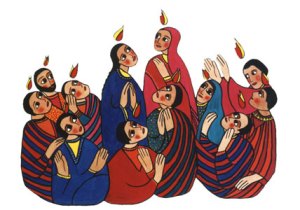
 “As the Father has sent me, so I send you” The Fourth Gospel speaks often of Jesus being sent into the world by the Father: to do his will (6:38–39; 8:29), to speak his words (3:34; 8:28; 12:49; 14:24; 17:8), to perform his works (4:34; 5:36; 9:4) and win salvation for all who believe (3:16–17). That the disciples were sent to continue the words and works of Jesus is foreshadowed at various places in the Gospel: Jesus urged them to lift up their eyes and see fields ripe for harvest, and told them he had sent them to reap where others had labored (4:35–38), he said those who believed in him would do the works he had done and greater works than these because he was returning to the Father (14:12); he told them, “I … chose you and appointed you to go and bear fruit that will remain, so that whatever you ask the Father in my name he may give you” (15:16), saying that when the Paraclete comes “he will testify to me. And you also testify, because you have been with me from the beginning” (15:26–27), and when he prayed for his disciples he said to the Father, “As you sent me into the world, so I sent them into the world” (17:18). This last text, which parallels 20:21, confirms that the sending of the disciples was ‘into the world’, i.e. with a mission to the world. The other texts reveal the essential content of their mission was to ‘harvest’ men and women for the kingdom by their witness to Jesus by word and deed, alongside the ongoing witness of the Spirit. Continue reading →


 They things slow down as a parish approaches summer. That has not been my experience. I am writing this column before things even more busy. There are lots of meetings about one thing or another. Some are meetings that are looking at the “year in review” – some are planning for September 2017 and beyond. Some are planning summer events for the parish. And some are part of life as a Franciscan Friar. Continue reading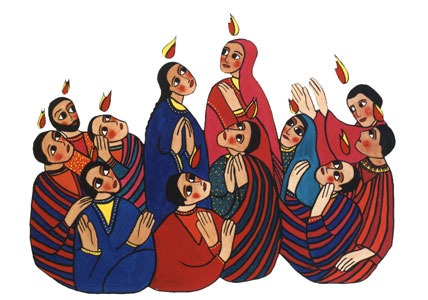
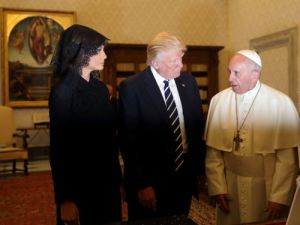 When President Donald Trump recently visited Pope Francis, part of the world’s attention was on Melania and Ivanka Trump as they wore black dresses and veils while meeting the Holy Father. The Holy See does not impose a compulsory dress code, but does suggest a protocol for state visits and hearings with the Pope, both for men and women. In the case of the latter, the protocol requires a long black dress with a high neckline, long sleeves, and a black veil. For historical reasons, however, some Catholic queens or consorts of kings have traditionally been exempted from using black. This is the so-called “privilège du blanc” (privilege of white), a special prerogative granted under the Pope’s criteria.
  When they saw him, they worshiped, but they doubted… (Mt 20:17)
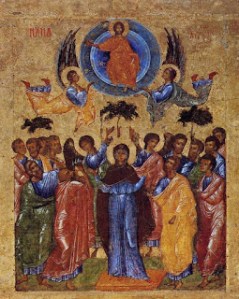 The Ascension of the Lord is a great celebration of the Church. It commemorates the bodily ascension of Jesus into heaven. According to St. Luke it occurred 40 days after the Resurrection (Acts 1:3). It is a feast of great antiquity with liturgies and art of the 4th century already addressing it as a norm of the Church. In the Eastern Church this feast is known in Greek as Analepsis, the “taking up,” and also as the Episozomene, the “salvation from on high,” indicating that by ascending into his glory Christ completed the work of our redemption.
  Father and Son (vv. 1–5) By lifting up his eyes toward heaven (17:1), Jesus strikes a customary posture in prayer (cf. Ps. 123:1; Mark 7:34; Luke 18:13). The first unit in this prayer is Jesus’ intercession for himself (17:1–5). Jesus’ opening petition, “Father, … Glorify your Son, in order that the Son may glorify you” (v.1), implies Jesus’ claim to deity, as the OT affirms that God will not give his glory to another (e.g., Isa. 42:8; 48:11). God’s granting of authority to Jesus (17:2; cf. 5:27) marks the inbreaking of a new era (Isa. 9:6–7; Dan. 7:13–14; Matt. 11:27; 28:18;).
