

 1 When Jesus had said this, he raised his eyes to heaven and said, “Father, the hour has come. Give glory to your son, so that your son may glorify you, 2 just as you gave him authority over all people, so that he may give eternal life to all you gave him. 3 Now this is eternal life, that they should know you, the only true God, and the one whom you sent, Jesus Christ. 4 I glorified you on earth by accomplishing the work that you gave me to do. 5 Now glorify me, Father, with you, with the glory that I had with you before the world began. 6 “I revealed your name to those whom you gave me out of the world. They belonged to you, and you gave them to me, and they have kept your word. 7 Now they know that everything you gave me is from you, 8 because the words you gave to me I have given to them, and they accepted them and truly understood that I came from you, and they have believed that you sent me. 9 I pray for them. I do not pray for the world but for the ones you have given me, because they are yours, 10 and everything of mine is yours and everything of yours is mine, and I have been glorified in them. 11 And now I will no longer be in the world, but they are in the world, while I am coming to you.
Introduction. “Jesus’ prayer in John 17:1–26 is the final scene of his farewell meal with his disciples. Since the sixteenth century, the traditional title of this prayer has been ‘Jesus’ high priestly prayer.’” (O’Day, 787) It shares many similarities with farewell speeches in the OT, e.g., Moses in Deuteronomy (31:30-32:47) as the Israelites are entering the promised land and Moses is at the end of his life. Continue reading
 All power…all nations… all that I have commanded you…with you always – One should be struck by the repetition of the word “all” in this passage:
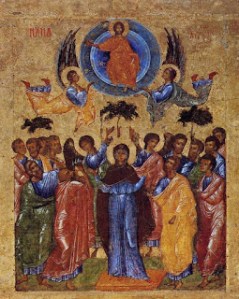 Commentary – Jesus was from Galilee and since the beginning of his public ministry had moved from the northern most reaches of Israel to its center in Jerusalem – the locus of the confrontation and rejection by the leaders of Israel. But now the “Galilean” has triumphed against all odds and it a manner none had foreseen. The preparation of the “twelve” was not lost in their abandoning Jesus at the Passion. They are now restored to their positions of trust and responsibility and given final instructions for fulfilling the mission to which they had already been called (cf. 10:1-15) – but the scope is now far wider than Israel and included all the nations (28:19)
  Matthew 28:16-20 16 The eleven disciples went to Galilee, to the mountain to which Jesus had ordered them. 17 When they saw him, they worshiped, but they doubted. 18 Then Jesus approached and said to them, “All power in heaven and on earth has been given to me. 19 Go, therefore, and make disciples of all nations, baptizing them in the name of the Father, and of the Son, and of the holy Spirit, 20 teaching them to observe all that I have commanded you. And behold, I am with you always, until the end of the age.”
  “Always be ready to give an explanation to anyone who asks you for a reason for your hope, but do it with gentleness and reverence.” (1 Peter 3:15-16)
 I will not leave you…I will come to you. The second promise of continuing presence is Jesus’ promise of his own return (vv. 18-20). “Orphan” (orphanos) was a common metaphor to describe disciples left without their master but the use of the metaphor here has a special poignancy in the light of the familial and domestic imagery that runs throughout Jesus’ words to his own (e.g., 13:33; 14:2-3, 10-14; 15:9-11; 16:21-24, 27). Jesus’ promise that he will not leave the disciples orphaned recalls his use of the address “little children” in 13:33 and is an assurance that the intimacy of that familial relationship is not undercut by Jesus’ departure. His promise to return (v. 18b) thus immediately counters any possible perception of Jesus’ death as his abandonment of his own.
  “If you love me, you will keep my commandments. 16 And I will ask the Father, and he will give you another Advocate to be with you always, 17 the Spirit of truth, which the world cannot accept, because it neither sees nor knows it. But you know it, because it remains with you, and will be in you.
