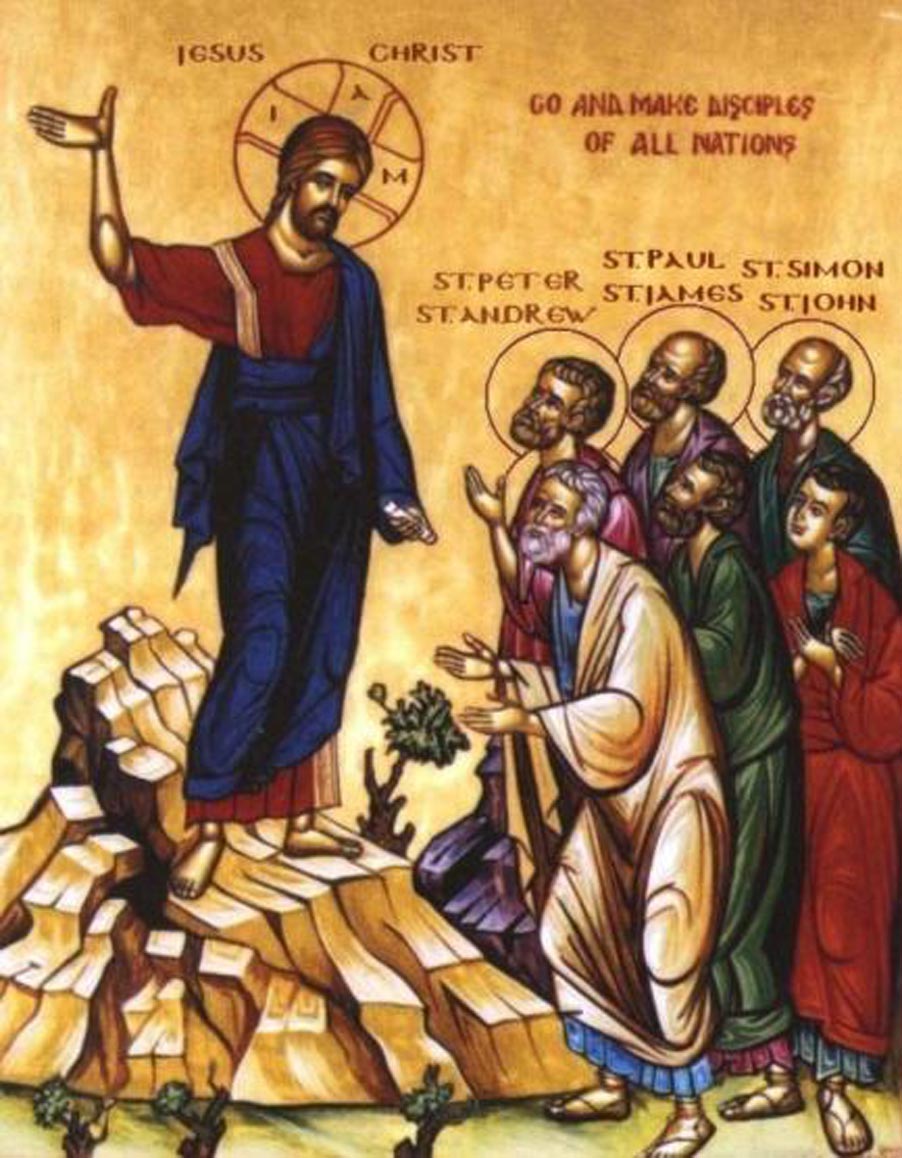
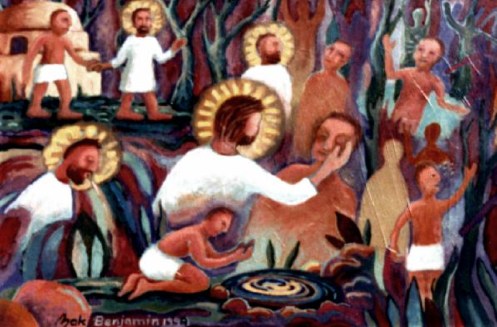
2 After six days Jesus took Peter, James, and John and led them up a high mountain apart by themselves. And he was transfigured before them, 3 and his clothes became dazzling white, such as no fuller on earth could bleach them. 4 Then Elijah appeared to them along with Moses, and they were conversing with Jesus. 5 Then Peter said to Jesus in reply, “Rabbi, it is good that we are here! Let us make three tents: one for you, one for Moses, and one for Elijah.” 6 He hardly knew what to say, they were so terrified. 7 Then a cloud came, casting a shadow over them; then from the cloud came a voice, “This is my beloved Son. Listen to him.” 8 Suddenly, looking around, they no longer saw anyone but Jesus alone with them. 9 As they were coming down from the mountain, he charged them not to relate what they had seen to anyone, except when the Son of Man had risen from the dead. 10 So they kept the matter to themselves, questioning what rising from the dead meant. Continue reading
Author Archives: Friar Musings
Remembering Rightly
Several summers ago we did a special summer Bible study on biblical covenants. We traced and discussed all the covenants between God and his people – beginning with Adam, continuing with Noah, Abraham, Moses, David, and reaching its fulfillment in Jesus Christ. Covenants: the memory and the promise that we will hold God alone and above all things, He will be our God, and we will be his people. Covenants are the means by which God builds his people. Continue reading
The desert: leaving
14 After John had been arrested, Jesus came to Galilee proclaiming the gospel of God: 15 “This is the time of fulfillment. The kingdom of God is at hand. Repent, and believe in the gospel.”
Now that Jesus has been introduced as the unique Son of God, the one who will embody the Spirit and even reverse the story of sinful humanity, his public ministry can begin. Mark notes that Jesus came to Galilee to preach after the arrest of John the Baptist (v. 14). His return to Galilee cannot have been an attempt to escape danger, since Herod Antipas, who executed John the Baptist (6:14–29), ruled Galilee and Perea. Continue reading
The desert: inhabitants
Satan. “Satan” comes from the Hebrew verb STN meaning “to be hostile, to oppose”. The noun means “adversary,” who usually is an earthling in the OT, but in 1 Chr 21:1; Job 1 & 2; Zech 3:1, 2 it refers to a heavenly being and is transliterated “Satan”.
In the LXX, the Hebrew satan was always translated by the Greek diabolos (“the slanderer, the devil”), a word that doesn’t occur in Mark. Continue reading
The desert: driven
12 At once the Spirit drove him out into the desert, 13 and he remained in the desert for forty days, tempted by Satan. He was among wild beasts, and the angels ministered to him.
The account of the baptism moves immediately into Jesus’ test in the wilderness (eremos) as seen in the phrase “At once.” Jesus’ expulsion into the desert is the necessary consequence of his baptism; it is the same Spirit who descended upon Jesus at his baptism who now forces him to enter more deeply into the wilderness. In Mark, the Spirit is “casting out” or “throwing out” (ekballo) Jesus into the wilderness. (Matthew and Luke are a bit less graphic with the Spirit “leading” [anago & ago] Jesus.) In the wilderness Jesus is to be tested (peirazo) by Satan (Mk) or the Devil (Mt & Lk). Continue reading
Shrove Tuesday
Shrove Tuesday is the day preceding Ash Wednesday. The day is observed by many Christians, including Anglicans, Lutherans, Methodists and Roman Catholics, who are called to make a special point of self-examination, of considering what wrongs they need to repent, and what amendments of life or areas of spiritual growth they especially need to ask God’s help in dealing with – and then carry those reflections into the season of Lent.
The idiom “short shrift”means brief and unsympathetic treatment.Shrift comes from the archaic verb shrive, meaning to obtain absolution for one’s sins by way of Confession and doing penance. Shrove Tuesday shares that linguistic origin. In its original form short shrift referred to a brief period of penance granted to a person condemned to death so he or she could be cured of immorality before execution.This original meaning has little relation to the modern sense of short shrift, which usually bears negative connotations. One usually does not want to be given short shrift.
May we priests not give “short shrift” to penitents seeking to draw closer to God. May all of God’s faithful not give “short shrift” to our reflections and on-going conversion in this Lenten season.
The desert: context
12 At once the Spirit drove him out into the desert, 13 and he remained in the desert for forty days, tempted by Satan. He was among wild beasts, and the angels ministered to him. 14 After John had been arrested, Jesus came to Galilee proclaiming the gospel of God: 15 “This is the time of fulfillment. The kingdom of God is at hand. Repent, and believe in the gospel.” Continue reading
Outside the camp
“He shall dwell apart, making his abode outside the camp.” For me these are frightening and dreadful words. Spoken to a person in the wilderness, a person on the Exodus betwixt and between the slavery of Egypt and the promised land of Palestine. These are words spoken about brothers, sisters, mothers, and fathers – now shunned to a life apart, a life without. No longer part of the only social fabric they had known. They are words which mean that you do not belong; and may soon not be remembered. Continue reading
Belonging: pew communities
Six weeks ago I started a series in this column space that began to explore what it means to say “I belong to Sacred Heart.” I hope you have been following the flow of musings and thoughts – if not – let me touch upon a few points. There are almost 3,000 households that are registered, but then “registered” is not the kind of belonging we are thinking about. There is a group of 500 (or so) households that volunteer, serve, minister, open parish emails, give in an identifiable way, and contribute to the annual appeal. This smaller group certainly demonstrates more of the characteristics that would seem to point to a greater sense of belonging. But along the way, we made the point that all these great external characteristics are the result of belonging, not the precursor to belonging. Continue reading