Unknown's avatar

About Friar Musings

Franciscan friar and Catholic priest at St. Francis of Assisi in Triangle, VA

Recognizing the journey

he_qi_road_to_emmausOur gospel on this 3rd Sunday of Easter is St. Luke’s telling of the two disciples on the road to Emmaus. It is a story about a journey of faith even as it is a journey to faith. The thing about journeys is that you often do not realize that you are on one, or if you do, may not recognize that the nature of the journey has changed. The two disciples had journeyed to Jerusalem with one set of hopes and expectations. They were following Jesus, were in Jerusalem for the events of Holy Week, and saw one journey seemingly end at Golgotha.

But on the third day, when the reports began to filter into the community of believers, what journey did they begin? Or did they recognize that the original journey was simply becoming clearer? It is the same day that the women discovered the empty tomb, were told Jesus had risen by two dazzling angels, and ran to tell the other disciples. How is it that, instead of a journey of joy, the walk to Emmaus scene is more like a trudge of disappointment? Had the journey of faith been derailed? Had the road zigged when they zagged? Continue reading

Emmaus: at table

emaus02At The Table With Jesus The disciples are struck by what Jesus has said and ask him to stay with them even has he appears to be traveling on. Alan Culpepper (479) offers an interesting insight into the simple passage (v.28):

Jesus’ first action is probably significant both thematically and theologically. He “walked ahead as if he were going on.” On the surface it is a gesture of social deference and polish. It implies that Jesus was not really going further but that he would not impose on the disciples to offer him hospitality. In Near Eastern customs, the guest was obligated to turn down such an invita­tion until it was vigorously repeated (see Gen 19:2-3). Theologically, Jesus’ action demonstrates that he never forces himself upon others. Faith must always be a spontaneous, voluntary response to God’s grace. Thematically, the action is sugges­tive, because all the way through the Gospel Jesus has been going further. When the people at Naz­areth rejected him, Jesus “passed through the midst of them and went on his way” (4:30). When the crowds wanted to prevent Jesus from leaving them, he responded, “I must proclaim the good news of the kingdom of God to the other cities also” (4:43). He preached in synagogues and with­drew to desert places to pray (4:44; 5:16). In Galilee he was constantly on the move, and from Luke 9:51 until 19:44 he is on the way to Jerusalem. The Lukan Jesus, therefore, was always going further, and in the book of Acts the gospel of Jesus will spread “to the ends of the earth.” Continue reading

Emmaus: on the way

he_qi_road_to_emmausCommentary. Luke sets the scene with markers of time (that very day), place (on the road between Jerusalem and Emmaus) and situation – two disciples who earlier had been with the disciples, heard the women’s testimony and apparently discounted their testimony has idle wistfulness. The community of believers has been fractured.

Unable to see. Elsewhere in the Gospel according to Luke “eyes” and “sight” have been correlated with comprehension, faith and salvation (cf. 1:78-79; 2:30; 6:39-42; 10:23; 11:34; 18:35-42; 10:42). For most the gospel referred to as the “Journey to Jerusalem” (9:51 – 18:14) the disciples have witnesses Jesus’ teaching, mighty deeds, and revelation of his heavenly Father. But in the earliest hours of the new world order after the Resurrection, the two disciples do not recognize Jesus. Their eyes are “prevented” from seeing, an expression for spiritual blindness. It ironic that the two travelers consider themselves the truly knowledgeable ones who are shocked that this fellow traveler has no idea of the very public events of the last three days. While they understand the details of the events from a human perspective, they are truly unaware of those event’s meaning. Continue reading

Emmaus: context

he_qi_road_to_emmausLuke 24:13-35  13 Now that very day two of them were going to a village seven miles from Jerusalem called Emmaus, 14 and they were conversing about all the things that had occurred. 15 And it happened that while they were conversing and debating, Jesus himself drew near and walked with them, 16 but their eyes were prevented from recognizing him. 17 He asked them, “What are you discussing as you walk along?” They stopped, looking downcast. 18 One of them, named Cleopas, said to him in reply, “Are you the only visitor to Jerusalem who does not know of the things that have taken place there in these days?” 19 And he replied to them, “What sort of things?” They said to him, “The things that happened to Jesus the Nazarene, who was a prophet mighty in deed and word before God and all the people, 20 how our chief priests and rulers both handed him over to a sentence of death and crucified him. 21 But we were hoping that he would be the one to redeem Israel; and besides all this, it is now the third day since this took place. 22 Some women from our group, however, have astounded us: they were at the tomb early in the morning 23 and did not find his body; they came back and reported that they had indeed seen a vision of angels who announced that he was alive. 24 Then some of those with us went to the tomb and found things just as the women had described, but him they did not see.” Continue reading

Lord of All

Last week I wrote that if Lent was about making “room for God” – and that is a good start – then the Easter season and beyond should be about coming to realize that God is the entire room! “God should be not merely the reference point but the whole context out of which we operate. God is not merely the source of our existence, he is the substance of our existence, the very life we have, and without God we would be lifeless, even if we are alive. Put another way, if Jesus is not Lord of all, he is not Lord at all.”

I think St. Francis understood that God is not just the philosophical construct as the “ground of being,” but the One who gives us life every day, is the reason we get up in the morning, and is the focus of our praise. God is both our creator and our redeemer. Both our raison d’etre and the reason why we do what we do. God is both the source of love and the sort of love we should have and express. God is the overwhelming, awesome, all-loving being that can sweep our lives into wholeness, completeness, and rest. He is Lord of all. Continue reading

The story we tell

telling_storiesEaster is one of those days in church we are filled with parishioners, regular and perhaps a bit less-so. Folks that are here just to please a mother or grandmother – which is itself a good thing. There are visitors passing through town, the last wave of folks here before heading back north for the summer, other people who just want to celebrate in the prettiest church in these parts, people that are curious, folks that sense that things are different with Pope Francis, folks who are suffering, folks are bit lost and searching, and all kind and manner of people. All are welcomed. Welcomed on this greatest of solemnities of the Christian faith. Someone said to be that this is like a second Christmas. Really? Maybe Christmas is a second Easter (…and I would have to give that one some thought.) Easter is the celebration – when we proclaim that, just as He said, Jesus was raised from the dead. Resurrection. It is amazing that God showed His love for us by coming to pitch his tent among us, but raised from the dead… that takes the Divine Love to a new depth, breadth, and mystery. Continue reading

Urbi et Orbi

The 2014 Easter Message of Pope Francis

PFrancis-on-loggiaDear Brothers and Sisters, a Happy and Holy Easter!

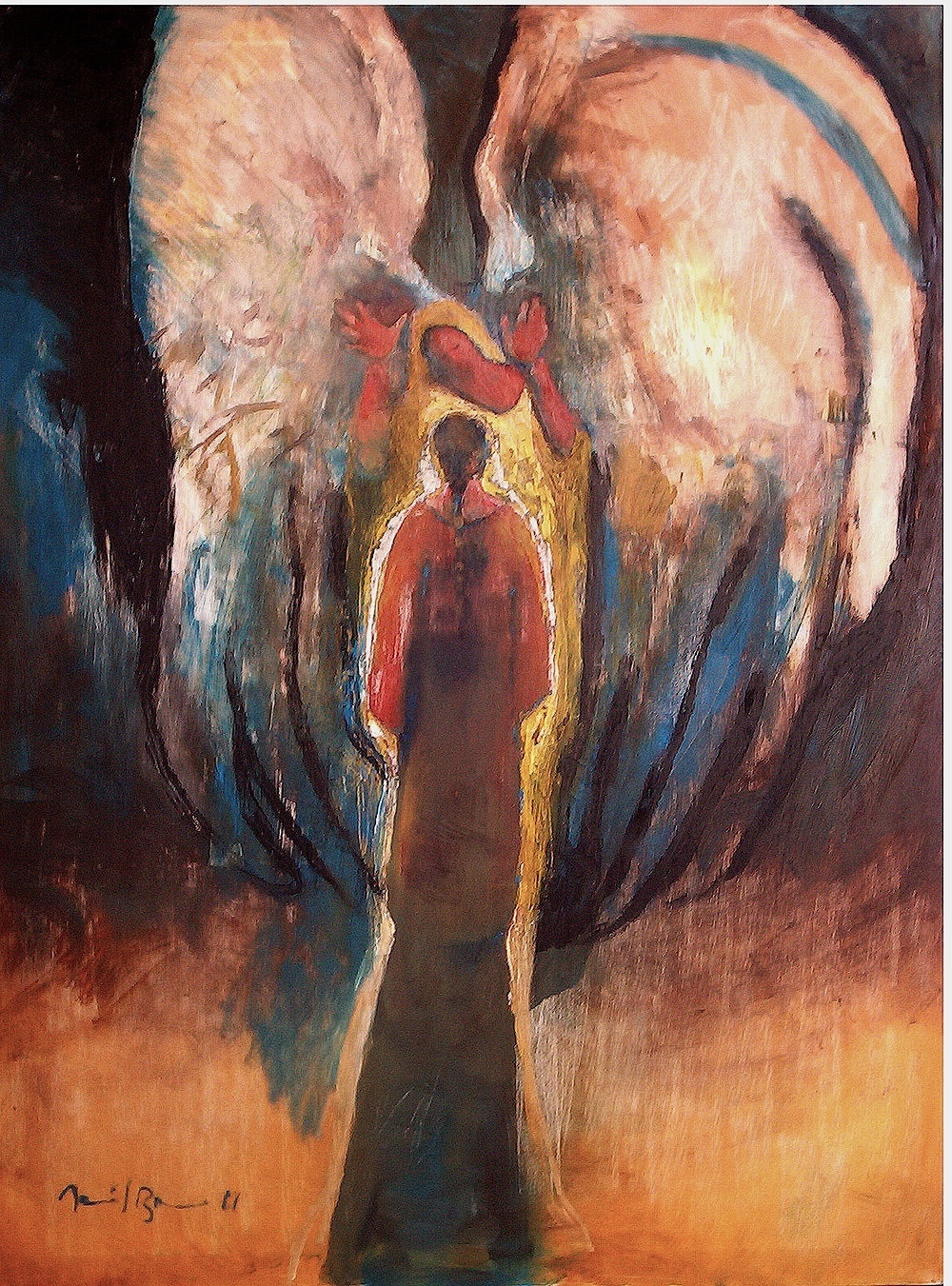
The Church throughout the world echoes the angel’s message to the women: “Do not be afraid! I know that you are looking for Jesus who was crucified. He is not here; for he has been raised… Come, see the place where he lay” ( Mt 28:5-6).

This is the culmination of the Gospel, it is the Good News par excellence: Jesus, who was crucified, is risen! This event is the basis of our faith and our hope. If Christ were not raised, Christianity would lose its very meaning; the whole mission of the Church would lose its impulse, for this is the point from which it first set out and continues to set out ever anew. The message which Christians bring to the world is this: Jesus, Love incarnate, died on the cross for our sins, but God the Father raised him and made him the Lord of life and death. In Jesus, love has triumphed over hatred, mercy over sinfulness, goodness over evil, truth over falsehood, life over death. Continue reading

Getting our bearings

sextent-antiqueMay the grace and peace of the Risen Lord be with you. I trust these words find you well, blessed, and part of the Easter people celebrating our awesome and loving God. As an Easter people we are about to begin a whole season of Easter from now until Pentecost Sunday on June 8th. Just about the same time as your life begins to accelerate with Confirmation (next Sunday!), First Holy Communion (May 10th), Mother’s Day, final exams, graduations, summer vacation and camp planning, getting ready for college, and a whole list of things around the home and office. Life can be breathless. Sometimes we need to take a breath, get our bearings, and see how far we have come. To ponder our successes, our failings, all the hurdles we jumped, disasters we dodged, and things that got accomplished. Continue reading

Between death and Resurrection – we wait

holy-saturdayGood Friday has passed and now it is morning on the second day. And we wait, even as we are busy about things. This morning last vestiges of the sparseness of Lent and Good Friday will give way to the many hands readying our church for the Light of Christ to enter the main doors. And yet we wait.  The Elect and Candidates of RCIA, along with their sponsors are waiting. They too wait. All filled with Hope.

“The Spirit itself bears witness with our spirit that we are children of God, and if children, then heirs, heirs of God and joint heirs with Christ, if only we suffer with him so that we may also be glorified with him. I consider that the sufferings of this present time are as nothing compared with the glory to be revealed for us. For creation awaits with eager expectation the revelation of the children of God… For in hope we were saved. Now hope that sees for itself is not hope. For who hopes for what one sees? But if we hope for what we do not see, we wait with endurance.” (Romans 8:16-19, 24-25) Continue reading