
From a Sermon by Saint Caesarius of Arles, bishop
Blessed are the merciful, for they shall receive mercy. My brothers and sisters, sweet is the thought of mercy, but even more so is mercy itself. It is what all men hope for, but unfortunately, not what all men deserve. For while all men wish to receive it, only a few are willing to give it.
How can a man ask for himself what he refuses to give to another? If he expects to receive any mercy in heaven, he should give mercy on earth. Do we all desire to receive mercy? Let us make mercy our patroness now, and she will free us in the world to come. Yes, there is mercy in heaven, but the road to it is paved by our merciful acts on earth. As Scripture says: Lord, your mercy is in heaven.
There is, therefore, an earthly as well as heavenly mercy, that is to say, a human and a divine mercy. Human mercy has compassion on the miseries of the poor. Divine mercy grants forgiveness of sins. Whatever human mercy bestows here on earth, divine mercy will return to us in our homeland. In this life God feels cold and hunger in all who are stricken with poverty; for, remember, he once said: What you have done to the least of my brothers you have done to me. Yes, God who sees fit to give his mercy in heaven wishes it to be a reality here on earth.
What kind of people are we? When God gives, we wish to receive, but when he begs, we refuse to give. Remember, it was Christ who said: I was hungry and you gave me nothing to eat. When the poor are starving, Christ too hungers. Do not neglect to improve the unhappy conditions of the poor, if you wish to ensure that your own sins be forgiven you. Christ hungers now, my brethren; it is he who deigns to hunger and thirst in the persons of the poor. And what he will return in heaven tomorrow is what he receives here on earth today.
What do you wish for, what do you pray for, my dear brothers and sisters, when you come to church? Is it mercy? How can it be anything else? Show mercy, then, while you are on earth, and mercy will be shown to you in heaven. A poor person asks you for something; you ask God for something. He begs for a morsel of food; you beg for eternal life. Give to the beggar so that you may merit to receive from Christ. For he it is who says: Give and it will be given to you. It baffles me that you have the impudence to ask for what you do not want to give. Give when you come to church. Give to the poor. Give them whatever your resources will allow.
Sermon 25,1: CCL 103, 111-112
 Life can be breathless. Sometimes we need to take a breath and see how far we have come; to ponder our successes, our failings, all the hurdles we jumped, disasters we dodged, and things that we accomplished. As strange as it might seem, the Easter Season can be a time to think about Lent. At the beginning of Lent the classic refrain is “What are you giving up?” One parishioner who loves chocolate gave it up entirely for Lent. I asked, “Did that bring you closer to God?” The response was, “Not really. I just end up being cranky and miserable for all of Lent.” I am pretty sure that was not the hoped-for result. Within the tradition of prayer, alms giving, and fasting, there needs to be a path that makes room in your life for our God who is ever close to us.
 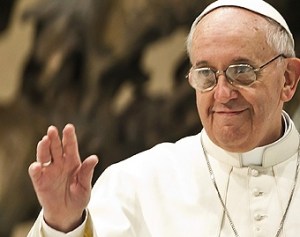 Here is the opening of Pope Francis’ homily on Divine Mercy Sunday. The
 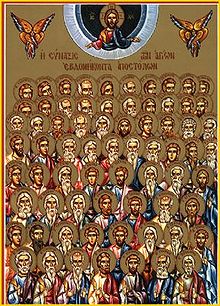 On the evening of that first day of the week, when the doors were locked, where the disciples were, for fear of the Jews, Jesus came and stood in their midst and said to them, “Peace be with you.” (John 20:19)
 Forgiveness is one of those fundamental lessons we try to teach our kids from an early age: when siblings bicker or hurt each other, or if friends break a toy. And at the same time, we should ever be aware that we have not exactly mastered the art of forgiveness. The ability to forgive is a learning experience that often takes a lifetime. It’s not easy, but perhaps it’s not meant to be easy. Showing compassion and understanding in a world through which we cautiously pass takes an open heart instead of the guarded one we often carry.
  Last week I wrote that if Lent was about making “room for God” — and that is a good start — then the Easter season and beyond should be about coming to realize that God is the entire room! “God should be not merely the reference point but the whole context out of which we operate. God is not merely the source of our existence, he is the substance of our existence, the very life we have, and without God we would be lifeless, even if we are alive. Put another way, if Jesus is not Lord of all, he is not Lord at all.”
 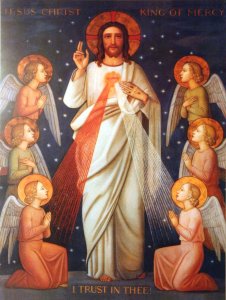 Pope Francis has declared a Jubilee Year of Mercy to begin on the Solemnity of the Immaculate Conception this December 8th . In Judaism and Christianity, the Jubilee is a special year of remission of sins, forgiving debts, and reconciling broken relationships. It is a year in which the people of God are asked to especially make manifest the mercy of God. So maybe, here at the beginning, it is a good time to think about the meaning of “mercy.”
 Last week I wrote that if Lent was about making “room for God” – and that is a good start – then the Easter season and beyond should be about coming to realize that God is the entire room! “God should be not merely the reference point but the whole context out of which we operate. God is not merely the source of our existence, he is the substance of our existence, the very life we have, and without God we would be lifeless, even if we are alive. Put another way, if Jesus is not Lord of all, he is not Lord at all.”
