
 I have written about calumny as sin, which it is indeed as noted in the Catechism of the Catholic Church. There are times I wonder if a “lack of curiosity” is very distant cousin. This would be a place for a “wink” emoji, but I will easily resist such temptations.
The recent power struggles during the February 2021 bitter cold snap are a case in point. It did not take too long for the leadership of the State of Texas to place the blame for the extensive loss of power on the renewable energy (solar panels, wind turbines) as the culprit. Texas Gov. Greg Abbott and Rep. Dan Crenshaw were quick to jump on that “party line” – pun intended – and people I know held that up as a demonstration of what’s wrong with this country; the green movement forcing people to adopt renewable energy – and “look where that got Texas.” I would such a reaction as one of many examples where a lack of curiosity helps lead people down a dead-end path.
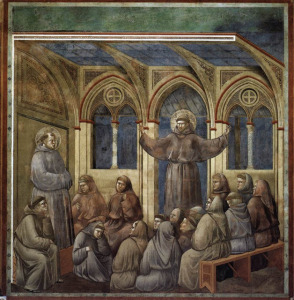 It is later in the autumn of 1206 that with his decision to “leave the world” Francis began to be aware of the powerful Divine Presence in his life through, his work among the lepers near Assisi, and his habit of taking refuge in churches for prayer and rebuilding the structures. At San Damiano he encountered the consoling presence of the Savior who had suffered and died for him. It was a presence he soon came to recognize in other churches: “And the Lord granted me such faith in churches that I would pray simply and say: We adore you, Lord Jesus Christ, in all your churches throughout the world, and we bless you, because by your Holy Cross, you have redeemed the world.” (Testament 4-7). Francis was at the beginnings of an inner peace.
  Several days ago I posted about the
  I suspect many readers will not recognize the name in the title. She passed away at age 62 on Friday. She was an Ursuline Sister, born in Colorado, raised in New Mexico, vowed in Kentucky, and served the Ursuline Sisters in Guatemala’s western highland during the years of that country’s civil war. She was an elementary school teacher. Please take a moment to read her
  There are three events that seem to highlight the “period of crisis” in Francis life during the period from late 1205 until the summer of 1206:
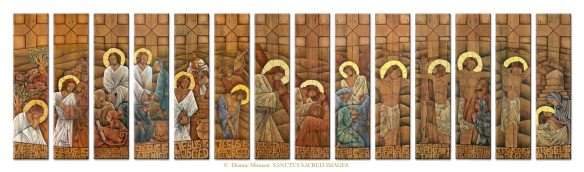 When Holy Land pilgrims returned home, they often brought back a bit of Palestine. In addition to relics, the pilgrims also brought back the desire to re-create scenes from the Holy Land in order to share their experiences with those unable to visit the holy places firsthand. When the Holy Land was closed to western visitors, European replicas of the sacred sites became increasingly popular. Outside of Jerusalem, the tradition of walking the via sacra in commemoration of Christ’s passion, death, and burial with “stations” is mentioned as early as the twelfth century and all of the references point to an outdoor celebration. There was no standard celebration of the via sacra. Depending on the location there were as few as seven and as many as 42 stations. Interestingly, in the beginning, the customary route apparently was the reverse of ours, starting with Calvary and ending at Pilate’s house – and included many other stops that are no longer considered part of the Via Dolorosa (“Sorrowful Way”).
 In
In 
 friarmusings