Franciscan Simplicity

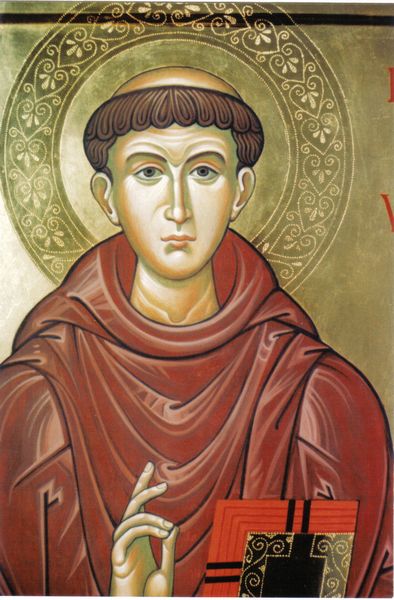
saint-francis-of-assisi-cimabueMy Franciscan brother, Fr. Dan Horan OFM, is prolific writer of exceptional clarity. He has an article over at American Magazine that might create some dialogue in the world of Franciscan scholars and perhaps a pundit or two. A simple history of the Franciscan intellectual tradition (too simple to be factual) is that many people from Bonaventure on have tried to peer into the writings and life of St. Francis and synthesize his thought and spirituality in flowing and lofty constructs and thoughts. Francis was no simple person, but he was a man of particular dedication to Scripture. One only need to read Francis’ own writings to see that.  And that is at the core of Fr. Dan’s article Continue reading

Christians and Atheists

“Among Islamic radicals incensed with the West, no two groups stir rage like Christians and atheists. Christians symbolize the perceived sins of the Western past, while atheists embody what Islamists see as the decadence and apostasy of the Western present.”

Insightful article by the ever-insightful and veteran Vatican/Catholic reporter John L. Allen, Jr. of the Boston Globe/Crux.com: An Easter reflection on what Christians and atheists have in common

Who are my mother and brothers?

What do you wantThe reading from today’s gospel (with a few extra verses) and St. Francis of Assisi’s answer to the question.

20 Jesus came with his disciples into the house. Again the crowd gathered, making it impossible for them even to eat. 21 When his relatives heard of this they set out to seize him, for they said, “He is out of his mind.” … 31 His mother and his brothers arrived. Standing outside they sent word to him and called him. 32 crowd seated around him told him, “Your mother and your brothers* [and your sisters] are outside asking for you.” 33 But he said to them in reply, “Who are my mother and [my] brothers?” 34 And looking around at those seated in the circle he said, “Here are my mother and my brothers. 35[For] whoever does the will of God is my brother and sister and mother.” (Mark 3) Continue reading

Come and See Where you Belong

Belonging_crDo you remember last week’s gospel? It was Mark’s account of the Baptism of the Lord. This week we shift to the Gospel according to John and see Jesus moving from the waters of the Jordan to his first encounter with would-be disciples. We know they are going to say ‘yes’ and follow Jesus. Still, I have wonder what they were thinking, feeling, and ultimately, why did they say “yes.” We are told that Andrew believed he had found the Messiah. Still, I wonder what was going on inside – the hopes, the expectations, what it was like to meet Jesus…. and so much more. Continue reading

St. Anthony of Padua

StAnthonyPaduaWhen we Franciscans arrived at Sacred Heart in 2005, we were quite surprised to find that one of the clerestory windows (the ones up high in the nave vault) was Saint Anthony of Padua, a Franciscan contemporary of St. Francis of Assisi. In fact, we Franciscans still have a brief letter, in Francis’ own hand, written to Anthony. Most people know St. Anthony of Padua as the patron saint of lost and stolen articles, but have you ever wondered why he is that particular patron saint? Continue reading

Passion Sunday: crucified

Crowning-with-Thorns-lowfThe King Is Scourged and Mocked (27:26-31a) The Gospel reading for Palm Sunday of the Lord’s Passion is quite lengthy and so will not be included here. It can be found at the USCCB website: http://www.usccb.org/bible/readings/041314.cfm

Where the religious trial ends by mocking Jesus as the Christ, the secular trial ends with Jesus being mocked as king with a scarlet cloak (a soldier’s cape) parodying the emperor’s purple robe, a reed representing a royal scepter, and the crown of thorns. Jesus is thus enthroned as king, and offered the homage of kneeling which a Hellenistic ruler required. In this scene Matthew continues to redefine what kingship means. If this scene is a coronation, then the cross will be the throne. Continue reading

St. Francis and Fasting

saint-francis-of-assisi-cimabueOf the three traditional Lenten practices: prayer, almsgiving, and fasting, it is the last one that is perhaps the one that is hardest to extract from the historical record. This is for two reasons. First, fasting was part and parcel of medieval Christianity. Second, Francis mentions fasting, but does not expound upon its meaning directly.

The meaning and context of medieval fasting. In the OT there were two kinds of fasts, public and private. The most notable, and only one required by the law of Moses was on the great Day of Atonement, thus fasting was a penitential practice associated with reconciliation from sin. In addition, there are biblical records of public fasts being proclaimed in times of distress, lamentation, and at the prophetic insistence for various situations. The public fasts were generally connected to communal sins and lasted a day. Private fasts were generally acts of penance. Continue reading