
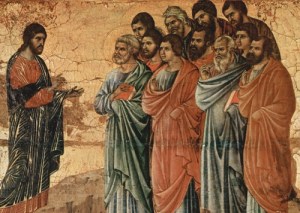
 In today’s gospel, Jesus sends the disciples out on their first mission. In the fast paced Markan gospel, the disciples had seen Jesus working for the kingdom and had been helped to reflect on the meaning of his activity and his message. They had seen his commitment and the how his service to the Kingdom came as a priority to his own needs. When tracked down after finding a quiet place to pray, when told of the need to minister to the people, Jesus responded: “Let us go on to the nearby villages that I may preach there also. For this purpose have I come.” (Mk 1:38)
The Kingdom of enough
1
 In
In  In today’s
  The second, longest, and most complex of this Gospel’s narrated exorcisms,
  So where was I….? As noted in an earlier post, today’s
  Patience is a virtue that’s been vanquished in the digital age. It would be interesting to know if our threshold of annoying things that impede our “getting on with things” has changed over the years. In the 1970s my computer science class developed programs/software on the Dartmouth Time Share system. We carried around boxes of IBM punch cards that took hours to punch. When had to carry them to the data center and submit them…and wait. When the paper punch strip came out that was amazing! This was progress!. Now if my webpage take more than 200 msec. to load, I am annoyed. “Who designed this thing? What’s wrong with our internet connection?” Just some of the inner thoughts that arise when we are impeded.
 friarmusings