
God is able to do his work in the world independent of humans, but He doesn’t. He is committed to working out his divine will through human covenant partnership, even when humans continually fail to uphold their end of the agreement. We humans continually mess up our end of the covenant, but God remains devoted to his decision to partner with us.
In Jesus, God becomes human to create a new humanity who is empowered to live in Jesus’ new covenant as partners with God. And so the God is committed to working out his good plans through covenant human partners. In this week’s Bible study, we are reflecting on God’s surprising plan to make up for humanity’s role in the covenant and how we can now live as renewed partners with him.
If you would like to read the Bible Project’s blog on this topic/video, you can access it here. The Bible Project is a non-for-profit organization that depends on our support. If you would like to support their efforts with a donation, you can reach them here.
 Today has an
  Part of the blessing being a parish priest is that you are invited into some of the most intimate moments of a family’s life. There is perhaps none more intimate and intense than the moments when illness passes through uncertain diagnosis, to one which blurs into the final days of a life. It is part of a life of ministry to be into a family whose loved one’s days are numbered. It is a privilege to journey with the family are they prepare for the loss that surely and steadily this way comes. In those times, Hope can seem more tentative, more distant; perhaps hovering on the edge of disappointment.
 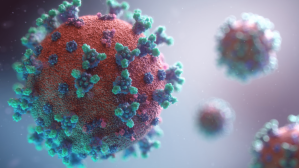 In the course of celebrating Mass we come to the distribution of Communion – during these times of the coronavirus pandemic. At my parish many precautions are taken as part of the distribution of Holy Communion: sanitizing hands of the minister, wearing masks, standing behind a plexiglass shield with a hand pass through – and the Bishop has asked that all the faithful please receive in the hand and not on the tongue. Still we try to be accommodating as best we can. If someone want to receive on the tongue, I will ask them to receive in the hands, but if they insist, I simply ask them to wait until the end of the line so that they are the last to receive. They can then receive on the tongue, following which I am able to again sanitize my hands.
  I don’t remember – it has been so long now – but somewhere, sometime ago, I began to start emails, letters, cards and the like with the same phrase: “May the grace and peace of Christ be with you.” It is an expression that begins many of St. Paul’s letters, in one form or another, e.g., Galatians 1:3. It is not a scripted beginning; there is a great deal of intention about it. There are times when I am in a hurry, responding to emails, that I am reminded at the end to return to the beginning and insert the greeting. It often leads to editing of the email if there is some part that does not have grace or peace about it.
 “To what shall I compare the Kingdom of God? It is like yeast that a woman took and mixed in with three measures of wheat flour until the whole batch of dough was leavened.”
 I remember when I was young, my limited spiritual life revolved around worrying about whether or not I would go to heaven after I died. Even though I wasn’t too sure what heaven was like, I was scared to death of going to hell and wanted to avoid it at all costs. Fortunately, I came to learn (meaning this is what I was taught) that there were ways that I could manage this. If I could obey all of the rules – okay, most of the rules – and do a lot of extra devotional things like going to Confession, Mass and receiving Holy Communion on nine First Fridays of the month in a row, I would go straight to heaven. As a student in Catholic school, that was worked into the curriculum! This was gonna’ be easy.
 friarmusings