
 It is a quiet morning before the sunrise. I am getting used to the change of parish, locale, and of course weather. The autumnal days of Virginia in October are far different than those in the Tampa Bay region. Since Virginia is not a “swing state” for the upcoming elections, I am also getting used to being able to watch television without the bombardment of political ads. I am not sure what is more refreshing the lack of political ads or the autumnal days and nights.
I was reading the news online (from a variety of sources) and several of them reported that in the face of steeply rising coronavirus infections, increasing positivity rates and hospitalizations, and the decreasing level of available ICU beds,a governor is moving to mandate the wearing of masks and social distancing in all public settings. The lieutenant governor agrees that masks and social distancing are vital to controlling the virus, but held that the mandate of wearing a mask is an infringement on personal freedom and an unnecessary intrusion of government into the lives of its citizens. This logic escapes me.
 Yesterday in Philadelphia, former President Barak Obama gave a speech in support of his former Vice-President, Joe Biden. I have no doubt that potential GOP voters dismissed the speech without listening to it or reading it. I have little doubt that potential Democratic voters accepted it in glowing terms, even if they also did not listen to it or read it. And I have no doubt that some now reading this post will think, “I knew it, he is a ______” (please fill in the blank as you see fit; for the record I am unaffiliated and quite independent). But, one might wonder why I posted this. The reason is simple and has come out in many homilies over the years. “The thoughts we have become the words we speak. The word we speak shape the actions we take. The actions we take form the habits we develop. The habits we develop reveal the character we possess. The character we possess shapes our destiny.” We Christians are asked to take all that and ask, “Do the thoughts, words, actions, habits and character we display reflect the
  One of the themes of this week’s gospels asks if the Lord, at his return, will find faithful people: “You also must be prepared,for at an hour you do not expect, the Son of Man will come.” (Luke 12:40 from
  One of the great communal celebrations is to welcome an infant into the community through the waters of Baptism. There are many ways in which the celebration occurs, depending on the construction of the church – especially the location of the baptismal font. At my previous parish, to give you an idea, there was no
  “Take care to guard against all greed” (Luke 12:15; from
 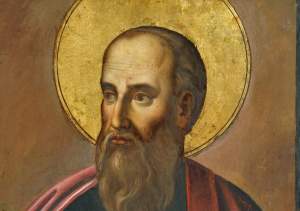 After acknowledging that real strength comes from Christ and not himself, St. Paul writes: “So, I will boast all the more gladly of my weaknesses, so that the power of Christ may dwell in me. Therefore, I am content with weaknesses, insults, hardships, persecutions, and calamities for the sake of Christ; for whenever I am weak, then I am strong” (
 Next Sunday is the celebration of the
 In the book of Genesis, the garden of Eden is portrayed as a high place where heaven and earth are one, and human relationships reflect this unity. But Eden is lost when humans rebel against God, so the unity between heaven, earth, and all humanity is fractured. God’s work throughout the rest of the Bible is all about recovering this lost unity. Israel’s tabernacle and temple served as symbolic Edens as they allowed for human and divine space to overlap. Because of Jesus, this place is no longer limited to one location, and the unity of Eden can be experienced wherever God’s people gather together in his love.
  friarmusings