Calculus of the Kingdom

When I was a youth I read a book, “Cheaper By the Dozen” that tells the story of time and motion study and efficiency experts Frank Bunker Gilbreth and Lillian Moller Gilbreth, and their twelve children. I always thought they were on to something, at least in the sense that their must be a “calculus of child rearing.” So years later armed with an undergraduate degree in Mathematics, an MBA, and zero child rearing experience, I thought I would offer a multivariate model of child rearing that could be of aid to parents everywhere. Continue reading

Resolutions – it’s never too late

A number of us were sitting around last week talking about this and that, and any number of things. In the course of the conversation someone mentioned New Year’s Resolutions – what has worked and what has… shall we say… resides somewhere between “oh yeah, I forgot about that” and “yeah… that didn’t work out so well.” What was interesting to us all is that many times the resolutions that did not work out shared something with “what not to do” advice in a column that appeared in this space just before New Year’s Day 2014. People thought it would be good to be reminded; hence the “reprint.” How did you do with your resolutions? Labor Day marks a “new year” of sorts. It is never too late. Continue reading

The Canaanite Woman: crossing over

Rahib_CanaaniteWomanA Framework to Understand the Response. It is believed that the etymology of “Hebrew” comes from the Semitic root ‘apiru, which refers to those who cross over. It is an apt description when one considers the journeys of Abraham and Sarah, the travels of Jacob/Israel and his 12 sons, and the Exodus of the Jews to Israel – a narrative history of people who were “other” and yet willing to “cross over” because of the call of God. And paradoxically, the disciples are not willing to “cross over” to console this woman who is “other.” Continue reading

What equals nine?

What do you wantOne of the interesting things about “blogging” is what happens off-line. WordPress has a feature for “comments” and it is a controllable feature. You can allow all comments and then remove inappropriate ones as you see fit. But then that means you have to monitor; sometimes manners and charity are not hallmarks of text and comments left behind. It takes time. Not willing to dedicate time to the supervising task? The blog administrator can not allow any comments at all.  That takes no additional time to oversee. There is at least one “middle way.” You can allow comments but require that all comments be approved before they are posted on one’s blog. That takes some time, but you have the luxury of getting to such things when you have time. Continue reading

Practiced Hospitality

Christian-HospitalitySeveral weeks ago we announced that we would try an experiment – Nametag Sunday. It is a pilot project that has arisen out of an ongoing conversation around what it means to be a committed parish of the faithful. Among all the studies and from surveys of Catholics across this nation – one thing that is clear: a parish must be welcoming. Continue reading

Hearing the Pearls

A while ago I started a blog that I use to post bible study notes, Sunday homilies, and occasionally when I have the time, things I muse about. It was started about the same time we started the parish Facebook page and Twitter streams as a way to broaden the manner and means by which the parish communicates to parishioners and any interested person. To date I have posted 570 entries, there are 337 followers, and the blog has been viewed – and I find this amazing – 31,188 times. Continue reading

This is our life

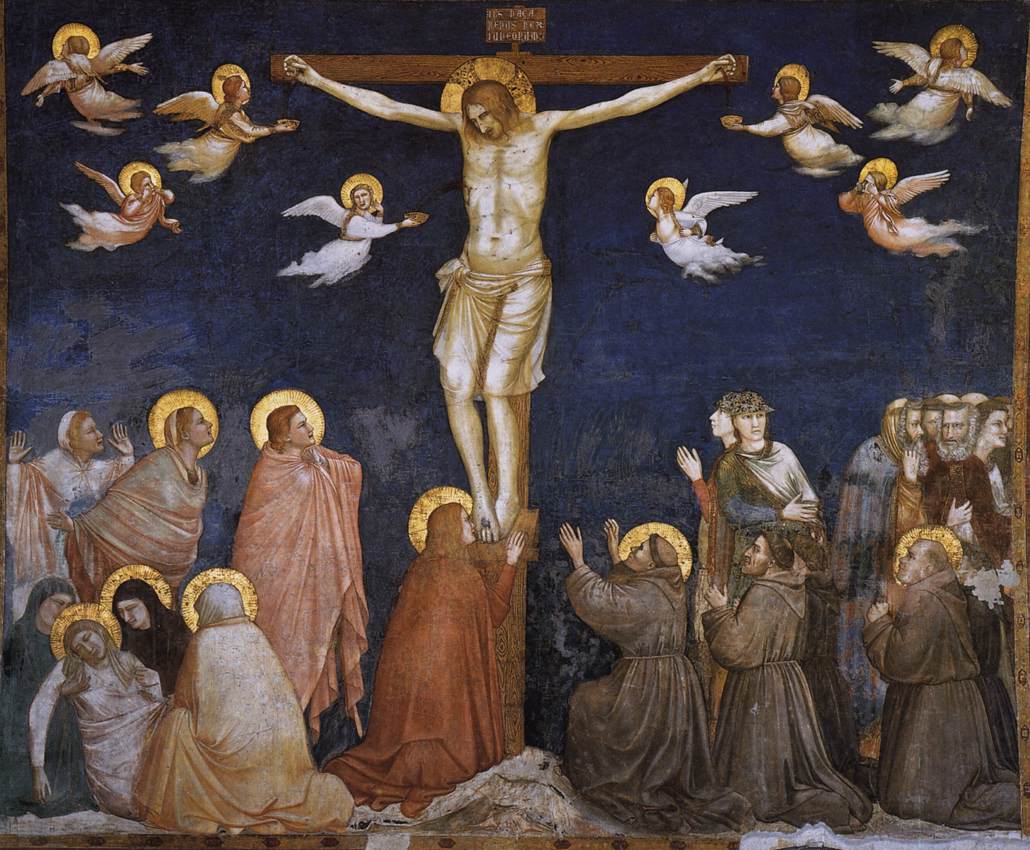
Franciscans34The movement founded by St. Francis of Assisi in the early 13th century was something unique compared to the then existing forms of “religious life.” The models of such life, spirituality, and the ways to be in the world were: monastic life, the life of the hermit, or a priest assigned to one place to serve out his days. And then came the Franciscans.

Europe had already experienced the Irish monks wandering on pilgrimage as a penitential practice, but not a way of life. From the beginning, Francis and the small band of friars practiced a type of ascetic homelessness. Francis himself spent a good portion of the early years (1209-1215) wandering, especially in central and eastern Italy. Francis and the early friars practiced peregrination pro Christo (“wandering for the sake of Christ”). Continue reading

Stories we tell; stories we hear

red-appleThank you to all who have asked about my mom. She is doing well physically, still plays a mean game of gin rummy, but her memory – or at least her access to her memories – lays somewhere between fuzzy and random with spots of complete clarity. Visits with her are a wonderful mix of storytelling and sometimes making a connection. Makes you wonder how memory works? Continue reading