 Who is my neighbor? But because he wished to justify himself… And who is my neighbor?” One wonders why the scholar did not “quit while he was ahead?” It is almost as though the scholar’s first question was entrée to the real question about who is (or is not) neighbor. In Leviticus 19 the word root neighbor (-ger) include fellow Israelites, but also stranger and travelers. While that Semitic custom remained present in Jesus’ time, the Pharisees also professed extensive limitations on interactions with non-Jews. (m. Abodah Zarah 1:1, 2:1-2, 4:9-10) To “justify himself” the scholar raises the disputed question about the identity of the neighbor. When the scholar added the Leviticus text, one may well speculate that the scholar’s understanding was that “neighbor” included only one’s fellow Israelite. Continue reading
Being neighbor: to who?
Reply
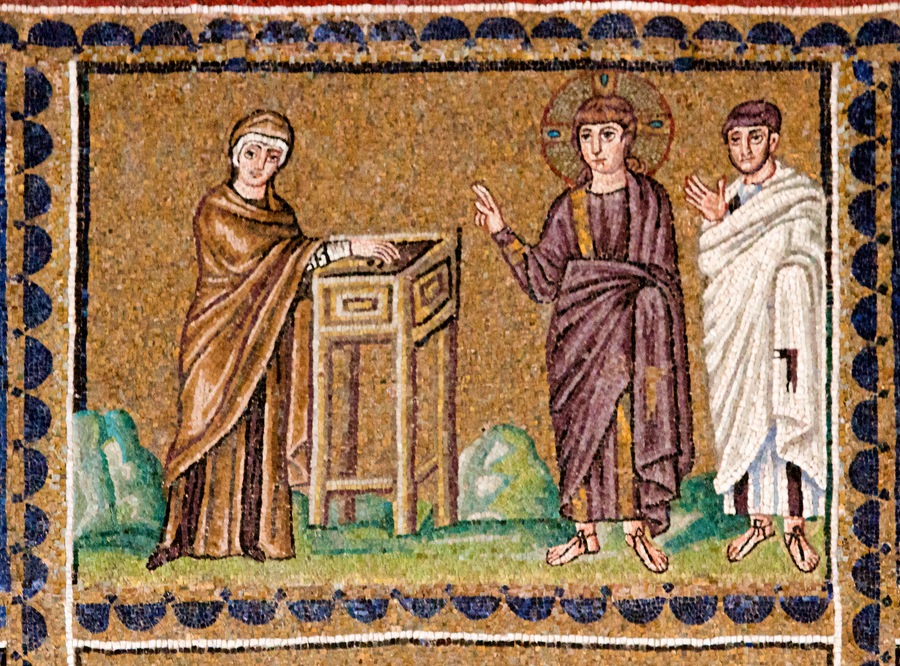
 The Parable. . 41 “Two people were in debt to a certain creditor; one owed five hundred days’ wages and the other owed fifty. 42 Since they were unable to repay the debt, he forgave it for both. Which of them will love him more?” 43 Simon said in reply, “The one, I suppose, whose larger debt was forgiven.” He said to him, “You have judged rightly.”
 Keeping Watch. 32 “But of that day or hour, no one knows, neither the angels in heaven, nor the Son, but only the Father. 33 Be watchful! Be alert! You do not know when the time will come. 34 It is like a man traveling abroad. He leaves home and places his servants in charge, each with his work, and orders the gatekeeper to be on the watch. 35 Watch, therefore; you do not know when the lord of the house is coming, whether in the evening, or at midnight, or at cockcrow, or in the morning. 36 May he not come suddenly and find you sleeping. 37 What I say to you, I say to all: ‘Watch!’”
  Promise Amidst Tribulation. 24 “But in those days after that tribulation the sun will be darkened, and the moon will not give its light, 25 and the stars will be falling from the sky, and the powers in the heavens will be shaken. 26 And then they will see ‘the Son of Man coming in the clouds’ with great power and glory, 27 and then he will send out the angels and gather (his) elect from the four winds, from the end of the earth to the end of the sky.