
 “Come away by yourselves to a deserted place and rest a while.”
Rest. A break from all the bustle and activity. A chance to renew, to stop, to slow. An end, a pause from work, if only for a little while. An opportunity to stop doing that you may simply be. A space in time to process, reflect upon, think, pray, to listen. We have lives filled with so much activity, so much work, so many obligations that the very idea of rest is as though the Holy Grail itself. Don’t get me wrong: this isn’t a complaint. I love my life, I love being in this parish. It’s more an observation that somewhere in all the things that make up a blessedly frenetic life, I think I’ve forgotten how to rest. It came to me last week as I stood in the very place where Jesus uttered those words to his disciples, realizing the deep need – and then someone on the tour asked, “Father, what do you think Jesus…” And the moment of my own musing and prayer passed. Continue reading
 The year was 1968. It was the year we first orbited the moon, the 747 jet liner made its commercial debut, the average rent for a three-bedroom house was $130/month, milk was $0.34/gallon, Dr. Martin Luther King, Jr and Robert Kennedy were assassinated, Intel corporation was founded, the Beatles released the White Album, zip lock bags were first sold, and the infamous Big Mac debuted at the golden arches for a whopping $0.49.
 Part of our task as faithful Christians and citizens of the world is to engage the deep and probing questions that the great thinkers, wisdom figures, and commentators raise. Perhaps no question is more penetrating, more challenging, and more important than that offered by the amateur philosopher, Tina Turner: “What’s love got to do, got to do with it? What’s love but a second-hand emotion?” It is the question for the ages.
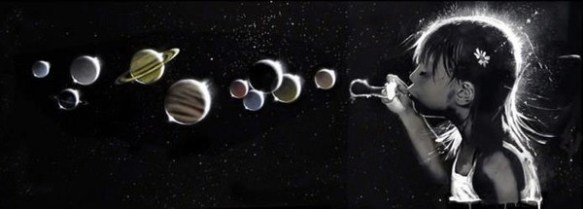 The great thing about being a child is that you can grow up to be a fire truck (my ambition at one point in life), not be concerned with gravity and the laws of physics, and your world in not limited by “that is not just the way things work.” It is a world of imagination and wonder that sometimes befuddles babysitters, teachers, and parents. It consumes lazy summer afternoons, creates space adventures, and can conjure up a most challenging collection of wisdom and insight. Nothing captures it better than my favorite comic strip of all time, “Calvin and Hobbes.” Calvin is a preternaturally bright six-year-old; Hobbes is his stuffed toy who, in Calvin’s imagination becomes into his best friend, the innocently wise Hobbes. To read Calvin and Hobbes is to be infused into wondering and wandering on a cosmic scale; to engage the innate human capacity to be surprised, to imagine, and be absorbed into mystery. No topic in the universe is closed to such capacity – not even the theological arts. Calvin mused how predestination is molded by procrastination, finally concluding, “God put me on this earth to accomplish a certain number of things. Right now, I am so far behind that I will never die.”
 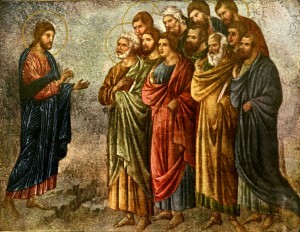 When you hear the “Great Commission” what is the prominent part that resonates with you? “Go” – “make disciples” – “Baptizing” – “teaching” – the declaration of the Holy Trinity: “Father, and of the Son, and of the Holy Spirit?”
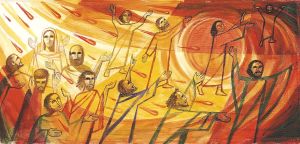 A strong driving wind-like sound filling the house; tongues of fire appearing, suddenly speaking in different languages. The Apostles emboldened and empowered by the Spirit. The crowds confused, astounded, amazed. This is Pentecost.
  I grew up in the College Park section of Orlando. It has been around for a while. The first resident, John Ericsson, built his home in 1880. In the 1920s there was a huge upswing in new homes and many of the neighborhoods east of Edgewater Drive were constructed. The area west of Edgewater was built in the late 1940’s and 1950’s. College Park was the home to people as diverse as astronaut John Young and beat-generation writer Jack Kerouac. In the late 1950’s and early 1960’s when I was growing up there, everybody knew folks; you certainly knew everyone on your street and one or two streets in each direction. You could mostly walk up and down the street in the early evening and meet and greet most folks. They were on the porch when the afternoon humidity had lifted and you could catch a bit of coolness from the evening breeze. Then some darn fool went and made air conditioning popular.
  Recently I was taking in a bit of light reading, you know, the classic summer beach novel: easy to read, entertaining, … and no I don’t remember the title. But I remember this, there are good guys being chased by bad guys. The good guys are only armed with their wit, imagination, guile, luck, and their paranoid friend who believes every conspiracy theory is true. But then again, just because you are paranoid doesn’t mean you’re wrong.
  I wonder why the Catholic Church chooses this gospel account every 2nd Sunday in Lent. We always hear the reading of the Transfiguration, the glorious account of the divine glory of God being revealed in the person of Jesus. It is amazing – so amazing that we celebrate the Feast of the Transfiguration every August 6th; we have been doing so for 800 years or so. Our Christian brothers and sisters proclaim this gospel on the Sunday before Lent. That also makes some sense to me because it is from this point in the story that Jesus will head straight to Jerusalem, culminating in Passion Week, fulfilling exactly what Jesus told them: he would be raised from the dead after suffering. Jesus’ words point to the crucifixion, just as Lent begins to point us to Good Friday. Reading the Transfiguration immediately before Lent gets us ready. But why the 2nd Sunday in Lent? But why proclaim this gospel twice in the same liturgical year?
  The very first liturgical action in the Rite of Baptism isn’t pouring water – it is marking the one receiving baptism with the sign of the cross – traced on the forehead. At the same time speaking the words, “I claim you for Christ…” They are powerful words, words of life and death. Words that mark a new beginning. “I claim you for Christ…” This is who you are and whose you are. And now off you go into the world, into the wilderness of life, among the beasts and the angels among us.
  friarmusings