
At the start of the 20th century, U.S. and Japanese interests appeared to be aligned both nations supported the idea of an “open door” for commercial expansion in China. After the Russo-Japanese War of 1904–05, U.S. President Theodore Roosevelt acted as a mediator at Japan’s request, and the two sides of the conflict met on neutral territory in Portsmouth, New Hampshire. In the same year, U.S. Secretary of War William Howard Taft met with Prime Minister Katsura Taro in Japan. The two concluded the Taft-Katsura Agreement, in which the United States acknowledged Japanese rule over Korea and condoned the Anglo-Japanese alliance of 1902. At the same time, Japan recognized U.S. control of the Philippines. It seemed as though the great powers in the Pacific region had reached a detent.
The apparent stability in U.S.–Japanese relations after 1905 can be misleading if we assume it removed Japan’s own strategic imperatives. In fact, the Russo-Japanese War settlement and the Taft–Katsura understanding reinforced rather than reduced Japan’s incentive to deepen its position in Manchuria. Several interlocking reasons explain this.
Manchuria
Japan did not go to war with Russia primarily to win diplomatic recognition or goodwill from the United States. Its central objectives were security and economic survival. Manchuria was always the goal of the 1904-1905 war. The war was meant prevent a renewed Russian threat on the Asian mainland and to secure resources and markets unavailable in Japan itself
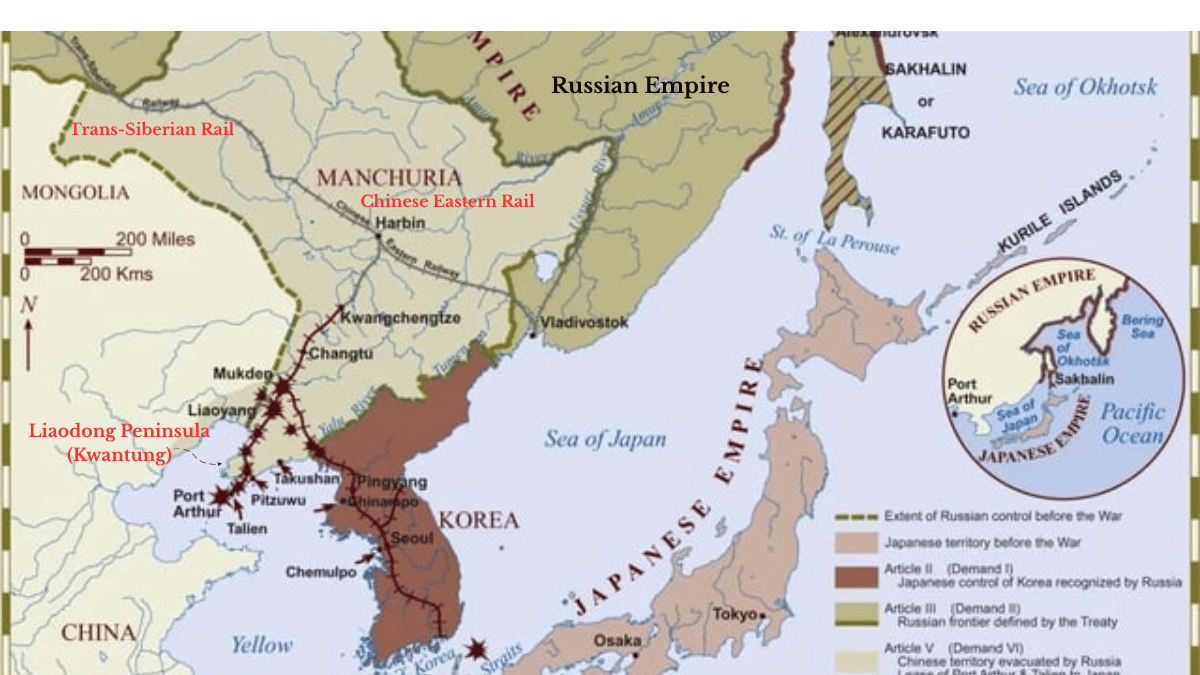
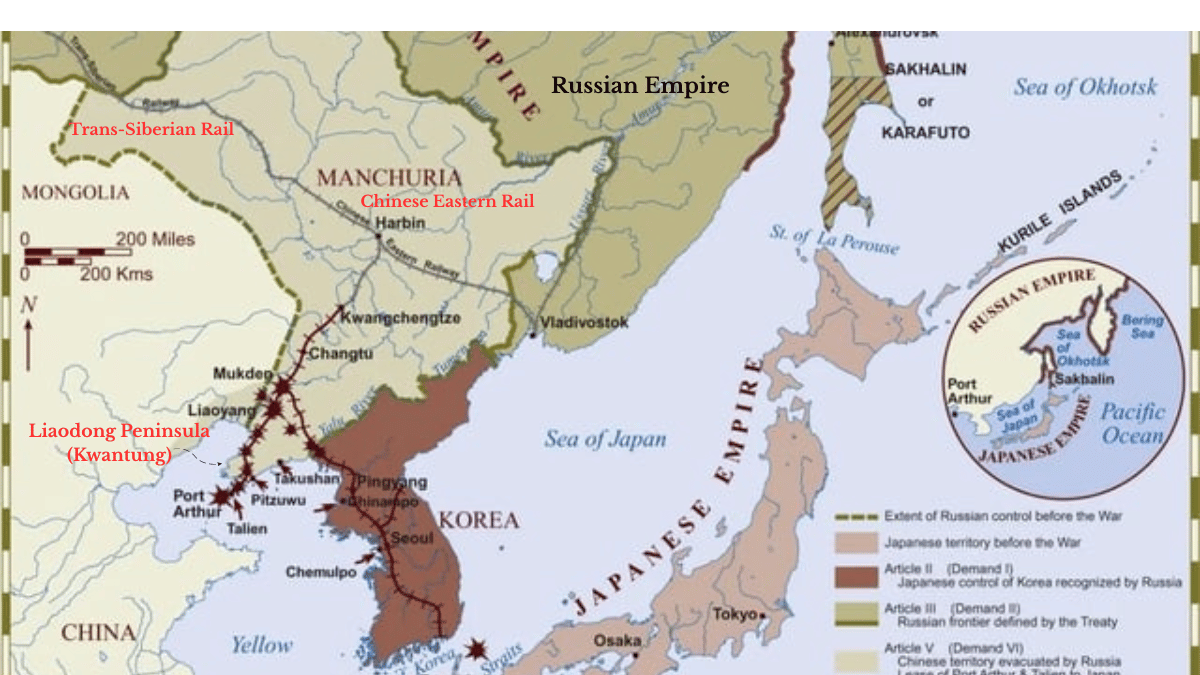
The Treaty of Portsmouth transferred to Japan Russia’s leasehold on the Liaodong Peninsula (Port Arthur, Dairen), control of the South Manchuria Railway (SMR) south of Changchun, and recognition of Japan’s “paramount interests” in Korea. These gains were geographically limited and strategically fragile. From Tokyo’s perspective, holding them required deeper penetration, not restraint. A narrow railway zone without political, economic, and military depth was indefensible. Taft–Katsura effectively removed constraints upon Japan rather than imposed limits.
From the U.S. perspective, the 1905 Taft–Katsura Agreement was seen as a mutual guarantee of peace. It is true that the Agreement established a recognition-of-spheres: U.S. acceptance of Japanese predominance in Korea and Japanese acceptance of U.S. control of the Philippines. But crucially, Manchuria was not restricted as the U.S. did not guarantee China’s territorial integrity in practice. So, on the Japanese side of things they concluded that as long as American core interests were untouched, it had room to maneuver on the continent. To the Japanese, Taft–Katsura signaled permissiveness, not partnership.
Economic Reality
Simply put, Manchuria was essential to Japan’s economic strategy. By 1905 Japan faced structural problems of rapid population growth, limited arable land, and dependence on foreign raw materials (coal, iron, soybeans). Manchuria offered vast resources of coal and iron, agricultural land and food supplies, a market for Japanese industry, and a base for settler colonialism, seen as a solution to domestic social pressures. The South Manchuria Railway Company quickly became a transportation firm, a development agency and a political and intelligence instrument. Economic logic alone pushed Japan beyond mere treaty rights.
The war with Russia had been a massive financial strain on Japan. The total cost of the war is estimated at around ¥17–20 billion. By comparison, government revenues in 1905 were only about ¥400 million, meaning war spending equaled roughly five years of peacetime revenue. Other war expense estimates range at nearly 11–12 times revenues. Whatever the case, Japan had to finance the war.
Roughly three-quarters of the war cost was covered by public bonds rather than taxes. A significant portion of this debt was sold on international markets, especially in London and other European financial centers, where Japanese foreign bonds found buyers through syndicates of banks supported ultimately by foreign credit. Around 40% of war expenditure was funded via overseas borrowing.
Japan’s banking and financial markets at the end of the Russo-Japanese War were under significant stress from heavy deficit spending, heavy reliance on debt finance (both domestic and foreign), and strained central bank reserves. The war pushed the government well into deficit territory by peacetime standards and transformed how public finance and capital markets operated in modern Japan.
Manchuria was the means to solve their economic and strategic concerns.
The Pattern
At the same time, China’s weakness invited Japanese incursions into Manchuria. Qing China was militarily weak, politically unstable, and had no means to enforce sovereignty in Manchuria. Japan simply followed an imperial pattern they had seen employed by the European powers: de facto control without overt conquests. It started with the railway zones, embedding imperial advisors in positions of power, instituting a separate police force, monopolizing the financial and banking systems, inserting itself into the local school system or offering “premium” schooling opportunities.
By 1905, outright annexation was no longer the preferred first step of empire-building among great powers. It was diplomatically risky and expensive. Instead, empires sought control without sovereignty. Manchuria remained nominally sovereign as real power shifted to Japan. Japan initially avoided annexation precisely because it wished to avoid provoking the U.S. and Britain and it could extract economic and strategic benefits without legal responsibility.
Control of the Southern Manchurian Railroad (SMR) might seem somewhat minor, but was exactly the means for controlled troop movement and logistics. The immigration of Japanese citizens to Manchuria was into settlements anchored on the railway. At the same time, the Chinese residents became economically dependent upon SMR services to transport their goods to market. In addition, by international norms of the time, railways created and defined extraterritorial “railway zones,” quasi-sovereign spaces. It is here that Japan stationed police, courts, and troops along the line. This allowed Japan to dominate Manchuria without governing all of it.
But who is in charge?
While Taft-Katsura recognized Manchuria as a “special interest” zone for Japan (since the U.S. had limited business interests there), diplomatically the U.S. held that Manchuria was part of China. As we’ve pointed out, Japan was slowly exerting increasing levels of dominance over Manchuria. But who was in charge of the Japanese strategy? The diplomats had negotiated Taft-Katsura, but it was the Imperial Japanese Army (IJA) that drove policy in Manchuria. The IJA was of the view that Manchuria was the strategic barrier protecting Korea from the next Russian offensive. As a result they acted rather autonomously in the field, expanding their Japanese-held territories in Manchuria. Actions of the Japanese army (known as the Kwantung Army – Kwantung was another name for the Laiodong Peninsula area) set national policy as the government in Tokyo raced to catch up.
Where was the United States?
At this time the interests of the U.S. was maintaining the “Open Door” policy for China to ensure business interests, but also the U.S. has concerns about stability in the Philippines as well as being heavily involved in interventions and peacekeeping in the Caribbean and Central America, notably in Cuba, the Dominican Republic, and Nicaragua. As a result, the U.S. had limited military presence in East Asia, and as long as China trade was open, had other concerns. Only later, after immigration disputes, naval competition, and China policy clashes did Manchuria become a focal point of U.S. tension with Japan.
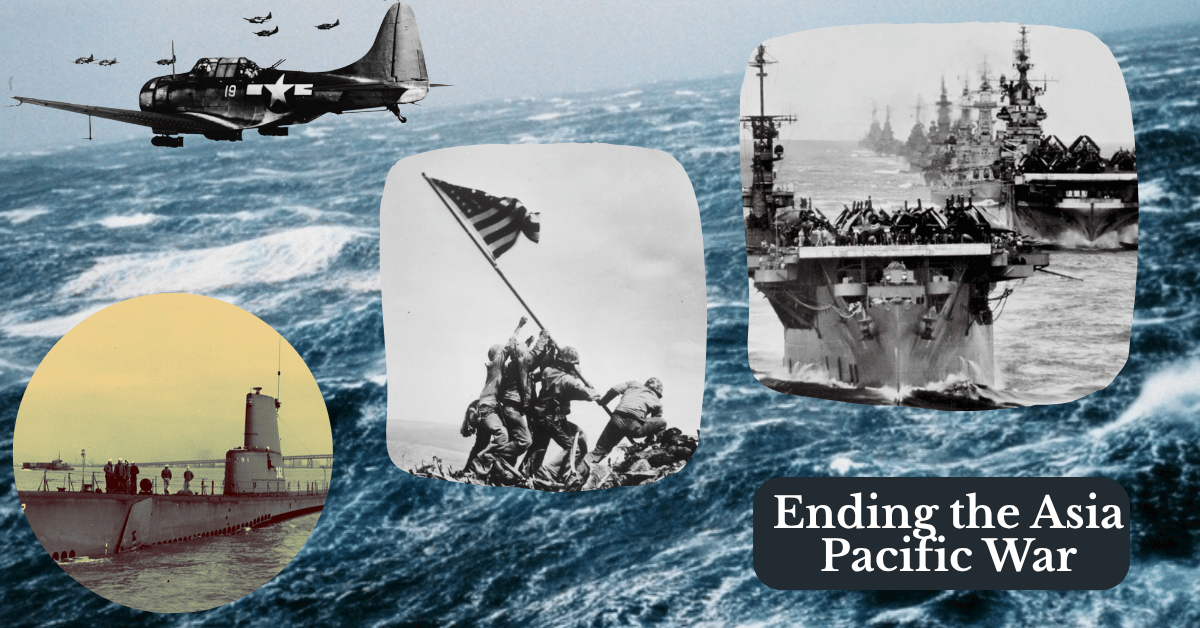
Image credit: various photographs from Naval Aviation Museum, National World War II Museum, and US Navy Archives.
 friarmusings