This coming Sunday we celebrate the Solemnity of the Ascension. The readings are taken from St. Luke’s Gospel and his Acts of the Apostles. Both the first reading and the gospel are accounts of the Ascension, making this event the lynchpin between the two works of St. Luke. Earlier today there was an introductory post, and as promised, for those that would like to have a short summary of what happens after the Ascension as recorded in the Acts of the Apostles, please continue to read (Acts of the Apostles – Introduction at USCCB.com). Continue reading →
This coming Sunday is the 7th Sunday of Ordinary Time, but in almost all of the dioceses of the United States, as allowed, the Solemnity of the Ascension is transferred from its traditional Thursday celebration to the following Sunday, replacing 7th Easter. The readings are taken from St. Luke’s Gospel and his Acts of the Apostles. Both the first reading and the gospel are accounts of the Ascension, making this event the linchpin between the two works of St. Luke. I will attempt to cover both during the course of the week. Continue reading →
This week a friend of mine recommended an online documentary entitled “Mr. Tornado.” It was a PBS video about the life and work of Dr. Ted Fujita. He was a fascinating person who did so much ground-breaking work on tornados. We expect to hear meteorologists describe a tornado as Category F1 or F2 – all the way up to F5. That is the Fujita scale which arose from his study of the 1974 Super Outbreak of 148 tornadoes that swept across 13 states, killing 300 people, causing billions in damage, and all in a 24 hour period. Having grown up in Florida I have some experience and images of vast storm damage – hurricane Donna in 1960. Donna was bad but paled in damage to the 1935 Labor Day storm, Andrew, Michael, Irma, Charley – and those are just the Florida hurricanes. The images from the 1974 tornado outbreak was horrific and brought back memories. So much destruction. So many things were destroyed. So many people lost everything. Continue reading →
Several years ago, while serving as pastor of a large, active downtown parish I was on the sidewalk in front of church, after Mass, when I was approached by someone. They wanted to ask a question – one of those questions that is more accusation than question, a civil conversation disguising an angry person. They wanted to know why the priest who had celebrated the Mass “just raised the Sacred Body of Jesus with just one hand… It was so disrespectful.” Continue reading →
There is an old expression: the enemy of my enemy is my friend. That did not apply in the German Reformation. The enemy (Rome) was Luther’s best friend. Rome was their own worst enemy.
When Leo X announced the renewal of indulgences in order to finance St. Peter’s Basilica, there were a plethora of voices from Emperor Maxillian to his own Roman Curia who warned the pope that the idea was feeding accelerant into a smoldering fire of revolution among the German social classes. His own Papal Nuncio to Germany reported to Pope Leo that the Germans were only waiting for “some fool” to open his mouth against Rome. Some fool did: John Tetzel attempted to peddle indulgences in Saxony where the Elector of Saxony had already forbidden their sale. In the eyes of the German princes, nobles, knights and Burghers, Rome had infringed upon Saxony’s territorial rights. And Rosa Parks would not give up her seat on the bus. This infringement of rights was not the initiating act, it was the hinge, the tipping point. Continue reading →
There are times I think I could be very content in perusing the internet and sharing content that I think is faith-giving or interesting or whimsical or just worth musing about. Given my life as a Franciscan friar and Catholic priest I am called to (and content with) another life that tends to occupy the day and early evening. That leaves the wee hours before dawn for catching up on personal emails, letters, and perusing the internet.
While I am known to be fascinated by details – especially in the area of etymology – I am more fascinated by the currents of history (hence my series on the Reformations) and things which speak to a meta narrative about meaning. This morning I finally had the chance – well, to be honest, I finally took the time…there is this whole Stanley Cup thing…. – anyway, I finally took the time to watch another video from the good people at The Bible Project. They are such excellent story tellers. In a little under 6 minutes they were able to tell the whole of Salvation History through the lenses of God’s blessings and the curse. Enjoy.
Explore a biblical pattern that offers hope. When God’s abundance seems to be overcome by pain and death, Jesus defeats the curse and unleashes the blessing of God’s life on all creation – The Bible Project team
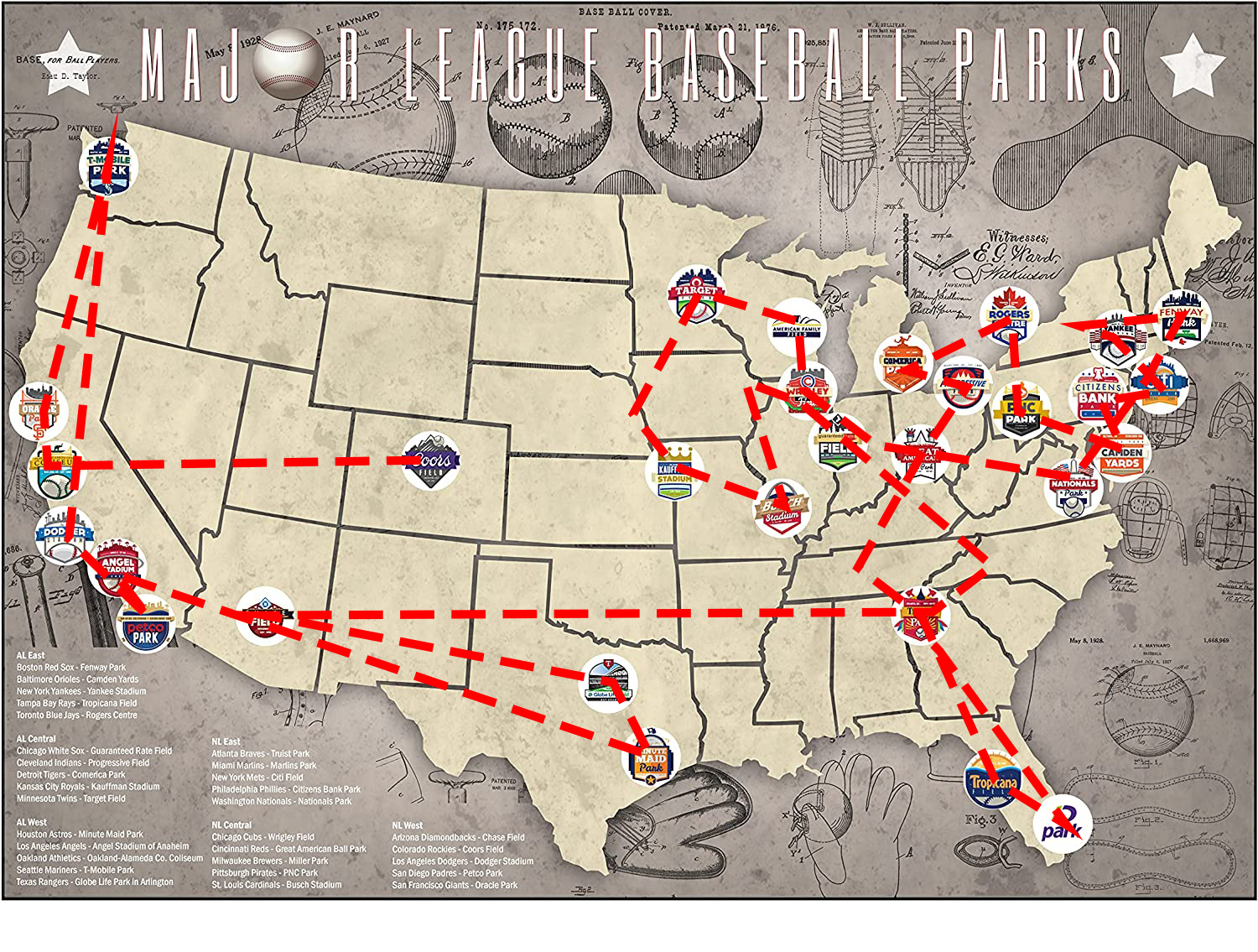
This summer two of my Franciscan brothers are visiting the great cathedrals of baseball, the major league stadiums, in a modern day version of the friars moving among the people. They will be attending games in their habits and meeting the world where the world meets. Along the way they are giving talks, celebrating Mass and witnessing to an evangelical life. Learn more and find out if they are coming to a city near you! And explore the connection between Baseball and Catholicism.
The Franciscan Bernardino of Siena, OFM, (sometimes Bernardine) was an Italian priest, missionary, and a Catholic saint. He is most noted for his preaching and evangelizing the people of Italy during the 15th century, sometimes being called “the Apostle of Italy” for his efforts to revive the country’s Catholic faith. His great oratorical skills and persuasiveness are the reason he is the patron saint of advertisers and advertising. Today is his feast day.
St. Bernardino’s popular preaching and missions had their own banner, the letters “IHS” on the background of a blazing sun. The IHS Christogram is often interpreted as meaning Iesus Hominum Salvator (“Jesus, Savior of men” in Latin) and is associated with the Feast of the Holy Name of Jesus. Continue reading →
One of my friends, a mentor of pastoral ministry, was a fully progressive liberal. She married a wonderful man who was as conservative as she was liberal. They reminded me of the famous political couple Mary Matalin and James Carville. My friend and her husband were both widowed, so it was a later-in-life marriage. I think that is worth noting as they entered their loving marriage with their views well cemented into the fabric of the way they thought and responded. Continue reading →
This coming Sunday is the 6th Sunday of Easter in lectionary Year C. In yesterday’s post we considered the first of two promises: Jesus (and the Father) come through the Word. Today, let’s consider the second response to the question posed in v.21: through the Paraclete
Perhaps it best not to translate the Greek word paraclete because there are too many possibilities. While the literal meaning of the related verb (parakaleo) means “to call to one’s side,” usually asking the other for help, the noun took on a legal meaning as “helper in court”. Thus we have translations like “counselor,” “advocate,” or “one who speaks for another” as well as the too general translation of “helper”. Continue reading →

 This summer two of my Franciscan brothers are visiting the great cathedrals of baseball, the major league stadiums, in a modern day version of the friars moving among the people. They will be attending games in their habits and meeting the world where the world meets. Along the way they are giving talks, celebrating Mass and witnessing to an evangelical life. Learn more and find out if they are coming to a