Our mission

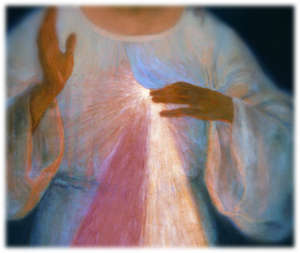
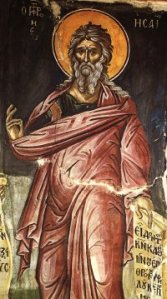
We are familiar with the story of John the Baptist as the herald of the coming Messiah – it is the story that introduces and highlights the Advent season. But Advent’s proclamation of Christmas is not the end of John’s story. He remained a man faithful to God’s calling.

After Jesus began his public ministry and the spotlight refocused, John continued baptizing and calling people to repentance. He continued calling people to remember they were a covenant people. He challenged kings, even if it meant being imprisoned and being killed.
Continue reading

Empathy

These days I have been reading and thinking about compassion, sympathy and empathy. The words all share a linguistic root in the Greek pathos (emotion or feeling). Sympathy shares a closer linguistic root with empathy. Sympathy comes from syn + pathos, to have common feelings or emotions. Compassion’s roots pass through Latin, com + passio, to bear with or to suffer the passion of another. They are similar words, but not exact synonyms. Compassion is the broader word: it refers to both an understanding of another’s pain and the desire to somehow mitigate that pain. Sympathy implies that there is already an existing relationship of some nature that draw people together that to share the same emotion or feeling. Empathy is that capacity to understand the emotion or feeling of another even without that already existing relationship. It seems to me the human quality of empathy is foundational to all the others.

Continue reading

A reminder

We often forget that the season of Advent speaks to the betwixt and between of the Birth of Jesus and his Second Coming. So, we shouldn’t be surprised that our first reading is from the firebrand, no-holds-barred prophet Zephaniah. He makes no bones about it. Judgment is coming upon Jerusalem. The Lord will be cleaning house: “And you shall no longer exalt yourself on my holy mountain. But I will leave as a remnant in your midst a people humble and lowly.” (Zeph 3:11-12)  All seems a little unfair, don’t you think? For Jerusalem to be sure, but us too. Not exactly joyful here just a new days after Gaudete Sunday.

Continue reading

Advent Annunciation

This coming Sunday is the 4th Sunday in Advent. The gospel reading is the well known “Annunciation” from Luke’s gospel. You can read a complete commentary on the gospel here.

26 In the sixth month, the angel Gabriel was sent from God to a town of Galilee called Nazareth, 27 to a virgin betrothed to a man named Joseph, of the house of David, and the virgin’s name was Mary. 28 And coming to her, he said, “Hail, favored one! The Lord is with you.” 29 But she was greatly troubled at what was said and pondered what sort of greeting this might be. 30 Then the angel said to her, “Do not be afraid, Mary, for you have found favor with God. 31 Behold, you will conceive in your womb and bear a son, and you shall name him Jesus. 32 He will be great and will be called Son of the Most High, and the Lord God will give him the throne of David his father, 33 and he will rule over the house of Jacob forever, and of his kingdom there will be no end.” 34 But Mary said to the angel, “How can this be, since I have no relations with a man?” 35 And the angel said to her in reply, “The holy Spirit will come upon you, and the power of the Most High will overshadow you. Therefore the child to be born will be called holy, the Son of God. 36 And behold, Elizabeth, your relative, has also conceived a son in her old age, and this is the sixth month for her who was called barren; 37 for nothing will be impossible for God.” 38 Mary said, “Behold, I am the handmaid of the Lord. May it be done to me according to your word.” Then the angel departed from her. (Luke 1:36-38)

Continue reading

Even if I am not asking

Today’s psalm refrain asks: Teach me your ways, O Lord.  Did you know that the psalm is chosen as a response to the first reading? In today’s first reading we hear about the pagan prophet Balaam. The reading is from the Book of Numbers, part of the narrative covering the Hebrew people in the wilderness between Egypt and the Promised Land.

The Amorites, Ammonites, Moabites and Midianites – all feared the Israelites. “Now this horde will devour everything around us as an ox devours the grass of the field.” So they summoned Balaam to curse the Israelites. Balaam sets up his sacrificial altar, prepares everything, raised his arms to begin the curse, but what comes out is a blessing. He tries again, same thing – blessing.

Teach me your ways, O Lord

Even if I am not asking

Teach me your ways, O Lord

Guide me in truth. Teach me you are my Savior. Guide me in humility. Remind me to be compassionate.

Show me the way of salvation

Let me always know the authority by which You do all things that your will be done.

Teach me your ways, O Lord

Even if I am not asking

Gift of Mercy

Recently wrote about forgiveness. I started out the column as a reflection on the readings for Advent sometime do not seem to fit the mood of Christmas coming. But then Advent is a time of waiting and reflecting; and to think about gift giving. Forgiveness is one of the great gifts you can give. The end of the post I mused: “What ‘Christmas gift’ comes along with this life of forgiveness? Lower blood pressure, restful night, sweet dreams, peace, no longer being a victim, uninterrupted prayer, a new experience of God’s love… and so much more. Your gift is waiting right there under the tree, the cross of Christ. Go ahead, open your gift. `Tis always the season.’” Continue reading

Choosing Joy

Earlier today I posted my homily for this 3rd Sunday in Advent. I noted that I like words, especially know their etymology, that is, their origin and development. I gave two examples (“peruse” and “egregious”) of words that have an original meaning, but human uses and circumstances change how we perceive and use the words. I went on to describe the word “joy” in that same context; how smush “joy,” “happiness,” and other synonyms into a generic sameness. But how Christians are to understand and live joy is different that “happiness.” How different? I will leave it to you to read the earlier post.

Continue reading

Why the name “Guadalupe”?

Our Lady of Guadalupe.Today it is common to find villages, towns, cities, and even districts in Mexico, Central and South America named “Guadalupe.”  But in the year 1531 there was no such place in Mexico. So, I have always wondered why the appearance of the Blessed Virgin Mary is referred to as “Our Lady of Guadalupe.”

Guadalupe is the name of an area, a city, a river, and a Marian shrine in Spain. The word itself comes from a mixture of  Arabic and Latin roots. Remember that Spain was occupied in part and whole by an Islamic regime from 720 CE until 1492 CE, hence many words have Arabic origin. The Arabic wadi (seasonal river bed) became the Spanish “quadi” having the same meaning. “Quadi” seems to have been combined with the Latin lupus (wolf) to come up with Guadalupe. Continue reading