In the previous posts we considered the strategic and tactical plans that began to take shape in 1940 into 1941 – the Imperial Japanese Navy (IJN) war planning and the Germany-first strategy by the United States. Underneath all that, both Japan and the United States approached the coming conflict with deeply rooted presumptions about culture, race, and military capability. These assumptions shaped strategy, diplomacy, and expectations about how the war would unfold. In many cases, they proved to be serious misjudgments on both sides.
Japanese leaders believed their society possessed a unique moral cohesion derived from loyalty to the emperor and a strong collective identity. The ethos of duty, sacrifice, and endurance often summarized in terms such as seishin (spiritual fighting spirit) was thought to provide a decisive advantage in war. This belief led many Japanese officers to assume that national willpower could compensate for material disadvantages. Military training emphasized discipline, courage, and willingness to die for the state, which were viewed as traits lacking in Western societies.
At the same time, Japanese observers also believed that American society was overly individualistic, comfort-oriented, and politically divided. Because Americans valued personal prosperity and safety, Japanese planners assumed the United States might lack the resolve to sustain a long and costly war far from home. These assumptions helped support the belief that a sudden shock, such as the attack on Pearl Harbor, might move the United States to negotiate rather than fight a prolonged war.
In Japan, modern nationalism incorporated ideas that the Japanese people were a uniquely pure and spiritually superior race. As Japan’s power expanded in Asia, this belief blended with the claim that Japan was the natural leader of the region. Many Japanese leaders saw Western colonial dominance in Asia as hypocritical and believed Japan had a mission to reshape the regional order.
American perceptions of Japan were shaped by a mixture of limited knowledge, racial stereotypes, and strategic complacency. Many Americans saw Japan as a small, resource-poor nation that could not match the industrial strength of the United States.
Culturally, Americans often viewed Japanese society as rigid, authoritarian, and overly obedient, assuming that soldiers trained in such a system would lack initiative or flexibility in combat. There was also a tendency to believe that Japan relied heavily on imitation of Western technology rather than genuine innovation. American planners expected Japanese forces to fight aggressively at the outset but believed that Japanese morale and capacity would eventually collapse under sustained pressure.
In the United States, racial attitudes toward Japan were shaped by decades of exclusion laws, immigration restrictions, and popular stereotypes. Japanese people were often portrayed as inscrutable, fanatical, or technologically inferior, while Western societies were assumed to possess inherent cultural and scientific advantages. These mutual racial assumptions deepened mistrust and contributed to a climate in which both sides underestimated the capabilities of the other.
While Japanese racism was evident in its views of their Asian neighbors, the United States, not without its own parochial and racial views of the Japanese, lacked understanding of Japan’s history and culture that was considered secondary to the assumption of a general superiority of peoples of European descent. Prior to December 1941, the assumed moral high ground was proven by the widespread accounts of Japanese atrocities in Nanking, Shanghai, and other events. Besides, according to some experts, the IJA had been bogged down in China for four years; the Soviets had made quick work of them at Nomonhan and the Japanese Navy had not been engaged in battle on the high seas since 1905. How accomplished could their military be? Even after the attack at Pearl Harbor, U.S. Secretary of War Stimson, asserted that Nazi Germany must have planned the attack, apparently thinking the blitzkrieg at Pearl Harbor was beyond Japan’s military planning capabilities. Stimson must have been unaware the “sneak attack” was actually a hallmark of the Japanese military as the Russians discovered in 1904. So embedded were such convictions, widespread within the Roosevelt administration, that key policymakers were blinded to the likely consequences of the decisions to impose what amounted to a complete trade embargo of Japan in the summer of 1941.
A Matter of Honor
By the beginning of 1941, Japan ruled over Korea and Manchuria, had conquered much of China north of the Great Wall and made inroads into central China, seized all of China’s major ports and islands in the South China Sea, and established a military presence in northern French Indochina. Japan was poised to invade resource-rich Southeast Asia, which Japanese propagandists had long and loudly proclaimed was rightfully within Japan’s sphere of influence, notwithstanding the fact that almost all of Southeast Asia lay under British, Dutch, French, and American colonial rule.
Japan had signed the Tripartite Act which the U.S. rightly understood as intended to deter the United States from going to war with Germany or Japan by raising the specter of a two-ocean war. Their signature transformed Japan from regional threat into a potential extension of Hitler’s agenda of aggression, especially with respect to the Soviet Union after the Nazi invasion of June 22, 1941. The hardliners in Washington DC correctly predicted that now Japan would turn towards Southeast Asia.
For the Japanese all things were a matter of honor and destiny. After the embargo it became a matter of necessity. Japan’s leaders were not certain that moving on Southeast Asia would cause a U.S. reaction but assumed that it would. The Roosevelt administration regarded a Japanese invasion of Southeast Asia, especially the oil-rich Dutch East Indies and tin and rubber-rich British Malaya, as strategically unacceptable. Control of Southeast Asia would weaken the British Empire and threaten India, Australia, and New Zealand allies in the war against Germany. Also, it would also afford Japan access to oil and other critical raw materials that would reduce its economic dependence on the United States, weakening the effect of other economic sanctions as controls on Japanese aggression.
While it might seem the U.S. reaction was simply an economic consideration. The more important consideration was keeping Britain in the war. It was a fundamental strategy of the United States and Britain that they could not afford to lose the raw material wealth and the sea lanes of Southeast Asia even if it meant war. Though the administration was never prepared to go to war over China, it regarded an extension of Japan’s empire into Southeast Asia as unacceptable. Thus Japan provoked a strong American response when Japanese forces occupied southern French Indochina in July 1941 as an obvious preliminary to further southward military moves. Operating out of southern French Indochina, the superior long-ranged Japanese naval bombers could provide air control of the seas around Singapore and support ground operations in Malay – both interim steps to the oil riches of Sumatra, Borneo and Java.
The United States was prepared to declare economic war on Japan as a means of deterring—or at least delaying—a Japanese advance into Southeast Asia, and that is exactly what the Roosevelt administration did in July 1941. The post The Financial Freeze details how those actions unfolded. In Going to War With Japan: 1937-1941, the author Jonathan Utley argues that the intent of the financial freeze was not to cut off all oil, but to ration it at a rate that let Japan know we control the spigot. Or as Roosevelt famously remarked it was to be like a noose around Japan’s neck which he would give it a jerk now and then to keep their attention. But by the end of August 1941, Roosevelt declined to reverse the decision. The reasons remain unclear. Perhaps he believed that a reversal would look like a retreat, or perhaps he had come to regard a Japanese advance into Southeast Asia as inevitable.
What was intended and what eventually happened is the nature of unintended consequences.
The consequence was that as a result of the de facto embargo and in conjunction with the seizure of Japanese assets by Great Britain and the Netherlands, there was a complete suspension of Japanese economic access to the United States and the destruction of between 50 and 75 percent of Japan’s foreign trade. No nation would meekly accept this situation – certainly the U.S. would not if such had been imposed on them. And neither did the Japanese.
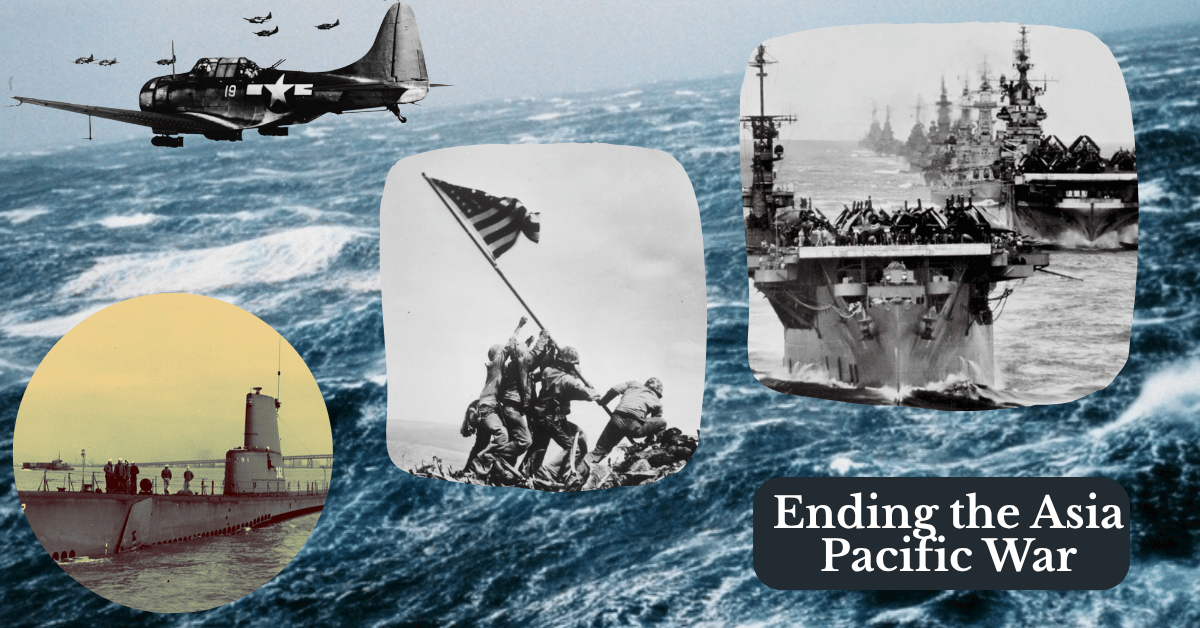
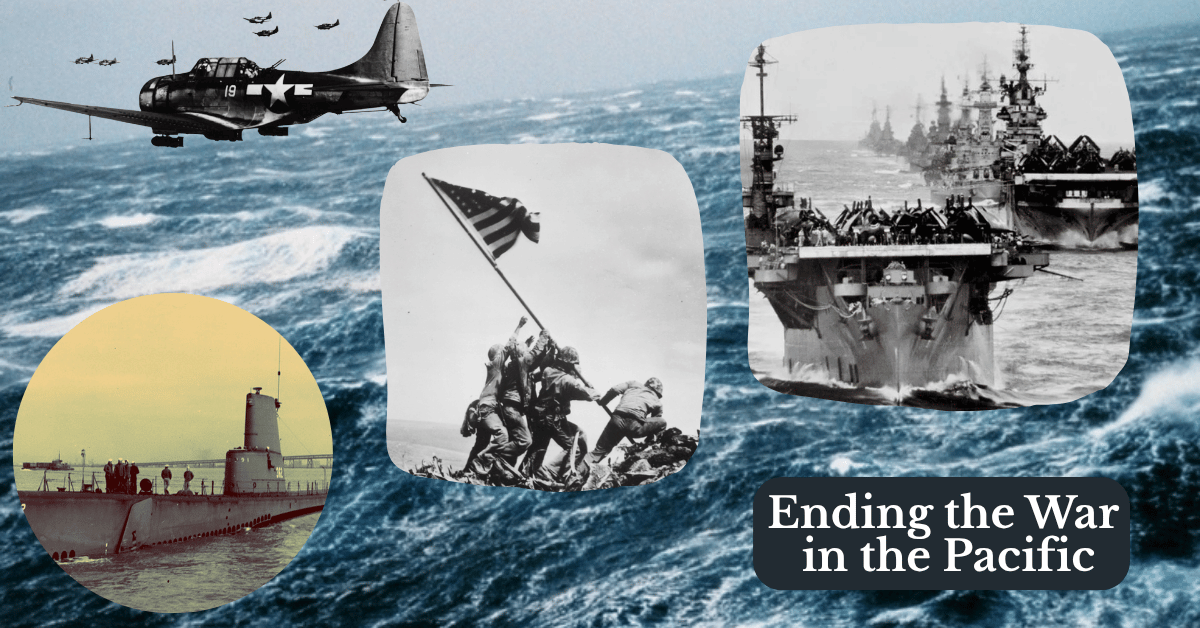
Image credit: various photographs from Naval Aviation Museum, National World War II Museum, and US Navy Archive | Utley quote taken from Going to War with Japan 1937-1941