
 Today’s gospel is a very familiar one and is part of the beginning of Jesus’ public ministry according to the Gospel of Luke. The scene is set in a local synagogue and Jesus is asked to read from the Scriptures. as seems to have been the tradition, the invited reader was able to select a passage. Jesus chose to read from the Prophet Isaiah (61:1):
The Spirit of the Lord is upon me,
because he has anointed me
to bring glad tidings to the poor.
He has sent me to proclaim liberty to captives
and recovery of sight to the blind,
to let the oppressed go free,
and to proclaim a year acceptable to the Lord.
Certainly the passage is meant to be understood by the listeners (and us!) as Jesus’ public testimony that he is the long awaited anointed one, the Christos. As the passage continues the listeners quickly move to “who does he think he is” and try to throw Jesus off a cliff as punishment for his blasphemy. I think the trajectory of the account quickly leaves the citation from Isaiah in the “rear view.”‘
What about us? Take some time and read Isaiah 61. The Word of the Lord is being spoken to the people of Israel in their Babylonian Exile. It is not only a promise of return to Jerusalem, but it is also a challenge of “if you say you are the People of God, then here is what I expect.” Just as Jesus promised glad tidings to the poor, liberty to those captive, sight to those blinded, and freedom from burdens – we are anointed by our baptism to offer those things in our age.
Today, in the midst of pandemic fatigue, viral uncertainty, and the loss of “normal,” we need glad tidings and to be people who bring glad tidings. We are captive to the pandemic, burdened by the necessary safety precautions, find it hard to see an end, and simply want to be free to hug family and friends. And yet, we are called to be Christ for one another, to bring the light of Christ into our lives and lives of others.
What about us? How will we fulfill our baptismal vows in which we too were anointed with Spirit of the Lord? There is a people in a modern captivity of this pandemic that need to hear the Good News.
 This originally posted in early December 2020 amidst all the “stop the steal” chatter – which has reached a crescendo not imagined. I thought the post worth repeating. We are morally bound to our words.
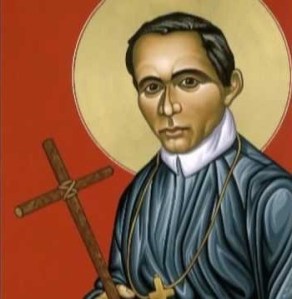 When asked how they could possibly feed so many people, Jesus said to disciples “in reply, ‘Give them some food yourselves.’” I often think of this as the scriptural equivalent of “how do you eat an elephant?” One bite at the time. How are we to minister to the overwhelming number of needs in our life and communities? One person at a time… always knowing the we do so we the grace of God, the love of Christ, and community of the Holy Spirit.
 For those of you that were players committed to the Facebook app “Farmville” back in 2010 or 2011 (…or so), we are sad to report that FarmVille shut down last week. Daniel Victor (NYT, 12/31) commented that many technique FarmVille popularized – nagging notifications to friends and encouragements to check back daily to tend to your crops – are now being imitated by everything from Instagram to QAnon. Where FarmVille was the time-eating destination of friends and family – there are many social media apps that are as demanding, nagging, and lead one down the “rabbit hole” of lost time. Where FarmVille feared not to tread, everyone else followed. Alas and aloha.
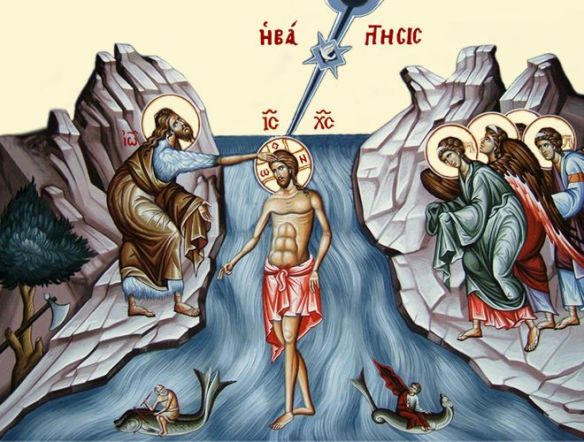 Next Sunday, we celebrate the
 “…the people who sit in darkness have seen a great light, on those dwelling in a land overshadowed by death light has arisen.”
 Last century (literally) I was researching for my master’s thesis on early Franciscan Missions. One of the really interesting aspects of the early Franciscan missions was the one to China. The friars arrived in China in 1292 and John of Montecorvino was the first bishop of Beijing. But all that is beside the point. In the course of my research, I ran across The Travels of Marco Polo in which he describes his travels in the far east. I was scanning the text to see if he had any mention of contact with the friars or the Christian monasteries that dotted the silk road in those days. While he had no mention of either – he did recount a most interesting rendition of the account of the Three Magi. Marco Polo wrote that he encountered this version in Persia (modern-day Iran). In that account there are three magi – but they are not traveling together. Each is on his own journey following the star to Bethlehem. Melchior is an older man, Balthazar is an adult in his middle years, and Gaspar is a young man just reaching adulthood.

