 There continues to be folks receiving emails and/or text messages — supposedly from me (in fact, this is a national problem, so substitute the name of your pastor). The most recent phishing emails and text: “In a Diocesan meeting and unable to talk but I need three gift cards for some cancer patients….” Please remember (a) I will never reach out to you by email or text asking you to procure gift cards or electronically transfer funds, and (b) ignore such texts or emails, and (c) add the sender to your spam/blocked caller list.
Rule of thumb, if your first inclination is “Really, why is Fr. George texting me?” and especially if the message is “Are you there,” “Are you available now” or “Are you in the office” or something equally vague — just delete the text and block the number that sent the text (both Apple and Android phones have that capability). The emails should be treated the same way.
Some folks responded to the text and received a reply asking for cash, checks, gift cards, and all the typical things that shout “scam.” Just search “email and text scams pastors” in your search engine and you will see how widespread this is. We are making you aware so you don’t become a victim of these scams.
Just an indication of wide-spread and ubiquitous this is… even I have received the scam in my parish email.
Have a scam free day

 “You have heard that it was said to your ancestors, You shall not kill; and whoever kills will be liable to judgment. But I say to you, whoever is angry with his brother will be liable to judgment” (Matthew 5:21-22). Yikes! What are we supposed to do with such dire warnings? Where is the unconditional love we’d much rather hear about? This sounds like it’s chock full of threats by a God that expected too much of us. I mean, come on, I haven’t murdered anyone! Sure, I have experienced anger at times and with even with people I love. But, hey, it happens. “It’s not like anyone has died!” Continue reading
 I am currently reading a biography of Thomas A. Edison by
  My friends, associates, strangers on the street, heck, just about anyone has probably heard me babble on about a book written by Mark Kurlansky:
  All families and households in the parish by now should have received a mailing from Bishop Parkes about the 2020 Annual Pastoral Appeal (APA). If you did not receive it, that means you are not registered here at Sacred Heart – or – you have changed addresses and not updated your information with the parish – or – perhaps you are not registered anywhere? Perhaps you are thinking, “That’s OK, I am registered with my parents.” True, that’s OK, unless you are a young professional already living on your own, with your own career. There are registration forms in the back of the church (Or
 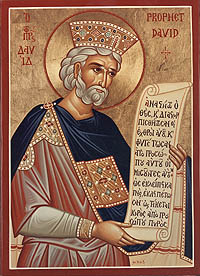 Today’s
  Franciscan sister and scientist Ilia Delio (my master’s thesis professor), has written a wonderful autobiography. In it she recounts how her parents decided to name her Denise. (She would have been named Denis had she been a boy.) Later in life, she was delighted to find a meaningful connection with the man who first approached theology in an explicitly mystical way in his text Mystical Theology. Delio writes:
  Yesterday’s
  friarmusings