 “As the Father has sent me, so I send you” The Fourth Gospel speaks often of Jesus being sent into the world by the Father: to do his will (6:38–39; 8:29), to speak his words (3:34; 8:28; 12:49; 14:24; 17:8), to perform his works (4:34; 5:36; 9:4) and win salvation for all who believe (3:16–17). That the disciples were sent to continue the words and works of Jesus is foreshadowed at various places in the Gospel: Jesus urged them to lift up their eyes and see fields ripe for harvest, and told them he had sent them to reap where others had labored (4:35–38), he said those who believed in him would do the works he had done and greater works than these because he was returning to the Father (14:12); he told them, “I … chose you and appointed you to go and bear fruit that will remain, so that whatever you ask the Father in my name he may give you” (15:16), saying that when the Paraclete comes “he will testify to me. And you also testify, because you have been with me from the beginning” (15:26–27), and when he prayed for his disciples he said to the Father, “As you sent me into the world, so I sent them into the world” (17:18). This last text, which parallels 20:21, confirms that the sending of the disciples was ‘into the world’, i.e. with a mission to the world. The other texts reveal the essential content of their mission was to ‘harvest’ men and women for the kingdom by their witness to Jesus by word and deed, alongside the ongoing witness of the Spirit. Continue reading →

 “Whose sins you forgive are forgiven them, and whose sins you retain are retained.” Many scholars see a parallel between v.23 and Matthew 18:18: “Amen, I say to you, whatever you bind on earth shall be bound in heaven, and whatever you loose on earth shall be loosed in heaven.” The parallel becomes clearer when we know that the words “forgive” in John 20:23 are the Greek words aphiēmi and krateō which mean “send away” and “hold” respectively [EDNT 2:314]. But even with the parallels aside, the meaning, extent and exercise of the Matthean and Johannine powers has been a source of division with the post-Reformation Christian community. Continue reading
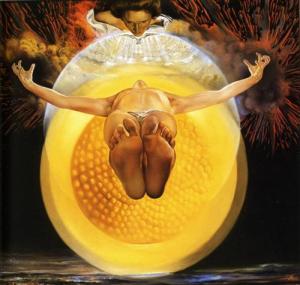 Salvador Dali’s painting “Ascension” is certainly one of the most provocative paintings depicting the Ascension of Our Lord Jesus. The symbolic elements are many, the speculations even more, and the agreement on meaning is still up for grabs. But I sometimes tend to focus on some of the more realistic elements cast among the surrealistic things. While the art experts discuss the finer points of Dali — his life, faith, and his work, I am fascinated by perspective, as well as the hands and feet. The former as though clutching at something; the latter soiled and showing the wear and tear of life on earth.


 friarmusings