
 I wonder why the Catholic Church chooses this gospel account every 2nd Sunday in Lent. We always hear the reading of the Transfiguration, the glorious account of the divine glory of God being revealed in the person of Jesus. It is amazing – so amazing that we celebrate the Feast of the Transfiguration every August 6th; we have been doing so for 800 years or so. Our Christian brothers and sisters proclaim this gospel on the Sunday before Lent. That also makes some sense to me because it is from this point in the story that Jesus will head straight to Jerusalem, culminating in Passion Week, fulfilling exactly what Jesus told them: he would be raised from the dead after suffering. Jesus’ words point to the crucifixion, just as Lent begins to point us to Good Friday. Reading the Transfiguration immediately before Lent gets us ready. But why the 2nd Sunday in Lent? But why proclaim this gospel twice in the same liturgical year? Continue reading
Looking around
Reply
 And well do you know, my excellent brother, how, in the midst of such offenses, we must watch lest hatred of any one gain a hold upon the heart, and so not only hinder us from praying to God with the door of our chamber closed, but also shut the door against God Himself; for hatred of another insidiously creeps upon us, while no one who is angry considers his anger to be unjust. For anger habitually cherished against any one becomes hatred, since the sweetness which is mingled with what appears to be righteous anger makes us detain it longer than we ought in the vessel, until the whole is soured, and the vessel itself is spoiled. Wherefore it is much better for us to forbear from anger, even when one has given us just occasion for it, than, beginning with what seems just anger against any one, to fall, through this occult tendency of passion, into hating him. (St. Augustine’s “Letter to Profuturus” (Letter 38))
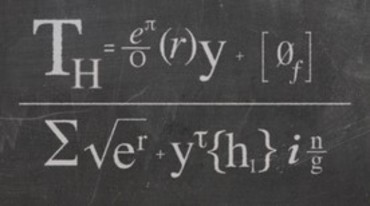 A theory of everything is the ultimate theory, a hypothetical single, all-encompassing, coherent theoretical framework of physics that fully explains and links together all physical aspects of the universe. Finding a “theory of everything” is one of the major unsolved problems in physics.
  The very first liturgical action in the Rite of Baptism isn’t pouring water – it is marking the one receiving baptism with the sign of the cross – traced on the forehead. At the same time speaking the words, “I claim you for Christ…” They are powerful words, words of life and death. Words that mark a new beginning. “I claim you for Christ…” This is who you are and whose you are. And now off you go into the world, into the wilderness of life, among the beasts and the angels among us.
  From time to time, I am asked “if the parish could use…” and what follows is a litany of things old and beloved, unusual and familiar, new and used, useful and whimsical, and the occasional, “I don’t know what it is, but it seems like it is holy.” The conversation is hardly ever (perhaps never?) with a person from the millennial demographic. At this point in their lives, they live minimally and do not have the same emotional connection to things as did the generations before. They are a mobile group and thus don’t want a lot of stuff when moving house or moving to a new city. IKEA will do just fine until things settle.
  Every year, as Lent approaches, parishioners ask for advice: What should I do for Lent? I am always happy to help a sister or brother in Christ to make Lent a time of spiritual growth. Maybe this year you might want to “upgrade” your source of Lenten advice. Well, who better to pick for as your Lenten spiritual director than Pope Francis? Here is his advice for a Lenten period of deepening your spiritual life.

 Traditions can be big or small, important and not. Not all traditions are created equal. If each one of us are to be a person faithful to Gods’ eternal covenant in Christ; if we are to be a church faithful to that covenant, then we must be a people who remember rightly and hold onto the Traditions that go to the heart of faith, the heart of the covenant.
  friarmusings