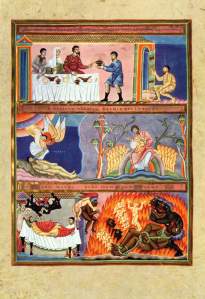
 “…between us and you a great chasm is established to prevent anyone from crossing who might wish to go from our side to yours or from your side to ours.…” Such are words spoken about Lazarus and the rich man, traditionally known as Dives. The words describe their fates in the afterlife: Lazarus comforted by Abraham while Dives languishes in a hellish afterlife.
But here is the thing – the chasm really wasn’t new; it was fixed a long time ago and made wider every time the rich man came and went to his safe, secure and plush home and ignored Lazarus. Don’t get me wrong, this parable indeed talks about the eternal consequences of the life we lead, but it is also about our lives now. And maybe, just maybe, St. Luke has been talking to us about the chasms, the great divides we have slowly built into our lives – and our failure to see them in the here and now. Continue reading →

 friarmusings