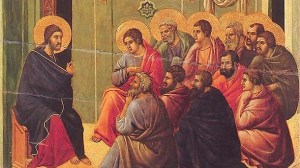
 7 Then they asked him, “Teacher, when will this happen? And what sign will there be when all these things are about to happen?” 8 He answered, “See that you not be deceived, for many will come in my name, saying, ‘I am he,’ and ‘The time has come.’ Do not follow them! 9 When you hear of wars and insurrections, do not be terrified; for such things must happen first, but it will not immediately be the end.” 10 Then he said to them, “Nation will rise against nation, and kingdom against kingdom. 11 There will be powerful earthquakes, famines, and plagues from place to place; and awesome sights and mighty signs will come from the sky.
When and by what Sign? In v.7 an unnamed interlocutor(s) asked Jesus, “Teacher, when will this happen? And what sign will there be when all these things are about to happen?” Given the introduction in v.5 where the disciples are mentioned, one assumes the disciples are the audience. But one should note that nowhere else in Luke do the disciples call Jesus “teacher.” This is the eleventh time Jesus is so addressed and in none of the previous ten are the disciples the one addressing Jesus. Luke reserves the moniker “Teacher” for the Pharisees, lawyers, the crowd, the rich, Sadducees, and scribes. Given the larger context of Luke, it is more likely that while the disciples are present, Jesus is responding to those present in the Temple complex. Continue reading →

 friarmusings