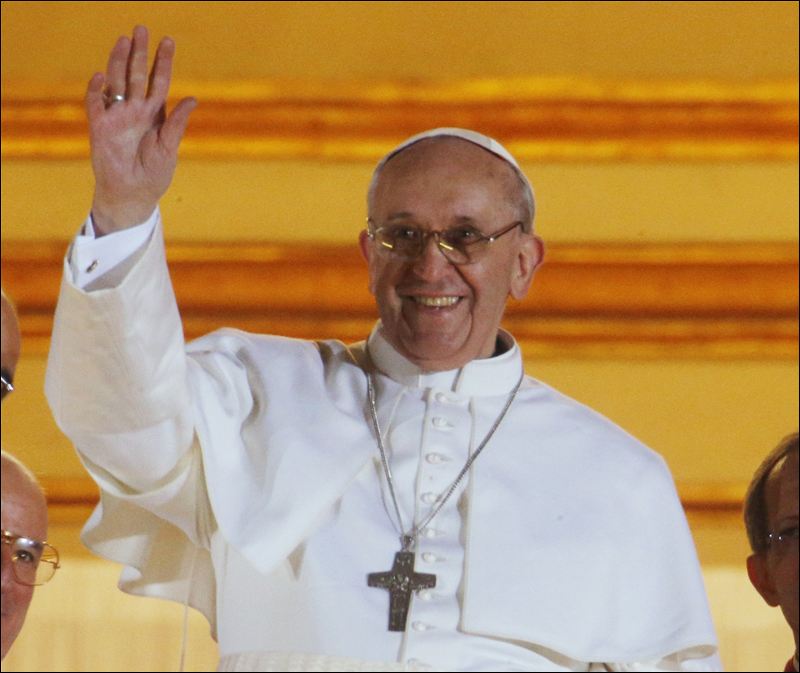
My Franciscan brother, Fr. Dan Horan OFM, had a nice insight this morning over at his blog DatingGod. In short, while the world has focused on the resignation of Pope Benedict XVI, the gathering of cardinals, the pomp and circumstance of the electoral process, and all thing papabili, the work of the Church continues.
While the spectacle of papal elections, with the pomp and circumstance of crimson cassocks and Latin chant captures the imagination of many the world over, the work of the church doesn’t end (nor begin, for that matter) with these attention-grabbing events.
The work of the church is in the parish, the ministry center, the homeless shelter, the Catholic Charities office, the Franciscan missions in Peru, the classrooms of Jesuit schools, the hospices of the Sisters of Charity, and so on. The life of the church is found not in the grand processions of cardinal electors or the daily routines of the Roman dicasteries, but in the experience of the Body of Christ, which is the People of God, living a life of faith, striving to follow the Gospel, and caring about how to be a good and holy person — every day, here and now.
Journalists, columnists, pundits, and the like will get their fair share of news and “exciting events” over the next few days, but when the TV cameras and reporters vacate St. Peter’s Square, the nuns who care for Rome’s homeless population and the doctors who work in the Catholic hospitals of that city will continue the mission of the evangelica vita.

 Before He Was Anthony of Padua. Anthony of Padua was born Fernando Martins de Bulhões on August 15, 1195 in Lisbon, Portugal. His was in a very rich family of the nobility who wanted him to become educated, and they arranged for him to be instructed at the local cathedral school. Against the wishes of his family, however, at the age of 15 he entered the community of Canons Regular at the Abbey of St. Vincent on the outskirts of Lisbon. Monastery life was hardly peaceful for young Fernando, nor conducive to prayer and study, as his old friends came to visit frequently and engaged in vehement political discussions. Continue reading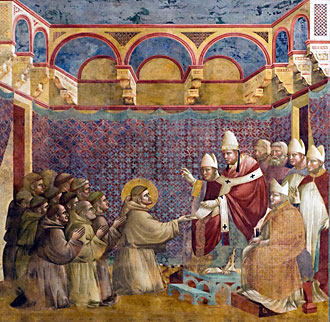
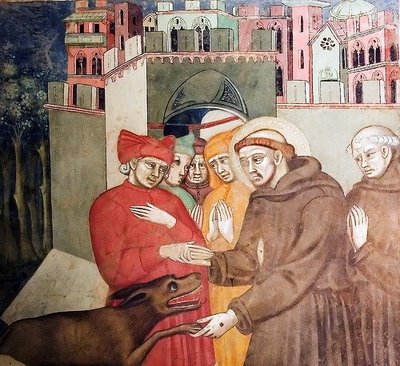
 St. Francis of Assisi is the patron saint of Italy, merchants, stowaways, ecology, but most famously, of animals. If one searches the internet, you can easily find all kinds of pious, ecologically insightful, and often amazingly-modern sounding quotes from St. Francis. And they are inevitably without a citation from one of Francis’ writings or at least a later Franciscan source writing about Francis. As I noted in the beginning of this series, Francis has always been reinvented and marketed as needed. Perhaps the one book most responsible for casting Francis as the lover of animals and nature is a collection of stories – many miraculous and all very saintly – that first appeared in 1390 in Tuscany: the Fioretti (The Little Flowers). But can we say about St. Francis, the patron saint of animals?
  By the spring of 1213, four years after the founding of the “order,” Francis’ reputation had risen to the attention of the Italian aristocracy – not just in Assisi but throughout central Italy. The order was beginning to attract men from the higher social classes. Sons of merchants like Francis, sons of the landed wealthy, sons of ruling households, men with established careers in law, music and the arts, and also ordained priests. They joined the already formed group of men from middle and lower backgrounds in muddling through what it meant to follow Christ in the manner of Francis. G.K. Chesterton’s later definition of the Catholic Church – “here comes everybody” – was being lived out in Francis’ day.
  One aspect of Francis’ changing life that has attracted recent attention is the movement of Francis from solitary figure, living a quasi-hermetical life for four to five years, now beginning to live in a growing community of brothers – all of whom are looking to Francis for spiritual and communal leadership. There was something attractive about Francis, his way of following the gospel, and perhaps the recent “commissioning” by Pope Innocent III gave a certain cache of legitimacy to this way of being Christian in the world. Eventually many people came to join the Franciscan movement, which soon enough became a religio and eventually an ordo, but those demarcations are eight to ten years in the future ahead of the Spring of 1209.
 friarmusings