
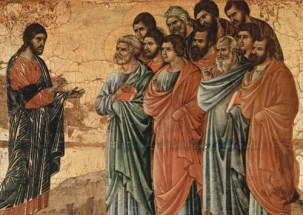
 41 The Jews murmured about him because he said, “I am the bread that came down from heaven,” 42 and they said, “Is this not Jesus, the son of Joseph? Do we not know his father and mother? Then how can he say, ‘I have come down from heaven’?”
Jesus’ words were not what the people wanted to hear. From the miraculous feeding of the 5,000 to the crowd’s references to mana in the desert, the context has been about bread they could eat. However, from v.35 onward, it is clear that Jesus’ meaning is about belief in himself, the one provides bread from heaven that last forever. The people are beginning to understand that they are not getting more bread and that this person before them is claiming to be someone greater than Moses. They rebel against the claims implied in what he said, feeling that they know very well who he is. In the face of this Jesus emphatically repeats his words. And the people grumble some more. Continue reading
 This coming Sunday,
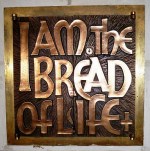
 Is the Bread of Life Discourse (John 6), metaphor or sacramental? There are many commentaries and religious traditions that insist on a metaphorical interpretation of “eat” and “drink” and thus “eat” and “drink” as metaphors for belief. There are some Catholic commentators (e.g. LaGrange) who insist there is no metaphor, that the entirety of Jesus’ discourse is sacramental/Eucharistic. As Fr. Raymond Brown and Fr. Francis Moloney point out, the truly Catholic position is “both-and.” What begins in John 6:22-50 as metaphor for belief, is ultimately answered in John 6:51-58 as Eucharist. With that in mind let us consider (a) a “big picture” view of this core question of John 6, but (b) fair warning: it does get a bit technical and dense in places. But give it a go!!
  Continuing our look into the gospel for the
  Continuing our look into the gospel for the
  Continuing our look into the gospel for the
  24 When the crowd saw that neither Jesus nor his disciples were there, they themselves got into boats and came to Capernaum looking for Jesus. 25 And when they found him across the sea they said to him, “Rabbi, when did you get here?” 26 Jesus answered them and said, “Amen, amen, I say to you, you are looking for me not because you saw signs but because you ate the loaves and were filled. 27 Do not work for food that perishes but for the food that endures for eternal life, which the Son of Man will give you. For on him the Father, God, has set his seal.” 28 So they said to him, “What can we do to accomplish the works of God?” 29 Jesus answered and said to them, “This is the work of God, that you believe in the one he sent.” 30 So they said to him, “What sign can you do, that we may see and believe in you? What can you do? 31 Our ancestors ate manna in the desert, as it is written: ‘He gave them bread from heaven to eat.’” 32 So Jesus said to them, “Amen, amen, I say to you, it was not Moses who gave the bread from heaven; my Father gives you the true bread from heaven. 33 For the bread of God is that which comes down from heaven and gives life to the world.” 34 So they said to him, “Sir, give us this bread always.” 35 Jesus said to them, “I am the bread of life; whoever comes to me will never hunger, and whoever believes in me will never thirst. (John 6:24-35)
  One of the most famous and insightful sentences in Christian history comes from the first page of Saint Augustine’s Confessions. As the book unfolds, Augustine describes his extensive experiences with unfulfilled desire. And so as if to give his conclusion beforehand, in the very first paragraph of the book he writes, “Thou has made us for Thyself, and our hearts are restless until they find their rest in Thee.” An insatiable craving, a psychic abyss, unsatisfied desire and desires, and the deep longing for a faraway land — all these point to and find fulfillment in God alone, despite our many failed experiments with all sorts of substitutes.
 The daily Mass gospels for this week (
 friarmusings