
In Exodus 34, God describes himself as overflowing with khesed, or loyal love. Khesed is a rich Hebrew word describing a love overflowing with generosity and born out of commitment to relationship. Khesed is shown through actions and deep personal care for another person even when they don’t deserve it. In the Bible, no one shows more khesed than God – it’s core to who he is. God creates out of khesed. He protects his people from disaster because of his khesed. He makes them prosper because of khesed. He forgives them in a display of khesed. God continually extends his loyal love to his people, not because they deserve it but because his love is generous.
The Bible Project is a not-for-profit ministry which provides an amazing treasure trove of videos on the Word of God. This coming Sunday the Catholic Church celebrates “Word of God Sunday” – so, perhaps this would be an apropos time to support Bible Project with a donation!
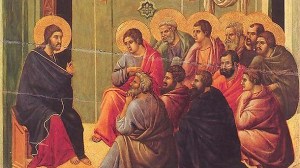 Yesterday’s psalm refrain was “The Lord is gracious and merciful; slow to anger, and of great kindness.” From that I asked the personal question, “Do you ever wonder if people think you are gracious, merciful, slow to anger and of great kindness?”
 “I, John, looked and there was the Lamb standing on Mount Zion, and with him a hundred and forty-four thousand who had his name and his Father’s name written on their foreheads.” (Rev 14:1) And so begins
 This day’s
 I was looking ahead on the parish calendar to see what the month of March would bring apart from the celebration of Lent. It was then I came across a simple marker “Mother’s passing.” It was four years ago now – hard to believe that much time has passed since my mom passed away. But that is the way of things as one grows older oneself; loved one are lost and time passes at an ever-increasing rate.
 Some things are indeed complicated, deserving of our time, energy, and perseverance. Today’s
 Franciscan sister and scientist Ilia Delio (my master’s thesis professor), has written a wonderful autobiography. In it she recounts how her parents decided to name her Denise. (She would have been named Denis had she been a boy.) Later in life, she was delighted to find a meaningful connection with the man who first approached theology in an explicitly mystical way in his text Mystical Theology. Delio writes:

