
Suddenly two men dressed in white garments stood beside them. They said, “Men of Galilee, why are you standing there looking at the sky?…” We are never told of the immediate reaction of the apostles.
I suspect it was one of those moments of silence which quickly became a bit uncomfortable and perhaps awkward. Maybe they looked around at each other, waiting to see who would say something or move. Maybe all eyes turned to Peter who was desperately trying to think of something to do or say.
Finally someone cannot endure the silence, “So guys, what do you think we should do?” “I don’t know, what do you think?” “Maybe we should go back to Galilee” “I think we are supposed to go back to Jerusalem” “Jerusalem? And do what?” “Wait.” “For what?” “For the power of the Holy Spirit.” “I don’t know…..” And then there is another period of silence…until someone finally begins to move off towards Jerusalem and the grand silence. The days between the Ascension and Pentecost when they are without the presence of Christ among them.
I do not think it would be too much of a stretch to imagine one of the disciples saying in joy, “He is risen, alleluia…,” only to have the following alleluia kinda’ fall off into a question mark, not of doubt, but of what’s next. One of them plaintively offers: “Jesus was always there to lead, to teach, to show…. And now we have silence and waiting.”
Silence and waiting are definitely an acquired taste.
When I was a child in the days between the end of school and Christmas, silence and waiting were definitely not part of my skill set.
Years ago when I was first working in the commercial sector, my company sent me to a sales training seminar. I did not want to go, but it was actually quite helpful. I learned the skill of asking a question and waiting in the silence while the person hems, haws, processes, or ponders the question. If you want to be truly helpful to the prospective client, you need to hear what they have to say.
Plato taught that often precedes insight. Søren Kierkegaard held that silence was necessary to develop authentic individuality. Simone Weil saw silence as a form of attention and spiritual receptivity. For her, silence allows one to truly attend to the presence of God, the needs of others, or the reality of suffering without rushing to fill the space. Across time, great thinkers have held silence in great esteem.
I find the same patient waiting in silence to be a valuable skill for hearing Confessions, talking with couples in marriage preparation, grief counseling, and a whole host of other pastoral settings. It is indispensable in preparing homilies. I can’t tell you how often I have sat in silence, waiting for an idea. …And I find it invaluable in my life of prayer.
“Men of Galilee, why are you standing there looking at the sky?…”
Perhaps the apostles should have said, “Hold your horses, I am looking at the sky, because I am taking this all in.” Maybe in the silence and the waiting, they realized that for the first time: “…in the Ascension, humanity has entered Heaven. Jesus, true God and true man, now sits at the right hand of the Father. In the Ascension, we have been shown our destiny. We have been shown the desire and hope of the Father in heaven, that all people will come to their inheritance, to their home.”
Maybe their thoughts continued “And Jesus just spent three years teaching and showing, caring and loving, and more. I can’t resurrect anyone, but I can lift people up. I can help them ascend in this lifetime to be ready when the power of the Spirit comes to them. I need to sit with all this a while and figure it out….”
And maybe they needed more time and silence to begin to contemplate the implications of the Ascension. “We are called to be witnesses to the end of the earth. We have to wait for the power of the Spirit to come upon us.”
The “Spirit of wisdom and revelation” as it says in the second reading. The wisdom and revelation that need to be pondered and considered, and to sit with , so that … “May the eyes of your hearts be enlightened, that you may know what is the hope that belongs to his call, what are the riches of glory in his inheritance among the holy ones” (Eph 1)
Silence can be awkward or welcomed. But I would offer that the wisdom and revelation of God is best served in the silence and the waiting. We don’t have enough of it in our lives. So, be it life or angels, don’t let anyone rush you past the silence and the waiting.
“Men of Galilee, why are you standing there looking at the sky?…”
Because from time to time, we are supposed to – it is a gift of God.
Find some time this week to enjoy the gift.
Amen
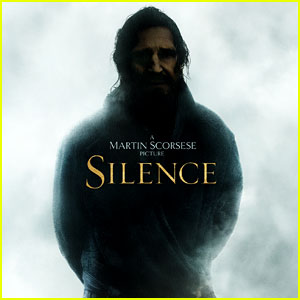 Martin Scorsese’s “Silence” tells the story of Portuguese Jesuit missionaries in 17th century Japan. Although the film is based on a fictional novel by the Japanese author Shusaku Endo, many of the events and people depicted in “Silence” are real.
 friarmusings