Greatness: in the eyes of God

jesus-and-child35 Then he sat down, called the Twelve, and said to them, “If anyone wishes to be first, he shall be the last of all and the servant of all.” 36 Taking a child he placed it in their midst, and putting his arms around it he said to them, 37 “Whoever receives one child such as this in my name, receives me; and whoever receives me, receives not me but the one who sent me.”

If the first teaching was troublesome, the next would have been downright shocking. In our time we have a different view of children. We hold children to be innocent and precious. This does not seem to have been the view of 1st century. In ancient culture, children had no status. They were subject to the authority of their fathers, viewed as little more than property. In Roman culture adults were adopted, not children. Consider St. Paul’s statement: “I mean that as long as the heir is not of age, he is no different from a slave, although he is the owner of everything, but he is under the supervision of guardians and administrators until the date set by his father.” (Gal 4:1-2) If this is said of the heir, can you imagine the attitude for children in general? Perkins [p. 637] writes: “… the child in antiquity was a non-person…Children should have been with the women, not hanging around the teacher and his students (cf. 10:13-16). To say that those who receive Jesus receive God does not constitute a problem. A person’s emissary was commonly understood to be like the one who sent him. But to insist that receiving a child might have some value for male disciples is almost inconceivable.” Continue reading

Greatness: service

jesus-and-child35 Then he sat down, called the Twelve, and said to them, “If anyone wishes to be first, he shall be the last of all and the servant of all.” 36 Taking a child he placed it in their midst, and putting his arms around it he said to them, 37 “Whoever receives one child such as this in my name, receives me; and whoever receives me, receives not me but the one who sent me.”

The conversation in Capernaum is no longer addressed to “disciples” but to “the Twelve.” In the gospel of Mark, the Twelve (hoi dōdeka) are a group of disciples chosen by Jesus to be his special companions (Mark 3:14; 4:10; 11:11; 14:17). They were particularly instructed by Jesus (Mark 9:35; 10:32) and were sent by him to proclaim the coming of the kingdom and to cast out demons (Mark 3:14, 16; 6:7). While we naturally add the phrase “Apostles” to the text, the emphasis is not on the 12 people in charge after the Resurrection, but rather the restoration of Israel as the people of God. The number was symbolic of the twelve tribes of Israel (cf. Matt 19:28; Luke 22:30; Rev 21:12–14) and pointed to the eschatological nature of Jesus’ mission. [AYBD 670] We can see this clearly in the Matthean account: 27 Then Peter said to him in reply, “We have given up everything and followed you. What will there be for us?” 28 Jesus said to them, “Amen, I say to you that you who have followed me, in the new age, when the Son of Man is seated on his throne of glory, will yourselves sit on twelve thrones, judging the twelve tribes of Israel.” (Matthew 19:27–28) Continue reading

The Stigmata of St. Francis

St. Francis receives the Stigmata (fresco attr...

Authorized by Pope Paul V, September 17th is the Feast of the Stigmata of St. Francis of Assisi, a feast day celebrated within the Franciscan communities.

Stigmata, from the Greek word, generically points to a “brand” or a “mark.” It is the common word to describing branding of cattle. In the Christian context it refers to the bodily marks resembling the wounds of the crucified Christ. St. Francis was the first person, historically recorded, who bore the marks of the crucified Christ in his hands, his feet, and in his side. Continue reading

Greatness: differences

jesus-and-childBut following the second prediction of the passion there seems to be a non-sequitur in process: 33 They came to Capernaum and, once inside the house, he began to ask them, “What were you arguing about on the way?” 34 But they remained silent. They had been discussing among themselves on the way who was the greatest.

Again the disciples remain silent. Before they were afraid to ask Jesus about the meaning of his teaching. Here they think they are trying to avoid embarrassment. If before they worried that Jesus would condemn them for not understanding his teaching, now, are they worried that he will condemn them for desiring and talking about greatness? They do not yet fathom Jesus as a gracious savior. Continue reading

Greatness: understanding

jesus-and-child30 They left from there and began a journey through Galilee, but he did not wish anyone to know about it. 31 He was teaching his disciples and telling them, “The Son of Man is to be handed over to men and they will kill him, and three days after his death he will rise.” 32 But they did not understand the saying, and they were afraid to question him.

In the scene immediately preceding our Gospel, the disciples experienced an inability to cast out a demon from a young child – a great change from their initial missionary experience. They are perplexed and do not understand. While Jesus’ answer is simple (v.29), it is a teaching moment for the disciples – more prayer is needed. The disciples are equipped with more witness that the average person Jesus encounters in this Galilean ministry, still they are perplexed about the meta-narrative that is the story of Jesus. Continue reading

Our Lady of Sorrows

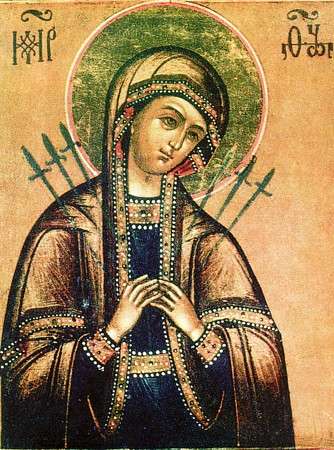
Mother-of-SorrowsOur Lady of Sorrows is celebrated on September 15th in the western Catholic Church. It is a devotion on Mary’s experience of the way in which the prophecy of Simeon came to be:

When the days were completed for their purification according to the law of Moses, Mary and Joseph took Jesus up to Jerusalem to present him to the Lord… Now there was a man in Jerusalem whose name was Simeon. This man was righteous and devout, awaiting the consolation of Israel, and the Holy Spirit was upon him. It had been revealed to him by the Holy Spirit that he should not see death before he had seen the Messiah of the Lord. He came in the Spirit into the temple; and when the parents brought in the child Jesus to perform the custom of the law in regard to him, he took him into his arms and blessed God, saying:  “Now, Master, you may let your servant go in peace, according to your word, for my eyes have seen your salvation, which you prepared in sight of all the peoples, a light for revelation to the Gentiles, and glory for your people Israel. The child’s father and mother were amazed at what was said about him; and Simeon blessed them and said to Mary his mother, “Behold, this child is destined for the fall and rise of many in Israel, and to be a sign that will be contradicted and you yourself a sword will pierce so that the thoughts of many hearts may be revealed.” (Luke 2:25-35)

In Catholic religious imagery, the Blessed Virgin Mary is portrayed in a sorrowful affect, with seven daggers piercing her heart. These represent the seven traditional sorrows:

  1. The prophecy of Simeon (Luke 2:25-35)
  2. The Flight into Egypt (Matthew 2:13)
  3. The loss of the child Jesus in the Temple (Luke 2:34-45)
  4. Mary meeting Jesus on the way to Calvary (John 19:26-27)
  5. Jesus dying on the cross (John 19:30)
  6. The piercing of the side of Jesus and Mary’s receiving the body of Jesus in her arms (Matthew 27:57-59)
  7. The body of Jesus placed in the tomb (John 19:40-42)

Meaning of greatness: context

jesus-and-child30 They left from there and began a journey through Galilee, but he did not wish anyone to know about it. 31 He was teaching his disciples and telling them, “The Son of Man is to be handed over to men and they will kill him, and three days after his death he will rise.” 32 But they did not understand the saying, and they were afraid to question him. 33 They came to Capernaum and, once inside the house, he began to ask them, “What were you arguing about on the way?” 34 But they remained silent. They had been discussing among themselves on the way who was the greatest. 35 Then he sat down, called the Twelve, and said to them, “If anyone wishes to be first, he shall be the last of all and the servant of all.” 36 Taking a child he placed it in their midst, and putting his arms around it he said to them, 37 “Whoever receives one child such as this in my name, receives me; and whoever receives me, receives not me but the one who sent me.” Mark 9:30–37 Continue reading

Exaltation of the Holy Cross

Christ on CrossSeptember 14th is the date established for a feast that recognizes the Cross as the instrument upon which our salvation was won by Jesus Christ. This feast is called in Greek Ὕψωσις τοῦ Τιμίου καὶ Ζωοποιοῦ Σταυροῦ (“Raising Aloft of the Precious and Life-Giving Cross”) and in Latin Exaltatio Sanctae Crucis. In English, the 3rd Edition of the Roman Missal restored the traditional name, the Exaltation of the Holy Cross, replacing the 1972 nomenclature of the Triumph of the Cross. When the feast day falls on a Sunday (e.g. 2014 and 2025) it replaces the Sunday celebration of Ordinary Time. Continue reading

Telling our stories

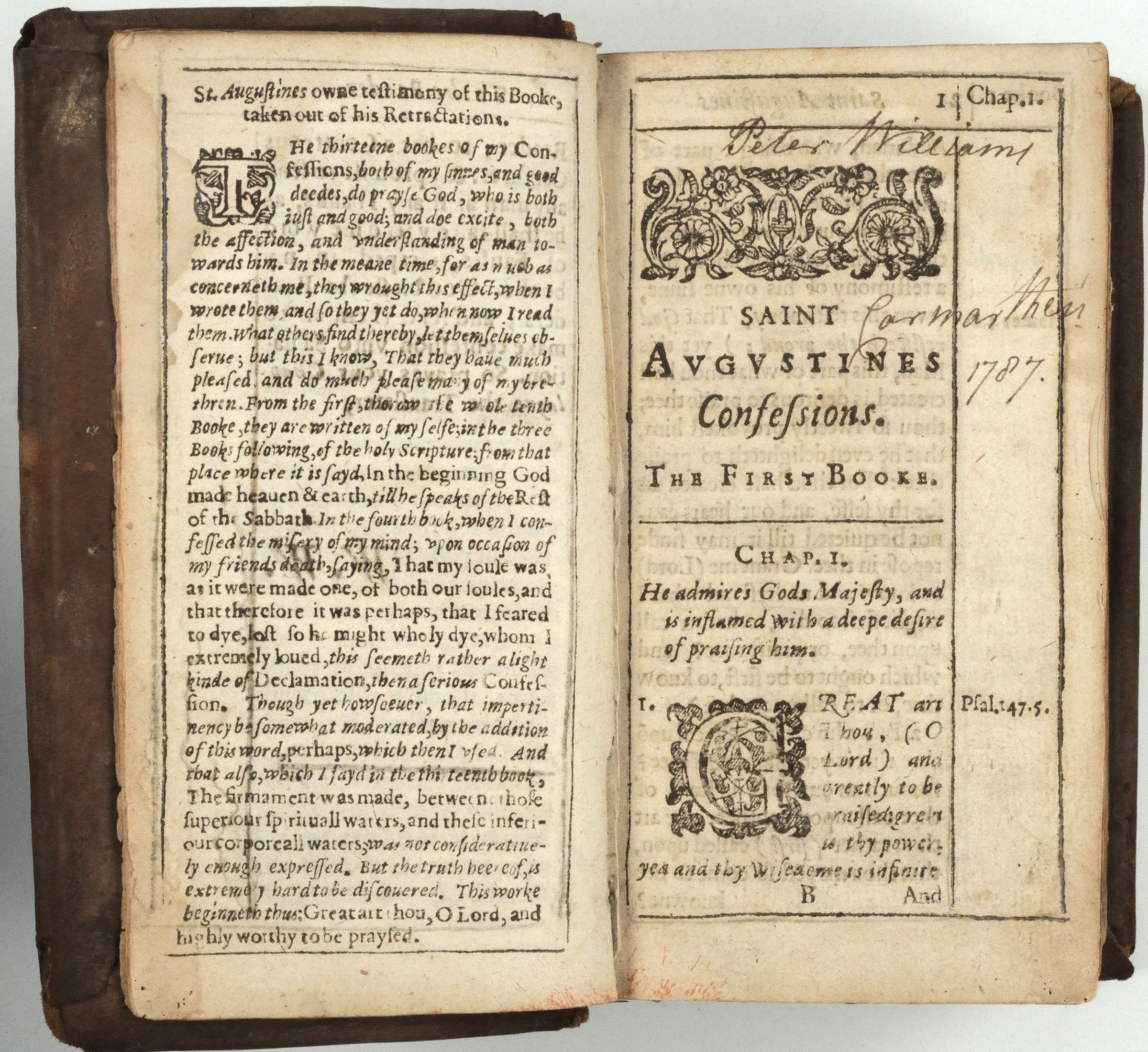
TheConfessionsSt. Augustine of Hippo begins his great work The Confessions with a question: “How shall I call upon my God and my Lord, when by the very act of calling upon him I would be calling himself into myself? Is there any place within me into which my God might come? How can God who made the heaven and earth come into me? Is there any room in me for you, Lord, my God?” (I:2) Continue reading

Who do you say that I am?

gospel-of-mark27 Now Jesus and his disciples set out for the villages of Caesarea Philippi. Along the way he asked his disciples, “Who do people say that I am?” 28 They said in reply, “John the Baptist, others Elijah, still others one of the prophets.” 29 And he asked them, “But who do you say that I am?” Peter said to him in reply, “You are the Messiah.” 30 Then he warned them not to tell anyone about him. 31 He began to teach them that the Son of Man must suffer greatly and be rejected by the elders, the chief priests, and the scribes, and be killed, and rise after three days. 32 He spoke this openly. Then Peter took him aside and began to rebuke him. 33 At this he turned around and, looking at his disciples, rebuked Peter and said, “Get behind me, Satan. You are thinking not as God does, but as human beings do.” 34 He summoned the crowd with his disciples and said to them, “Whoever wishes to come after me must deny himself, take up his cross, and follow me. 35 For whoever wishes to save his life will lose it, but whoever loses his life for my sake and that of the gospel will save it. (Mark 8:27–35) – 24th Sunday, Year B Continue reading